Sacrificed Inca children died very differently than we thought, study finds
A new look at three children who died in the Inca human sacrifice ceremony known as Capacocha reveals their last few months and moments.
Live Science plus Get started to get free access to selected news stories, receive our daily newsletter, post comments, play games and earn badges. JOIN FREE Live Science pro Unlimited access to our exclusive features, expert analysis and in-depth interviews, all ad-free No ads, ever Exclusive, original reporting Scientist interviews and video Member-only features Join live science pro 10Member Features 24/7Access Available 25K+Active Members Exclusive Newsletters Science news direct to your inbox Member Competitions Win exclusive prizes Exclusive Content Premium articles & videos Early Access First to see new features Private Forums Connect with members Monthly Rewards Surprise gifts & perks GET LIVE SCIENCE PLUS It's quick and easy to access Live Science Plus, simply enter your email below. We'll send you a confirmation and sign you up for our daily newsletter, keeping you up to date with the latest science news.
Contact me with news and offers from other Future brands By submitting your information you agree to the Terms & Conditions and Privacy Policy and are aged 16 or over. FIND OUT ABOUT OUR MAGAZINE Want to subscribe to the magazine? Click the button below to find out more information.
Find out more 10Member Features 24/7Access Available 25K+Active Members Exclusive Newsletters Science news direct to your inbox Member Competitions Win exclusive prizes Exclusive Content Premium articles & videos Early Access First to see new features Private Forums Connect with members Monthly Rewards Surprise gifts & perks GET LIVE SCIENCE PLUS It's quick and easy to access Live Science Plus, simply enter your email below. We'll send you a confirmation and sign you up for our daily newsletter, keeping you up to date with the latest science news. Contact me with news and offers from other Future brands By submitting your information you agree to the Terms & Conditions and Privacy Policy and are aged 16 or over.
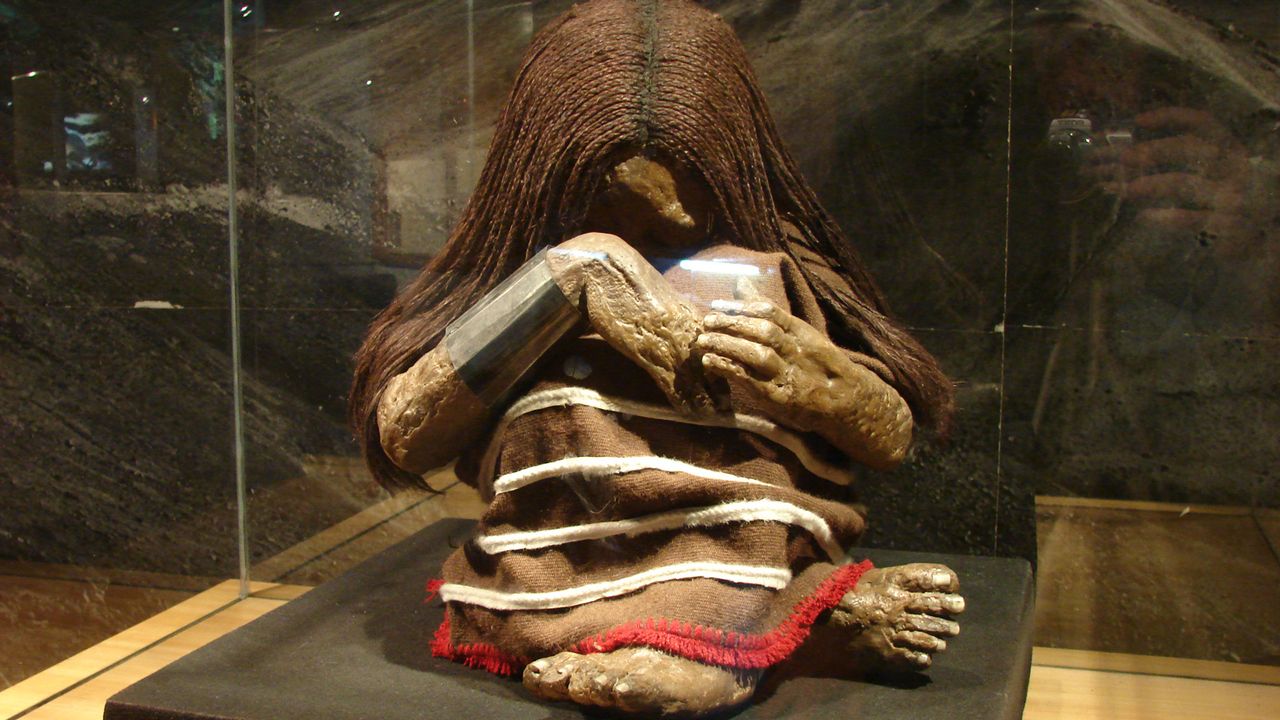
FIND OUT ABOUT OUR MAGAZINE Want to subscribe to the magazine? Click the button below to find out more information. Find out more A replica of the "Niño de El Plomo" or El Plomo Boy, on display at the Natural History Museum in Santiago, Chile.
(Image credit: Jason Quinn, CC BY-SA 3.0, via Wikimedia Commons) Copy link Facebook X Reddit Pinterest Flipboard Share this article 0 Join the conversation Follow us Add us as a preferred source on Google Newsletter Subscribe to our newsletter Inca boys and girls chosen for human sacrifice trekked through Inca communities for thousands of miles on sacred pilgrimages before their ritual deaths, often near high peaks in the Andes Mountains, a new analysis of their mummies reveals.The research also looks again at the manners of their deaths and found that none of three children in the Inca ritual, known as Capacocha, died in the ways that scientists previously thought."
Capacocha was not limited to the final act of offering at the mountain," study first author Verónica Silva-Pinto, an archaeologist at Diego Portales University in Santiago, Chile, told Live Science in an email. "It was an extended ritual process that began months earlier and involved mobility, dietary changes, the participation of different communities, and the creation of sacred landscapes."Latest Videos FromWatch full video here: But some other experts, while welcoming the study, are cautious about some of its details.
The new study is based on new examinations of three Capacocha mummies from two sites: The "Niño de El Plomo" or El Plomo Boy, who was about 8 or 9 years old in the 15th century when he was sacrificed near the 17,700 foot (5,400 meter) summit of Cerro El Plomo, now in central Chile; and two girls, one about age 9 and the other about 18, who were sacrificed about 30 years earlier near the top of what's now Cerro Esmeralda in northern Chile's Atacama Desert. An aerial view of Cerro El Plomo in the Andes of Chile, where El Plomo Boy was sacrificed in about 1480.(Image credit: dreamextreme via Getty Images)It was long thought that the El Plomo boy had died from hypothermia, or exposure to freezing temperatures, on the high peak, and that the Cerro Esmeralda girls were killed by strangulation.
But the new study, published July 15 in the journal Science Advances, rejects those ideas.Human sacrificeArchaeologists found the El Plomo Boy in 1954 and the two Cerro Esmeralda girls in 1976. The new study applies modern archaeological techniques to them for the first time.
Sign up for the Live Science daily newsletter nowGet the world’s most fascinating discoveries delivered straight to your inbox.Contact me with news and offers from other Future brandsReceive email from us on behalf of our trusted partners or sponsorsIt "demonstrates that previously investigated contexts can continue to provide crucial information when revisited using new technologies, minimally invasive methods, and an ethical perspective," Silva-Pinto said.Their examinations with CT scans and microscopy revealed that El Plomo Boy had been
Đọc thêm từ Khoa học

‘Super weird’ object may be space’s first confirmed exomoon
The object about 72 light-years away from Earth could be the first satellite discovered outside our solar system. The post ‘Super weird’ object may be space’s first confirmed exomoon appeared first on Popular Science.

Robotic Servicing Mission Launches with NASA Support
Following its liftoff from Cape Canaveral on July 21 aboard a SpaceX Falcon 9 rocket, the Mission Robotic Vehicle (MRV) hosting the NASA-supported Robotic Servicing of Geosynchronous Satellites (RSGS) payload is now en route to geosynchronous Earth orbit, where it will use its ad

NASA's Roman Space Telescope could reveal black holes ripping up stars. It's set to launch Aug. 30
NASA's next super telescope, the Nancy Grace Roman Space Telescope, may leave nowhere to hide for black holes that violently murder and devour stars, not even cosmic noon.
/https://tf-cmsv2-smithsonianmag-media.s3.amazonaws.com/filer_public/f1/5a/f15a9581-481b-4311-9350-908e2ee67411/rms_titanic_3.jpg)
This Letter Penned on the ‘Titanic’ Days Before It Sank Shares the Perspective of the Ship's Second-Class Passengers
The letter, now up for auction, describes good weather and bustling activity as the "Titanic" prepared to set off across the Atlantic Ocean