Bernie Sanders unveils $7T plan for public control of AI industry
Sanders' AI plan could shift power dynamics, promoting public ownership and potentially boosting decentralized AI alternatives over centralized giants. The post Bernie Sanders unveils $7T plan for public control of AI industry appeared first on Crypto Briefing.

Bernie Sanders unveils $7T plan for public control of AI industry The senator's American AI Sovereign Wealth Fund Act would impose a 50% stock tax on major AI companies and give every eligible American voting shares in the resulting fund. Share Add us on Google by Editorial Team Jun. 18, 2026 Senator Bernie Sanders wants to take roughly $7 trillion from the AI industry and hand it to the American public.
That’s not a typo, and it’s not a metaphor. The Vermont senator introduced the American AI Sovereign Wealth Fund Act in June 2026, proposing a one-time 50% tax on the stock of AI companies generating more than $200 million in annual AI-related revenue. The proceeds would flow into a sovereign wealth fund managed by an independent commission, with eligible Americans receiving voting shares and potential annual distributions of around $1,000 per person at a 5% distribution rate.
To put the scale in perspective: the projected $7 trillion fund would be nearly seven times larger than Norway’s Government Pension Fund Global, currently the world’s biggest sovereign wealth fund. How the plan would actually work The legislation targets any AI firm crossing the $200 million annual AI sales threshold. That captures the obvious names: OpenAI, Anthropic, xAI, and the major cloud providers with significant AI revenue streams.
It also sweeps in any future company that reaches that benchmark, meaning the tax base would grow as the industry grows. Advertisement Rather than a traditional cash tax, the mechanism operates through equity seizure. The government would take a 50% stake in the stock of qualifying companies, transfer those shares into the sovereign wealth fund, and then distribute voting shares to American citizens.
In English: the public wouldn’t just get a check. They’d get an ownership stake with governance rights in the companies building the most powerful technology on the planet. Sanders framed the initiative around the idea that AI’s value derives from collective societal contributions, including public data, human labor, and creative works used to train large language models.
His argument is straightforward: if the raw material was collectively produced, the wealth generated from it should be collectively owned. The fund’s independent commission would manage the portfolio and determine distribution schedules. At a 5% annual distribution rate on $7 trillion, that works out to roughly $350 billion per year flowing back to the public, either as direct payments or funding for services like healthcare and education.
The political and corporate backdrop This isn’t Sanders’ first swing at the AI industry in 2026. He and Representative Alexandria Ocasio-Cortez introduced the AI Data Center Moratorium Act on March 25, targeting the rapid expansion of energy-hungry AI infrastructure. That bill sought to pause new data center construction pending environmental and community impact reviews.
OpenAI CEO Sam Altman reportedly met with Sanders in June 2026 to discuss the implications of public equity stakes in AI companies. What this means for investors and the crypto-AI crossover For crypto markets, the implications are layered. The AI-crypto crossover has become one of the most active sectors in digital assets, with tokens tied to decentralized AI compute, data marketplaces, and inference networks attracting significant capital.
A regulatory environment that threatens centralized AI companies with massive equity dilution could, paradoxically, benefit decentralized alternatives. If building a large centralized AI company in the US becomes politically expensive, developers and capital might flow toward decentralized architectures that are harder to target with stock-based taxation. There’s also the governance angle.
Sanders’ proposal essentially creates a public DAO for AI oversight, minus the blockchain. Eligible Americans would hold voting shares in a collectively managed fund with influence over the companies inside it. Disclosure: This article was edited by Editorial Team.
For more information on how we create and review content, see our Editorial Policy. AI Bernie Sanders unveils $7T plan for public control of AI industry The senator's American AI Sovereign Wealth Fund Act would impose a 50% stock tax on major AI companies and give every eligible American voting shares in the resulting fund. by Editorial Team Jun.
18, 2026 Share Add us on Google Senator Bernie Sanders wants to take roughly $7 trillion from the AI industry and hand it to the American public. That’s not a typo, and it’s not a metaphor. The Vermont senator introduced the American AI Sovereign Wealth Fund Act in June 2026, proposing a one-time 50% tax on the stock of AI companies generating more than $200 million in annual AI-related revenue.
The proceeds would flow into a sovereign wealth fund managed by an independent commission, with eligible Americans receiving voting shares and potential annual distributions of around $1,000 per person at a 5% distri
Đọc thêm từ Tiền số / Crypto
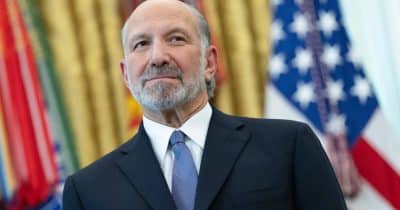
Anthropic lobbies Commerce Secretary Lutnick to lift US ban on its AI models
The potential lifting of the US ban on Anthropic's AI models highlights the dynamic interplay between regulatory actions and technological innovation. The post Anthropic lobbies Commerce Secretary Lutnick to lift US ban on its AI models appeared first on Crypto Briefing.

ZetaChain unveils Anuma, a private memory layer for AI
Anuma's unified memory layer could revolutionize AI interactions by enhancing user control and reducing redundancy in AI subscriptions. The post ZetaChain unveils Anuma, a private memory layer for AI appeared first on Crypto Briefing.

Iran suspends US talks until Lebanon attack assurances are met, adding new geopolitical risk to crypto markets
The suspension of US-Iran talks heightens geopolitical tensions, potentially destabilizing crypto markets and affecting global risk sentiment. The post Iran suspends US talks until Lebanon attack assurances are met, adding new geopolitical risk to crypto markets appeared first on
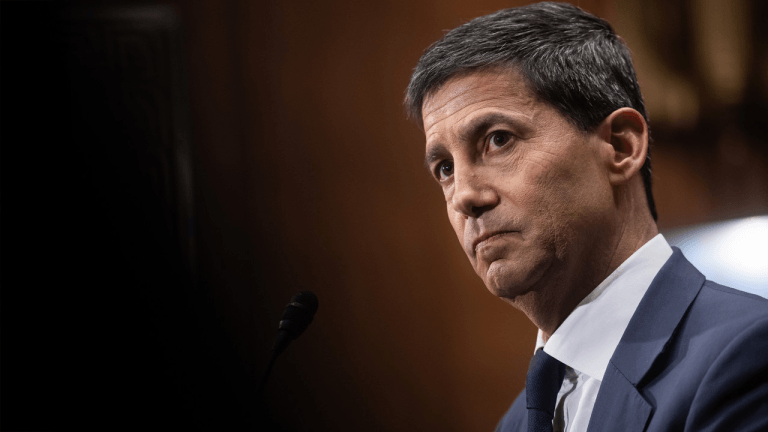
New Fed Chair Kevin Warsh Ditches Rate Signals, Bitcoin Slides as Nasdaq Bounces 1.5%
Federal Reserve Chairman Kevin Warsh used his debut press conference on June 17 to strip away decades of central bank communication habits, and markets spent the following day sorting out what that means for rates, risk, and bitcoin. Rates Hold, Statement Shrinks The Fed held the