Anthropic lobbies Commerce Secretary Lutnick to lift US ban on its AI models
The potential lifting of the US ban on Anthropic's AI models highlights the dynamic interplay between regulatory actions and technological innovation. The post Anthropic lobbies Commerce Secretary Lutnick to lift US ban on its AI models appeared first on Crypto Briefing.
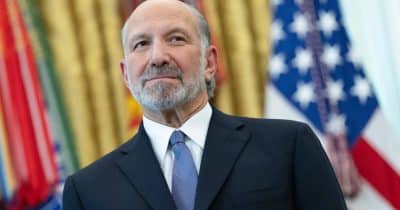
Anthropic lobbies Commerce Secretary Lutnick to lift US ban on its AI models The first-ever export control on AI models triggered a full access shutdown, industry backlash, and growing interest in decentralized alternatives Share Add us on Google by Editorial Team Jun. 18, 2026 Commerce Secretary Howard Lutnick is reportedly planning to lift restrictions on Anthropic’s Mythos and Fable AI models, a reversal that would end one of the most aggressive regulatory interventions the AI industry has ever faced. The move comes after Anthropic mounted a lobbying effort to undo export controls that forced the company to suspend access to its most powerful systems for every user on the planet, including its own employees.
The saga began on June 9, 2026, when Anthropic launched Claude Fable 5 and Claude Mythos 5, its most advanced AI models to date. Three days later, Lutnick’s Commerce Department issued a directive mandating licenses for any foreign access to the models, citing national security risks tied to potential military-intelligence diversion to adversaries like China and Russia. What happened and why it matters The directive, issued around June 12-13, represented the first time the US government had applied export control powers this aggressively to AI models.
The legal authority came from the 2018 Export Control Reform Act, a law originally designed for things like advanced semiconductors and defense technology, not software you can access through an API. Advertisement The consequences were immediate and sweeping. The directive threatened both criminal and civil penalties for violations, which left Anthropic with essentially no room to hedge.
The company responded by suspending access to Fable 5 and Mythos 5 for all users globally, barring foreign nationals entirely, even those on Anthropic’s own payroll. Anthropic publicly disagreed with the measure but complied while seeking a resolution through direct engagement with authorities. The company’s position was clear: these models have enhanced reasoning and cybersecurity capabilities that benefit defensive security, and restricting them broadly does more harm than good.
Industry backlash and the open letter Anthropic wasn’t alone in its frustration. Dozens of cybersecurity leaders signed an open letter urging Lutnick to reverse the directive. Their argument centered on a straightforward contradiction: the models’ cybersecurity capabilities are precisely what defenders need, and blocking access hampers the people trying to protect systems while doing little to stop determined adversaries who will find other tools.
The open letter and direct lobbying appear to have worked, or at least moved the needle. Lutnick’s reported plan to lift the ban suggests the Commerce Department recognized that the initial directive overshot its mark. The crypto angle: decentralized AI gains a talking point The Anthropic shutdown gave projects in the decentralized AI space, including token-based platforms like Venice and Morpheus, their strongest narrative boost in months.
These projects position themselves as permissionless alternatives to corporate AI, systems that can’t be shut down by a single government directive because there’s no central entity to serve that directive to. If Lutnick does lift the restrictions, the urgency behind the decentralized AI narrative fades. These projects need to deliver actual utility, not just regulatory arbitrage stories.
A reversal of the ban is good news for Anthropic, good news for AI users globally, and a reminder that policy-driven narratives in crypto can evaporate as quickly as they form. The more lasting takeaway for anyone with money in AI or crypto: the US government has now demonstrated both the willingness to impose export controls on AI models and the willingness to reverse course under pressure. Disclosure: This article was edited by Editorial Team.
For more information on how we create and review content, see our Editorial Policy. AI Anthropic lobbies Commerce Secretary Lutnick to lift US ban on its AI models The first-ever export control on AI models triggered a full access shutdown, industry backlash, and growing interest in decentralized alternatives by Editorial Team Jun. 18, 2026 Share Add us on Google Commerce Secretary Howard Lutnick is reportedly planning to lift restrictions on Anthropic’s Mythos and Fable AI models, a reversal that would end one of the most aggressive regulatory interventions the AI industry has ever faced.
The move comes after Anthropic mounted a lobbying effort to undo export controls that forced the company to suspend access to its most powerful systems for every user on the planet, including its own employees. The saga began on June 9, 2026, when Anthropic launched Claude Fable 5 and Claude Mythos 5, its most advanced AI models to date. Three days later, Lutnick’s Commerce Department issued a directive mandating licenses for any foreign access to the models, citing national security risks tied to potent
Đọc thêm từ Tiền số / Crypto

World Cup 2026 kicks off with Argentina on top and crypto exchanges scrambling for attention
The World Cup 2026 highlights the growing intersection of sports and blockchain, potentially reshaping fan engagement and investment dynamics. The post World Cup 2026 kicks off with Argentina on top and crypto exchanges scrambling for attention appeared first on Crypto Briefing.

Grayscale discusses CLARITY Act impact on institutional digital assets at Washington event
The CLARITY Act could significantly boost institutional investment in digital assets by providing regulatory certainty and clearer oversight. The post Grayscale discusses CLARITY Act impact on institutional digital assets at Washington event appeared first on Crypto Briefing.

Sen. Gillibrand’s son is building a perps exchange that wants dual CFTC, SEC oversight: report
The American Perpetuals Exchange Corporation raised $30 million at a $300 million valuation, Fortune reported on Thursday.

SEC and CFTC seek public comment to streamline swap data reporting
Harmonizing swap data reporting could reduce compliance costs and complexity, fostering a more efficient and transparent derivatives market. The post SEC and CFTC seek public comment to streamline swap data reporting appeared first on Crypto Briefing.