Youth at the vanguard: On the Education Minister’s resignation
The resoluteness of the protests forced the government to step back
A government that does not bend to the people’s will risks being broken. The resignation of Dharmendra Pradhan as Union Education Minister, after a sustained agitation by youth led by the satirically named Cockroach Janta Party (CJP), is more than just a ministerial casualty of the “paper leaks” scandal. It is a seminal moment in what political scientists describe as the Bharatiya Janata Party’s-dominant party system in Indian democracy.
Entrance examinations are the gate-keeping apparatus that determines which young Indian gets to enter the narrow but reassuring world of formal employment later on, in a country where most work remains in the grinding unorganised sector. Repeated leaks across several examinations have turned an apparatus for testing merit into one of widespread graft. More than 20 lakh candidates were made to take the National Eligibility cum Entrance Test (NEET) again after gruelling preparation that coincided with their school examinations.
Several students did not survive the ordeal. The grievance bound youth across caste and religion, the very identities that political mobilisation in India has lately been confined to in recent years. Bypassing a television establishment largely aligned with the ruling dispensation, the faceless protesters built support on social media within days.
The high-handedness of the Delhi police and the attempts to throttle the internet and mobility around the protest venues only swelled their ranks. The Government eventually found that this agitation could not be crushed, swayed, split, distracted or left to dissipate, as others have been over the past 12 years. It had to negotiate, and in the face of the CJP’s rightful stubbornness, Mr.
Pradhan’s continuation became untenable. The nothing-to-lose desperation of the protesters gained a political halo that came from their non-alignment with electorally focused established parties. This was a movement that could not be hijacked or undermined by the political elite, whether of the Opposition or of the Government.
The Narendra Modi-led BJP Government has converted mostly narrow electoral victories — a plurality of votes yielding a majority of seats, singly or in coalition — into expansive mandates. It has used them to break the constitutionalist consensus on settled questions of secularism and federalism, advancing a unitary, majoritarian agenda by creeping degrees. It has simultaneously raised its floor of support by radicalising sections in the north, west and now the east of India on the communal plank, which has in turn helped secure its legislative strength.
It has recast dissent as anti-national or separatist, and hollowed out the Opposition through induced defections and selective deployment of enforcement agencies. Combined with the pusillanimity of other institutions, including a passive judiciary, this has led to what many describe as a managed democracy living under an undeclared emergency for civil liberties. A nation born of non-violent struggle has needed, more than once since Independence, a non-parliamentary convulsion to turn its institutions back towards the vision of the freedom-fighting generation that framed the Constitution.
The CJP, and those who stood with it — Sonam Wangchuk fasted for 26 days — have shown that a just demand pressed through the quintessentially Indian route of satyagraha can outlast the state’s brutality and move an inflexible Government to action. This is a lesson for the institutions charged with checking the executive, and for those charged with questioning authority, especially the media, which —barring some notable exceptions— have mostly played a negative role. They must play their constitutionally mandated and socially responsible role rather than give in to browbeating or expediency.
Whether they do so will be tested as the Government sets about reforming the entrance examination system with a different Minister-in-charge. What is certain is that India is yearning for change and rejuvenation. Published - July 26, 2026 11:10 am IST Read Comments Copy link Email Facebook Twitter Telegram LinkedIn WhatsApp Reddit READ LATER SEE ALL Remove Related Topics Cockroach Janta Party / politics / demonstration
Đọc thêm từ Thế giới

“약자 피해자만 보호하나, 땜질 입법”…민주 형소법 개정안 비판 확산
본문사회사회일반“약자 피해자만 보호하나, 땜질 입법”…민주 형소법 개정안 비판 확산박지영,정혜민기자수정 2026-07-26 17:53펼침0:00Your browser does not support theaudio element.구글 선호 매체 등록16일 서울 서초구 서울중앙지검 모습.
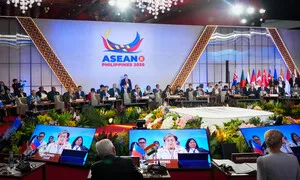
아세안지역안보포럼 “한반도 비핵화” 2년 연속 채택…당사자 대화 촉구
본문정치정치일반아세안지역안보포럼 “한반도 비핵화” 2년 연속 채택…당사자 대화 촉구장예지기자수정 2026-07-26 17:46펼침0:00Your browser does not support theaudio element.구글 선호 매체 등록북한은 지난해 이어 불참지난 23일(현지시각) 필리핀 마닐라에서 제33차 아세안지역안보포럼(ARF) 외교장관회의가 열렸다.
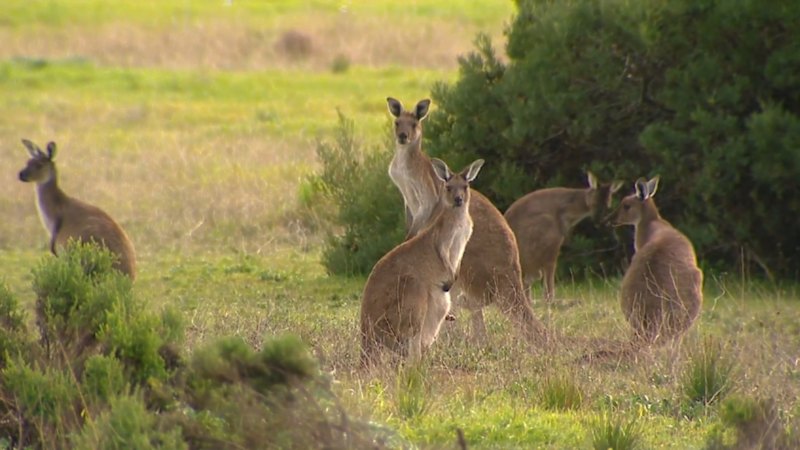
Outrage as kangaroos found dead in suspected animal cruelty case
A suspected deliberate act of animal cruelty has prompted outrage after two adult kangaroos and a joey were found dead near Adelaide.

Elon Musk documentary, CIA comedy lead Venice Film Festival 2026 lineup
A four-hour documentary about Elon Musk, Martin McDonagh’s dark CIA comedy “Wild Horse Nine” and films featuring Robert Pattinson, Penélope Cruz and Javier Bardem are among the movies premiering at the Venice Film Festival in September. Alberto Barbera, the festival’s artistic di