Wyatt calls for Indigenous Procurement Policy to be shut down if ‘black clad’ rorts continue
Ken Wyatt said contracts flowed mainly to businesses in major capital cities despite most Indigenous Australians living outside the capitals.
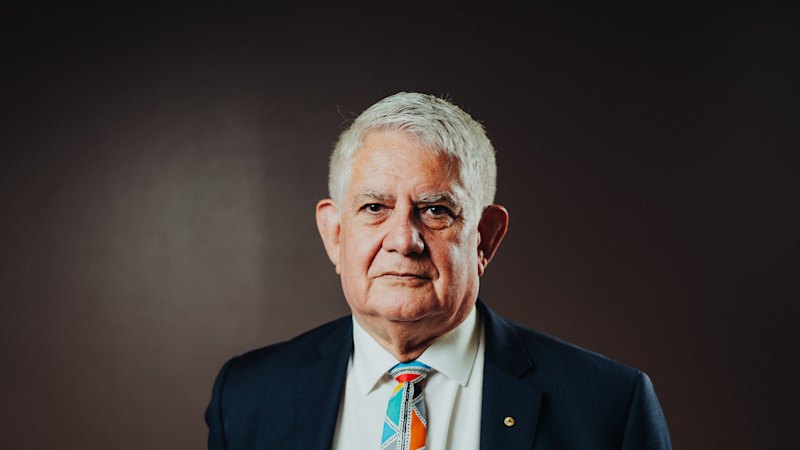
The federal government should shut down the current Indigenous Procurement Policy if ‘black cladding’ rorts that deny business to genuine Aboriginal enterprises are not addressed, according to former Aboriginal affairs minister Ken Wyatt. The former member for the WA federal seat of Hasluck believes legitimate Aboriginal-owned companies are losing out to ‘black clad’ companies setting up joint ventures with Indigenous partners in a cynical bid to qualify for and win Commonwealth contracts designed to encourage Indigenous enterprise. “If that is happening, then something needs to be done.
Or alternatively, the government should shut the program down,” Wyatt said. He added that ‘false flagged’ businesses with token Indigenous partners appear to be proliferating. “Black cladding means that I could go into partnership with a white-owned company and they pay me to have my name associated with the company,” Wyatt said.
“That company wins contracts as a joint venture with an Indigenous partner. But all of the capacity to deliver that contract resides with the principal partner.” Wyatt said the problem was demonstrated by a visit from a group of men - three non-Indigenous and two Aboriginal elders - who told him they had started a joint venture.
“I asked the elders what exactly was their role in the business and they said, ‘We’re going to get paid X amount.’ It showed clearly that black cladding was not a theoretical element,” he said. “There are three or four Indigenous directors I know who get paid salary only and have very little participation in the company.
“That’s the definition of black cladding. A genuine Aboriginal business partner should be co-leading and involved in the decision-making as you would under the Corporations Act. I should be sitting on your board with you as both a stakeholder and also a decision maker.”
Wyatt said recent analysis by the Australian National University looked at the distribution of IPP contracts from the program’s inception in 2015 through to 2023. Social policy researcher Christian Eva found that although the IPP had generated contracts for 3900 Indigenous businesses, half of contracts over $10,000 were awarded to just 11 businesses, with half of the accumulative value of contracts above $10,000 awarded to 18 businesses. “A staggering 27 per cent of the total value of all contracts went to businesses with an unidentified Indigenous ownership status,” Eva said.
“This is deeply troubling. Under what other program could a main requirement be considered so flexible?” Wyatt said contracts flowed mainly to businesses in major capital cities despite most Indigenous Australians living outside the capitals.
“Curiously, the lion’s share went to Canberra firms. The ACT has only 1 per cent of Australia’s Indigenous population, yet it secures 18 per cent of the Commonwealth procurement contracts,” he said. “Very few Indigenous groups in regional Australia access the government’s Indigenous procurement program.
“It should have prompted a government probe into the possible misuse of billions of taxpayers’ funds.” More than 6000 entities are registered with a Supply Nation database of certified Indigenous businesses. “Yet Supply Nation is still denying there’s an issue,” Wyatt said.
“They have tried to establish a certification system which to some extent has served a purpose. But it’s not thorough enough - you’d have to scrutinise all the actual documents and have a verification system of red flags that pop up. That is just not happening.”
Supply Nation was contacted for comment. Professor Mayowa Babalola, Business Ethics chair at the University of Western Australia, who recently wrote an article about black cladding in the Australian Financial Review, said Supply Nation certification without independent verification “is an insufficient proxy for genuine Indigenous participation.” He added that systemic failures exist in procurement practices.
“These are not isolated failures. They are systemic ones… when systems designed to benefit Aboriginal and Torres Strait Islander people are compromised — by undisclosed conflicts, by inadequate oversight, by institutional non-engagement with documented concerns — the people those systems were built to serve pay the cost,” he said.
Wyatt raised the issue of black cladding with Prime Minister Anthony Albanese and Federal Minister Malarndirri McCarthy in October last year. As former Aboriginal Affairs minister, he said he ordered a Cabinet paper on the issue, but reform was halted by the 2022 election. “We were looking to tighten regulation, with greater integrity in identifying genuine businesses,” he said.
From July 1, the Indigenous Procurement Policy threshold will increase required First Nations ownership and control to 51 per cent. But Wyatt said this reform will not solve the issue. “You can still enter into a joint venture where on paper you own 51 percent of the company but an innovative person will find ways around ensuring non-Indigenous cont
Đọc thêm từ Thế giới

Swiss voters reject 10 million population cap
Nearly 55% of participants voted against the proposal to cap population by cutting migration, results show.

1 person dead after being hit by vehicle during fight in Toronto: police
Toronto Police Services' homicide unit is investigating an incident in a quiet neighbourhood early Sunday in which a fight broke out and one person was hit by a car.

Twelve people killed as plane full of skydivers crashes in Missouri, police say
The plane crashed near an airport, killing all 12 people onboard

Eberechi Eze reflects on Champions League penalty heartbreak ahead of potential World Cup shootout
Eberechi Eze prepared to step up in penalty shootout despite missed chance in Champions League final