World’s largest jellyfish spotted near Cape Cod
Its tentacles can be twice the size of a city bus. The post World’s largest jellyfish spotted near Cape Cod appeared first on Popular Science.
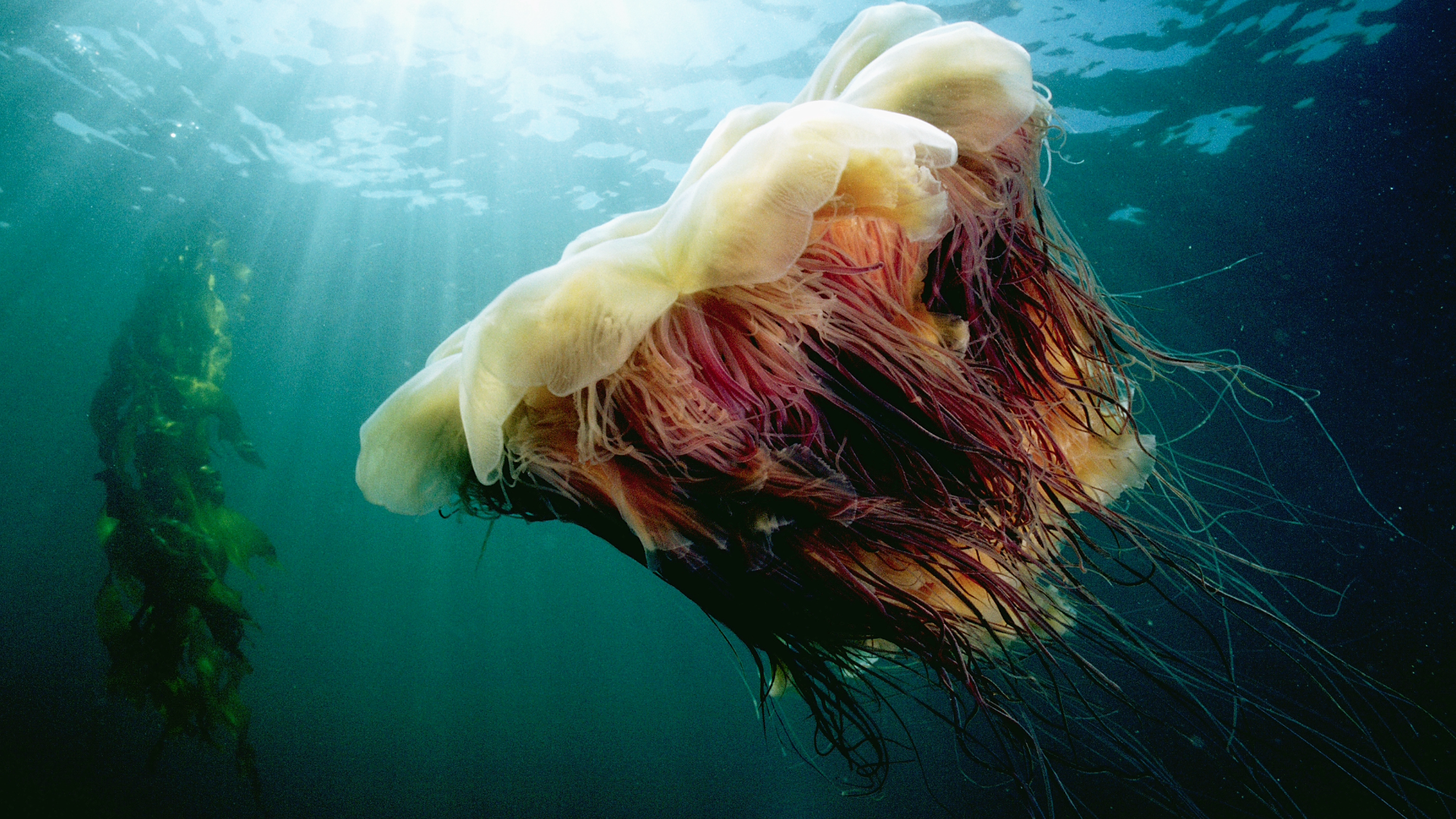
One of the planet’s largest species of jellyfish—the Lion’s mane jellyfish (Cyanea capillata)—have been making unwelcome appearances on Massachusetts beaches, as reported by the Boston Globe. These invertebrates’ bells can be around three feet across, and they can grow tentacles over 100 feet long. Unfortunately for beachgoers, they deliver very toxic stings, though there have been few known instances of human fatalities.
They are typically found in open-ocean ecosystems, in areas of the Pacific, Atlantic, and Arctic Oceans, as well as the Baltic and North Seas. But for some reason, Massachusetts waters have recently been seeing surprisingly many of them. “Keep an eye out: lion’s mane jellies can give a pretty painful sting!
If you see one washed up on the beach or floating in the water, it’s best to admire it from a safe distance,” the New England Aquarium wrote in a social media post. Jellyfish get around by drifting instead of swimming. So a mix of ocean currents and winds may have led to this significant appearance in the Bay State.
“Lion’s Mane jellyfish are currently appearing in unusually large numbers off Cape Cod,” reads a social media post by the Sandwich Marina – Sandwich Harbormaster in Cape Cod. “While Lion’s Mane is normally seen from late spring through summer, this year reports began in May, with exceptionally high densities observed by mid-June. Similar blooms have occurred in the past, including in 2020.
Experts believe factors such as water temperatures and available food sources may contribute to these increases.” Furthermore, the post reminds people to not touch jellyfish—whether they’re on the beach or in the water. It’s generally a good idea to stay away from them, as tentacles can be hard to spot.
In the case of a sting, wash the spot with warm water and use tweezers to get rid of the tentacles. You can use vinegar to help get rid of the sting. The post World’s largest jellyfish spotted near Cape Cod appeared first on Popular Science.
Đọc thêm từ Khoa học

When a teenager makes the 'stupid choice,' their brain is working exactly as designed
When an adult refuses to let an injustice pass—stands up to a bully or asserts their rights—we call it principle. When a 15-year-old retaliates to an insult thrown in a school corridor, risking detention, we call it a failure to think ahead. It's easy to ascribe this to a not-yet

Gamma-ray pulsations reveal extreme 3.2-millisecond pulsar 3,900 light-years away
By analyzing the data from NASA's Fermi gamma-ray space telescope, Chinese astronomers have investigated a recently identified millisecond pulsar known as PSR J0435+3233. As a result, they found that the pulsar exhibits gamma-ray pulsations. The discovery was detailed in a paper

Make a plan for your digital photos after you die
Consider adding a Digital Executor to your will so your memories aren't lost forever. The post Make a plan for your digital photos after you die appeared first on Popular Science.

Trace molecules emerge as chemical 'keystones' that steer life's communities
In nature, the rarest ingredient can be the one that holds everything together. In a new article published in Trends in Ecology & Evolution, Dr. Erika C. Freeman of the Leibniz Institute of Freshwater Ecology and Inland Fisheries (IGB) in Berlin argues that a handful of scarce mo