Why Pakistan’s first advanced stealth submarine is a gamechanger for balance of power with India
Pakistan’s newly inducted Chinese-made attack submarine is set to strengthen its naval presence in the waters around India. Experts tell Arpan Rai what that means for the rival nation
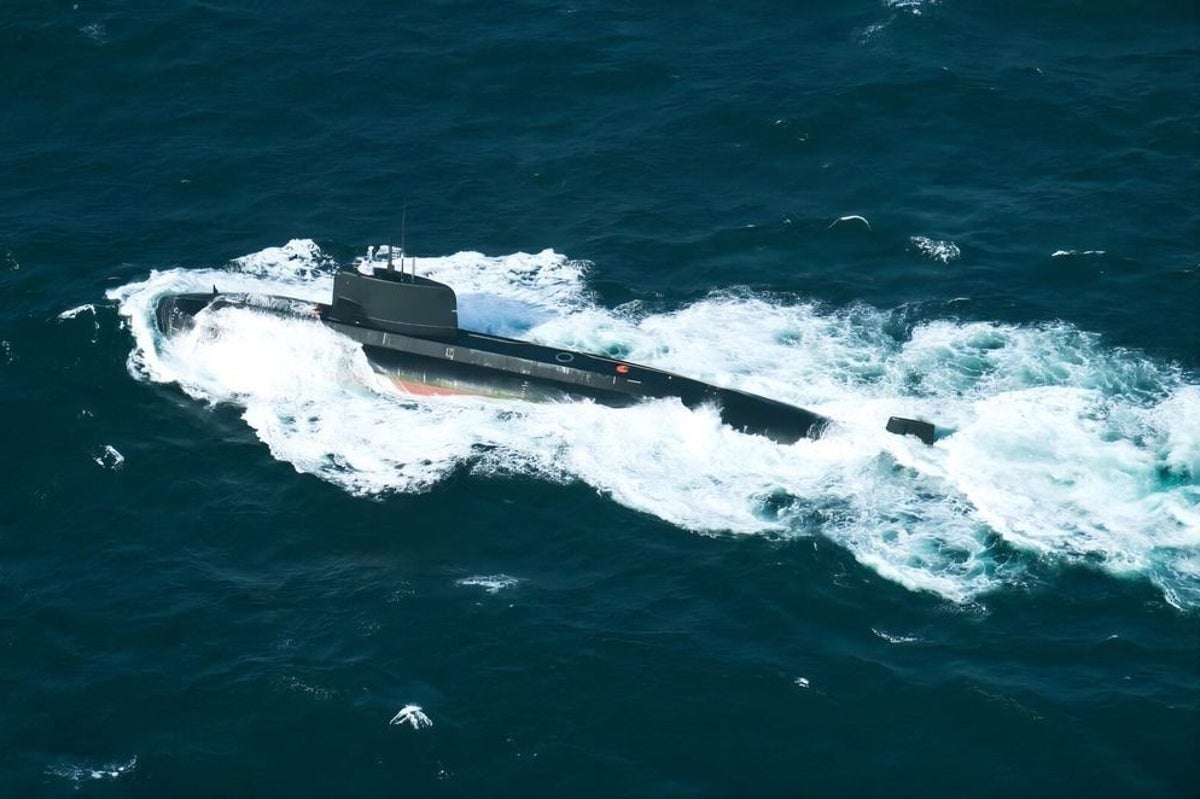
The last time Pakistan operated a submarine in the Bay of Bengal, during the 1971 war with India, it was destroyed. The South Asian nation did not possess the means to venture back into the strategic waters for more than half a century. That changed a few weeks ago.
Last month, Pakistan brought home a new attack submarine from China. The navy had commissioned the PNS Hangor in April and the submarine, the first of eight of its class to be inducted, sailed into the Karachi port on 11 June and was feted with the beating of drums and the sounding of trumpets.Commodore Omer Farooq, mission commander of the new flotilla, says the advanced submarine will be a “gamechanger” as it will extend the navy’s operation reach well beyond its own waters, enabling it to impose a sustained presence in the eastern Indian Ocean, where the PNS Ghazi suffered a humiliating rout in 1971.
open image in galleryPakistani president Asif Ali Zardari with Chinese leader Xi Jinping at the Great Hall of the People in Beijing (Getty)The Hangor sports a shiny black, teardrop-shaped hull and, with a length of 76m and a beam of 8.4m, is noticeably larger than most contemporary conventional submarines.The induction of the Hangor fleet will allow the navy to gradually replace its ageing and near-obsolete French-made Agosta submarines.
The Hangor boasts the Air Independent Propulsion technology, meaning it can remain underwater for weeks, adding to its stealth capability.Pakistani president Asif Ali Zardari went to Sanya in China’s Hainan province to receive the vessel and announced that the Hangor fleet would be armed with advanced weapons and navigation systems. The new submarines, he added, would help his country preserve maritime order and stability in the region.
open image in galleryPNS Hangor makes a goodwill visit to Colombo, Sri Lanka, on its way to Pakistan (X/Sri Lankan Navy)Although India operates leagues ahead with its fleet of 19 submarines, the Hangor fleet offers Pakistan a bare minimum but powerful presence against the vessels of its chief rival.A government official said earlier that four of the submarines would be made in China and as many in Pakistan under a transfer-of-technology programme. The timeline for the fleet to be assembled could extend up to 2032, according to Pakistani naval experts.
China previously played down the deal as “normal military equipment cooperation” between allies but experts cautioned India it would finally be faced with superior military technology in the Indian Ocean, that too at a time of rising tensions.The rival neighbours came to the brink of war last year after Indian airstrikes across the border sparked four days of intense fighting that left hundreds of people dead. India launched the strikes after blaming Pakistan for a militant attack in the restive Himalayan region of Kashmir that killed nearly two dozen people, mostly Hindu tourists from the mainland, in late April.
But India lost multiple aircraft during what it called Operation Sindoor and experts were quick to credit the Pakistani military’s Chinese hardware.open image in galleryPakistani president Asif Ali Zardari at the commissioning ceremony of the PNS Hangor in Sanya, China (X/Pakistan Navy)Retired Rear Admiral Syed Faisal Ali Shah argues that the conflict busted “the myth of conventional disparity” between Pakistan and India, and that the Hangor fleet only strengthens his nation’s hand. “It was not only the air battle,” the former Pakistani admiral tells The Independent.
“At sea, the Indian navy loitered at a distance of 400-500 nautical miles, which is 700-900km from Karachi, but couldn’t move forward, a risk calculation they made.”“In any future conflict we have with India, these submarines will further multiply the navy’s capability, especially underwater capability, and this should be a source of concern for Indian military leadership,” he says.The submarines, he says, will also enable Pakistan’s navy to protect “the sea lines of communication in the Bay of Bengal, the Strait of Hormuz, the Persian Gulf, as well as the Gulf of Aden”.
open image in galleryINS Khanderi is seen during its commissioning ceremony into the Indian navy in Mumbai (AFP via Getty)Shah acknowledges India is still ahead by commissioning three nuclear submarines and planning for six more, but argues the rival nation should nonetheless be concerned. “In my experience,” he says, “the threat of one submarine and 10 submarines is almost equal because unless you find that submarine underwater, the ships are not comfortable operating in that area.”Dinakar Peri, a security studies fellow at Carnegie India, notes that while Pakistan currently operates just three Agosta submarines, India’s sub-surface fleet is also limited to 16 mostly ageing submarines.
“On a larger scale, however, India’s naval prowess has been wider and far more capable than has been demonstrated,” he says. “On the contrary, Pakistan’s navy has been rather limited, both in size and capability, as s
Đọc thêm từ Thế giới

이 대통령 “3대 메가프로젝트, 지지율 노렸다면 지방선거 전에 했을 것”
본문정치청와대이 대통령 “3대 메가프로젝트, 지지율 노렸다면 지방선거 전에 했을 것”서보미기자수정 2026-07-04 11:19펼침0:00Your browser does not support theaudio element.구글 선호 매체 등록이재명 대통령과 이재용 삼성전자 회장, 최태원 에스케이(SK)그룹 회장이 지난달 29일 청와대에서 열린 3대 메가프로젝트 국민보고회에서 손을 잡고 있다. 청와대통신사진기자단광고이재명 대통령이 ‘3대 메가프로젝트’와 관련해 “지지율보다 더 중요한 건 성과와 실적

Burnham told to consider means testing state pension to fill defence blackhole
Tax expert Dan Neidle has listed 37 options for Andy Burnham to raise the £4.7bn needed to fill the gap in defence spending

Trump kicks off America’s 250th with dead of night memes trolling foes as Pee-wee Herman and Alfred E. Neuman
Trump caps off apocalyptic Independence Day speech on midterm elections with Truth Social posts aimed at Democrats

BBC sued for £1.2 million over Panorama segment on Evri
Evri suing BBC for £1.2m over Panorama segment after ‘serious financial loss’