Why humans find fire so mesmerizing
It's not just cozy vibes. We're hardwired to stare at flames. The post Why humans find fire so mesmerizing appeared first on Popular Science.

There’s a particular kind of trance that takes hold when you gaze into a glowing, flickering campfire—the kind where you don’t even notice that your marshmallow has gone from toasty treat to active volcano to some kind of science experiment gone horribly wrong, all while you were looking right at it. Fire has mesmerized us for as long as we’ve known how to control it. It warms us, feeds us, and lights our homes.
But something else is clearly going on: right alongside premium entertainment and live sports, streaming services like Netflix somehow find room in their lineup for hours of fireplace footage. For humans, anyway, fire is more than just a practicality—it’s closer to a fixation. Dr.
Daniel M.T. Fessler, an evolutionary anthropologist at the University of California, Los Angeles, has a theory about why.
He maintains that kids who grow up building fires out of necessity actually lose interest in fire once they’ve mastered it. The fascination so many of us carry into adulthood, he argues, might just be unfinished business. “Once people get good at building fire,” Fessler says, “they’re just not as interested in it anymore.”
Master it, and the magic disappears Fessler’s original research on this dates back more than two decades, when he and his wife, an anthropologist, spent nearly three years conducting ethnographic research in Southwestern Sumatra, a large Indonesian island west of Java. They lived in a community where most households cooked over a wood fire, and only a few had transitioned to kerosene stoves. In these communities, Fessler observed, kids were around fire from the time they could walk, and often had more unsupervised free time than most American kids.
Six-year-olds scooped embers from the family cooking fire so they could “bake” their mud pies—tiny imitations of the meals they watched the adults cook every day. By age 10, Fessler says, kids in this community had complete mastery of fire, matching that of “any American outdoor guy.” And that was e
Đọc thêm từ Khoa học

Japan space probe skims asteroid in test for planetary defense
A Japanese space probe performed a flyby of a near-Earth asteroid on Sunday in a test mission for technology that could help protect the planet from space rocks.

Scattered bronze bells in Chinese lord's 2,600-year-old tomb point to ritual deactivation
When archaeologists opened the 2,600-year-old tomb of an ancient Chinese lord, they discovered his magnificent bronze bells had been scattered, their wooden hangings broken. But the most mysterious part of all: This was apparently no accident, with the family of the tomb's owner
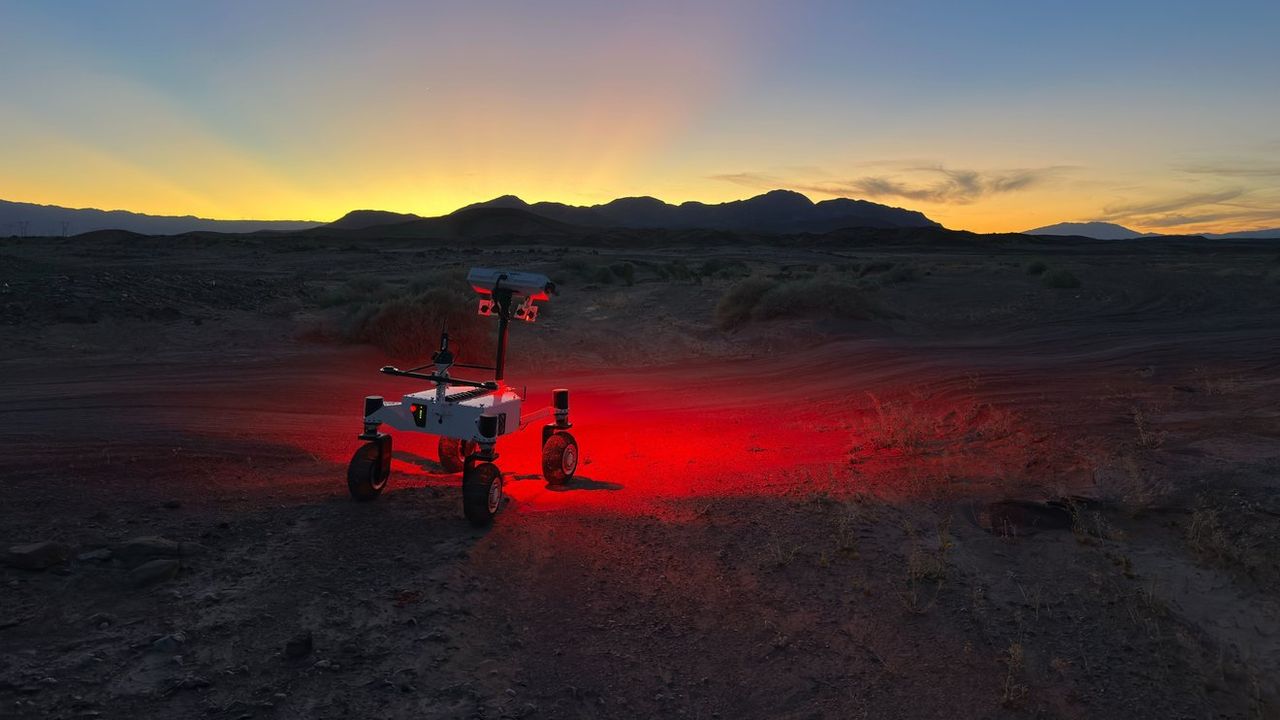
NASA tests advanced new Mars rover prototype in the California desert (video)
A new rover prototype is teaching NASA scientists how to design robots that can think for themselves and navigate terrain that would leave old rovers stuck in the lunar or Martian dust.

Rare 309-million-year-old fossils suggest early tetrapods developed without tadpole phase
Scientists have long posited that the earliest water animals to transition to land had amphibious tadpole features, going through a metamorphosis akin to that of today's frogs.