West Coast clams are coming down with cancer
Pollution and climate change-driven heat are worsening the outbreak
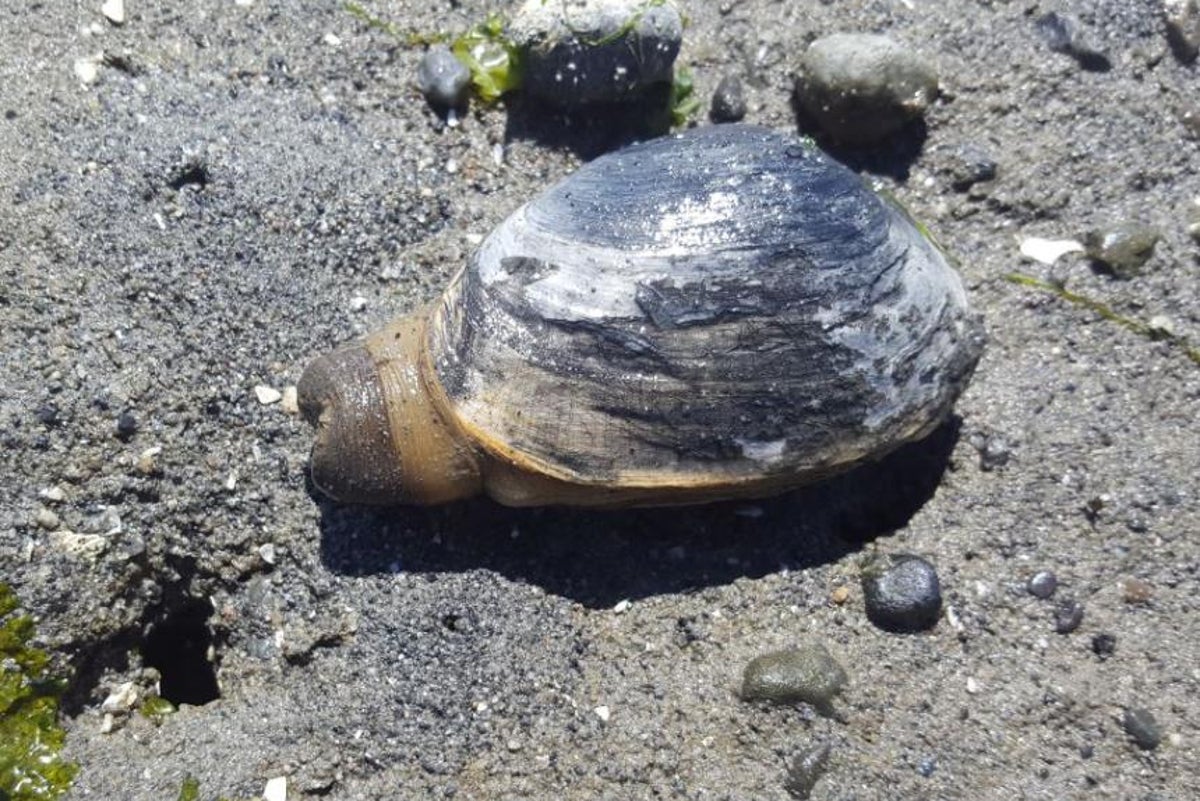
Soft-shelled clams along the West Coast are coming down with contagious and deadly cancer, scientists have warned. The widespread outbreak in Washington state’s Puget Sound has impacted three-quarters of the population in a large watershed called Triangle Cove, according to the Pacific Northwest Research Institute.The cancer, known as bivalve transmissible neoplasia, spreads between marine animals through seawater.
It has no known direct impact on human health and the clams are still safe to eat. But infections threaten the wider ecosystem and other shellfish already threatened by pollution and marine heat waves.The disease could spread down the coast to Oregon, a spokesperson for the state’s Department of Fish and Wildlife warned this week.
Unlike Washington, the state does not have its own monitoring program for the cancer.Though, there is “currently a low risk,” Meghan Dugan told Portland’s KOIN 6.open image in galleryA softshell clam is pictured on the beach in Washington state.
Researchers say the clams in Washington’s Puget Sound being infected with a contagious form of cancer (Washington Department of Fish & Wildlife)Soft-shell clams provide vital ecosystem services, acting as water filters that clear out plankton and bacteria, according to the non-profit Blue Ocean Society.They are already at risk from climate change-driven heat and acidification, and ocean pollution. A 2021 heat wave led to a mass shellfish die-off in the region, cooking species alive on Puget beaches.
Pollution and warming temperatures can make the clams more susceptible to cancer, according to the Environmental Protection Agency’s National Estuary Program.The disease has previously been found in clams along the East Coast but had never been documented in populations on the West Coast. The cancer was first detected in Puget Sound in 2022 and surveys of the area were taken through 2024.
Genetic analysis shows that it is from the same lineage previously identified in the Atlantic and Japanese clam species that could be less susceptible to illness.open image in galleryA ferry and a tanker pass through the Puget Sound near Seattle's Pike Place Market in Seattle, Washington, in March 2022. The cancer was first detected there in 2022 (Getty Images)Fortunately, the outbreak appears to be in its early stages.
That doesn’t mean scientists can stop it but it offers a rare opportunity to observe how wild clams respond to the disease. Scientists still don’t understand how the cancer reached Washington waters."The most likely explanation is accidental human-assisted transport of an infected clam or seawater containing cancer cells, but we don't yet have evidence that allows us to determine the precise route,” Michael Metzger, associate investigator at the institute, said.
“Understanding how transmissible cancers move between regions will be critical for monitoring and managing future outbreaks."There are steps that people can take to limit the spread. Looking for hitchhiking shellfish on ships can prevent further disease.
Limiting marine pollution may also help.Join our commenting forumJoin thought-provoking conversations, follow other Independent readers and see their repliesComments
Đọc thêm từ Thế giới
Shopify president confronted, again, by anti-Israel protester at tech conference
The protest was 'disguised under a thin veil of advocacy, and everyone in the room saw right through it," wrote Finkelstein on X

England wrap up T20 series win over India with explosive batting display
Harry Brook dazzles as England thrash India again to seal T20 series win
「西ヨーロッパ、史上最も暑い6月」EU気象情報機関
EU=ヨーロッパ連合の気象情報機関は、先月の西ヨーロッパの平均気温が20.74度で、6月としては、観測史上、最も高くなったと発表しました。

Rock-star reception for India's PM
A crowd of 35,000 people greeted Indian PM Narendra Modi in Melbourne overnight.