We Need to Talk About AI: China’s Therapists Lose Patients to Tech
As more Chinese turn to AI tools for counseling, mental health professionals warn that the technology could be making people worse.
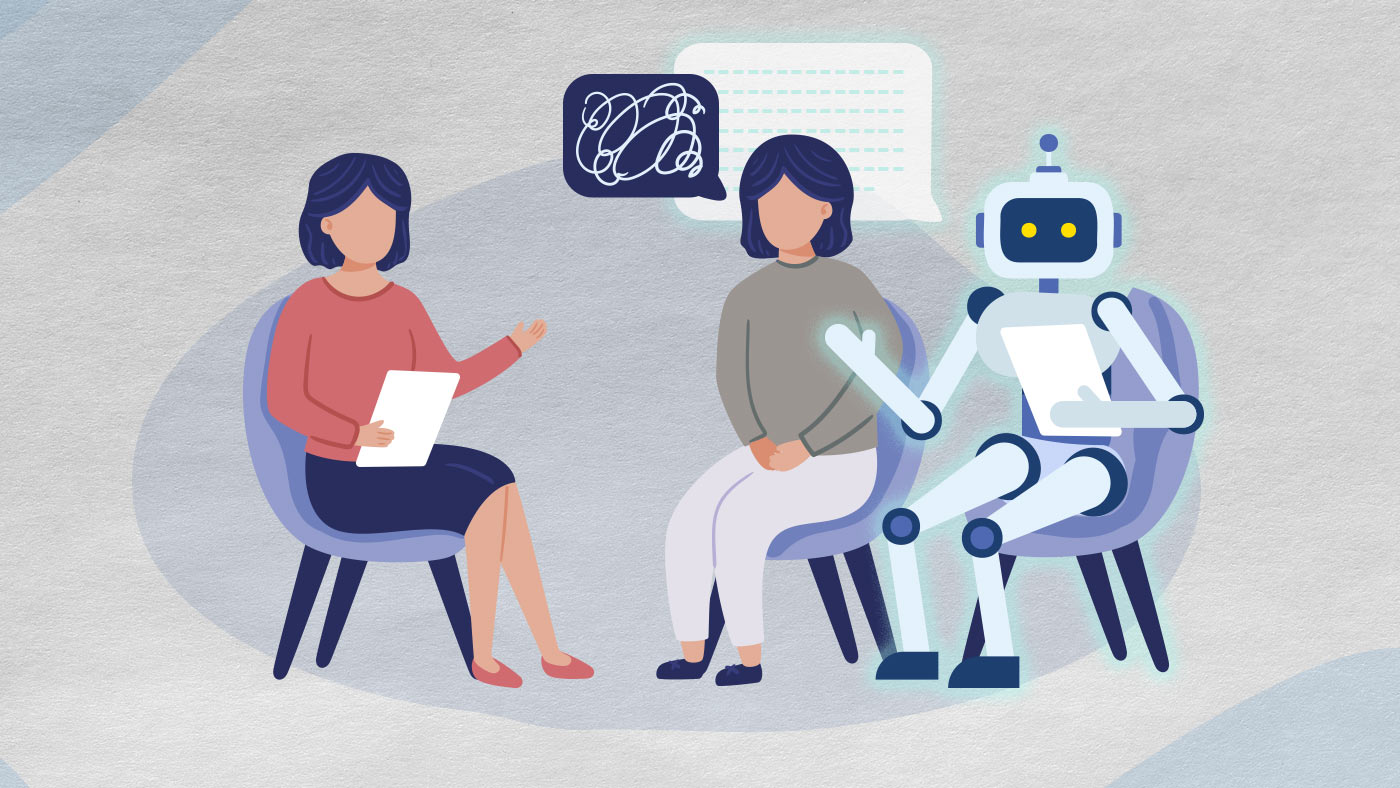
SIXTH TONE ×We Need to Talk About AI: China’s Therapists Lose Patients to TechAs more Chinese turn to AI tools for counseling, mental health professionals warn that the technology could be making people worse.By White Night WorkshopJul 01, 2026#artificial intelligence#healthAfter 20 years in the therapist’s chair, Chen Kehan has pretty much heard it all. Lately, though, she’s become conscious of a third party listening in to every conversation: artificial intelligence.
She’s discovered that clients are increasingly turning to AI tools to discuss and “interpret” their one-on-one sessions, sometimes leading to conflicting messages and false conclusions.One woman recently ended their professional relationship after deciding that Chen didn’t like her based on AI analysis of transcripts from a dozen or so sessions. “It was like she was holding a magnifying glass to scrutinize her therapist,” Chen says from her clinic in Beijing’s bustling Central Business District.
Other clients who once struggled to articulate emotions are now suddenly launching into lengthy explanations of personal experiences, using an array of psychological terminology gleaned from DeepSeek and ChatGPT. “But that isn’t one person speaking — it’s the echo of thousands of voices,” Chen adds.As a therapy tool, AI certainly has advantages over humans: it’s available 24/7, responds instantly, and never tires of listening to complaints.
As a result, the mental health industry has begun incorporating the technology into everyday practice, with counseling organizations using it to collect client information and conduct initial psychological assessments, and specialized apps offering advanced chat services.Yet many therapists in China are uneasy about the trend. They worry that something irreplaceable is being lost, such as those precious opportunities at intake to access subtle but essential information that can inform treatment: body language, facial expressions, tone of voice, demeanor, and emotional presence.
In a broader sense, Chen feels that the fluid, embodied exchanges that lie at the heart of healing therapy are under threat — and this could leave clients at risk.Harming or calming?Last year, local legislatures across the United States began tightening regulations to restrict AI from providing mental health services.
Posting on the lifestyle platform Xiaohongshu, or RedNote, Chen called for China to also ban the technology’s use in psychological counseling in March, arguing that AI cannot truly grasp the emotional complexity of a human or offer a genuine relationship. “It gives you what you want, even if what you want is poison,” she wrote.She was surprised at the flood of objections and angry comments that her suggestion received.
In stark contrast to the caution of industry professionals, many laymen have fiercely defended AI, with some claiming to find a sense of healing in the algorithm. After all, AI is knowledgeable, inexpensive, unfailingly patient, and offers a space to vent without the risk of judgment.Twenty-something Wei Bo was diagnosed with depression while in high school, and has recently been relying heavily on AI.
He says his initial forays with therapy were discouraging: the senior specialist he saw was more condescending than supportive, minimizing Wei’s struggles as simply a “symptom of being too young.”After the emergence of ChatGPT, the AI tool soon became the quiet keeper of his most intimate thoughts. At his lowest points, he has spent up to 12 hours a day talking with the platform.
Two years ago, he relocated from the northern Hebei province to the suburbs of Beijing to study for the college entrance exam. Far from any friends, his emotional state began to deteriorate, leading to severe somatic symptoms such as fatigue and shortness of breath. During one episode, he described what was happening in real time to ChatGPT, and the AI instructed him to “place a hand on your chest, close your eyes, take a deep breath, and feel your heartbeat.”
Listening to the steady thumping in his chest, Wei realized that he was still alive and burst into tears.Later, on a train heading west to Shanxi province for the exam, Wei had a mental breakdown when he missed his station, weeping uncontrollably in front of the other passengers. Logging onto the internet, he repeatedly switched between two AI tools, which ultimately began reeling off the many struggles he had faced.
Wei says this had a calming effect, like a gentle pair of hands reaching out to comfort him.His trust in the tech has since transformed into dependence. At one point, he had more than 100 conversation threads open, and would export chat histories and feed them back into AI to generate “multidimensional, objective, rational, and comprehensive” personality assessments.
He bought premium subscriptions and maintained the most up-to-date systems.Wei has now stopped seeing doctors entirely and feels he no longer needs the prescribed medication.The mind is a jungleTherapists say the
Đọc thêm từ Văn hóa

How J Paul Getty became the world's richest man
In 1963, the US oil tycoon talked to the BBC in his 16th-Century English mansion

Begone dull care
Let this exuberant melding of jazz and animation from 1949 blur your senses as abstract visuals interpret the music- by Aeon VideoWatch on Aeon
Couples Weekend review – Alexandra Daddario annd Josh Gad lead spicy comedy of marital melee
Two couples start to fall apart during a midwinter break, involving a lot of shouty dialogue that’s neither realistic nor funnyThe interesting premise in this laborious and dispiriting relationship dramedy sadly leads nowhere; all we get is strained shouty dialogue and mugging pe
Inside Akira Ikezoe’s Studio
The Whitney Biennial artist on humor and climate change, plus an unsung AbEx painter gets his due.