Washington bets on military cooperation to unlock Libyan crude supplies
Enhanced military cooperation in Libya could stabilize oil markets, reduce reliance on Russian influence, and boost global energy security. The post Washington bets on military cooperation to unlock Libyan crude supplies appeared first on Crypto Briefing.
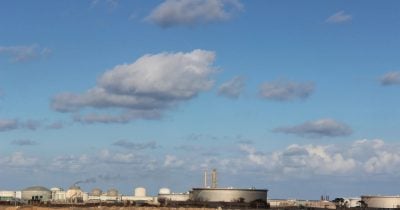
Washington bets on military cooperation to unlock Libyan crude supplies The US is brokering an unlikely détente between Libya's warring factions, and the payoff is already showing up in barrel counts Share Add us on Google by Editorial Team Jun. 17, 2026 Libya is pumping more oil than it has in over a decade, with production hitting 1.43 million barrels per day.
The strategy behind this: get the country’s rival military camps to stop fighting each other and start cooperating. That figure represents a 10-year high for a country whose output has been hostage to civil conflict since the fall of Gaddafi. The target is 2 million barrels per day, a level Libya hasn’t touched since before its 2011 revolution.
A budget, joint exercises, and a lot of handshakes In April 2026, Libya’s rival governments did something they hadn’t managed since 2013: they approved a unified national budget. The price tag was roughly 190 billion Libyan dinars, or about $30 billion, with a significant chunk earmarked for the National Oil Corporation. In mid-April, Libya hosted its first-ever joint military exercises between western and eastern forces in Sirte, the coastal city that has historically served as a dividing line between the two camps.
The exercises were supported by US Africa Command leadership, with key figures including Lt. Gen. John Brennan.
Advertisement Libya also participated in AFRICOM’s Flintlock exercises, marking a milestone in security ties between Tripoli, Benghazi, and Washington. Massad Boulos has also been involved in the advisory framework shaping this approach, adding another layer of Trump administration engagement to the effort. Why oil is the glue holding this together The unified budget is the financial architecture.
The joint military exercises are the security architecture. And the National Oil Corporation is the institution that converts both into actual crude flowing through pipelines and onto tankers. At 1.
43 million barrels per day, Libya is already making a meaningful contribution to global supply. That’s roughly on par with Algeria’s output and puts Libya back in the conversation as a serious OPEC producer after years of being treated as a rounding error in supply models. The Russia factor Russian military presence in Libya, particularly through forces aligned with the eastern faction, has been a persistent concern for Western policymakers.
The Wagner Group and its successor organizations have maintained a footprint in the country, providing muscle for the LNA while giving Moscow a strategic position on NATO’s southern flank. By integrating both Libyan factions into a US-supported security framework, the strategy aims to reduce the demand for Russian military assistance. Eastern commander Khalifa Haftar has cultivated his Russian ties for years, but the budget agreement and joint exercises suggest at least some willingness to test the waters.
Libya’s oil infrastructure needs significant investment to reach the 2 million barrel target. The unified budget allocates money to the NOC, but international expertise and private capital will be essential to close the gap between current production and historical peaks. The spread between 1.
43 million and 2 million barrels per day is roughly 570,000 barrels, enough to meaningfully soften global prices during periods of supply stress, including disruptions around the Strait of Hormuz. Disclosure: This article was edited by Editorial Team. For more information on how we create and review content, see our Editorial Policy.
POLITICS Washington bets on military cooperation to unlock Libyan crude supplies The US is brokering an unlikely détente between Libya's warring factions, and the payoff is already showing up in barrel counts by Editorial Team Just now ago Share Add us on Google Libya is pumping more oil than it has in over a decade, with production hitting 1.43 million barrels per day. The strategy behind this: get the country’s rival military camps to stop fighting each other and start cooperating.
That figure represents a 10-year high for a country whose output has been hostage to civil conflict since the fall of Gaddafi. The target is 2 million barrels per day, a level Libya hasn’t touched since before its 2011 revolution. A budget, joint exercises, and a lot of handshakes In April 2026, Libya’s rival governments did something they hadn’t managed since 2013: they approved a unified national budget.
The price tag was roughly 190 billion Libyan dinars, or about $30 billion, with a significant chunk earmarked for the National Oil Corporation. In mid-April, Libya hosted its first-ever joint military exercises between western and eastern forces in Sirte, the coastal city that has historically served as a dividing line between the two camps. The exercises were supported by US Africa Command leadership, with key figures including Lt.
Gen. John Brennan. Advertisement Libya also participated in AFRICOM’s Flintlock exercises, marking a milestone in security ties be
Đọc thêm từ Tiền số / Crypto

Jordan holds Austria to 1-1 draw in historic FIFA World Cup debut
Jordan's resilient debut signals a rising force in international football, inspiring hope and ambition for underdog nations on the world stage. The post Jordan holds Austria to 1-1 draw in historic FIFA World Cup debut appeared first on Crypto Briefing.

UK inflation rate expected to rise as May 2026 figures loom over Bank of England decision
Rising inflation may delay rate cuts, impacting borrowing costs and investor returns, while energy sectors could benefit from higher prices. The post UK inflation rate expected to rise as May 2026 figures loom over Bank of England decision appeared first on Crypto Briefing.

Kalshi perps volume tops $5.5B as it eyes markets beyond crypto
Kalshi says perpetual futures volume crossed $5.5B in two weeks as it studies more contracts and plans to expand beyond crypto assets later.

Israeli air strikes target southern Lebanon amid ongoing conflict with Hezbollah
The escalation reduces ceasefire prospects and signals potential for broader regional instability, impacting peace negotiations and market dynamics. The post Israeli air strikes target southern Lebanon amid ongoing conflict with Hezbollah appeared first on Crypto Briefing.