US oil inventories fall to precariously low levels amid Iran war disruption
The depletion of US oil reserves amid geopolitical tensions heightens vulnerability to further supply shocks, potentially driving up global prices. The post US oil inventories fall to precariously low levels amid Iran war disruption appeared first on Crypto Briefing.
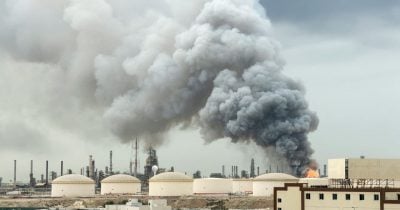
Via jpost.com US oil inventories fall to precariously low levels amid Iran war disruption Commercial crude stocks drop to 409.7 million barrels as Strait of Hormuz disruptions and emergency reserve drawdowns leave America's oil buffer at its thinnest in decades Share Add us on Google by Editorial Team Jul.
29, 2026 America’s oil cupboard is looking dangerously bare. Commercial crude inventories fell to 409.7 million barrels for the week ending July 10, a decline of 1.
7 million barrels from the prior week and a full 6% below the five-year average. The Strategic Petroleum Reserve sits at 349.2 million barrels, a level not seen since 1983.
The Iran conflict, which escalated into a full coalition operation involving the US and Israel beginning in late February, has ripped through global oil supply chains. Global supply losses now exceed 1 billion barrels. The near-closure of the Strait of Hormuz has been the single most devastating supply-side factor.
That narrow waterway between Iran and the Arabian Peninsula normally handles roughly one-fifth of the world’s daily oil consumption, with approximately 15 million barrels per day typically transiting through it. Advertisement Total US crude and petroleum product inventories have dropped to 1.57 billion barrels, the lowest level since 2004.
The International Energy Agency coordinated emergency releases of over 400 million barrels from strategic reserves across member nations. Most of those releases concluded by early July. The IEA’s coordinated release of 400 million barrels was historically unprecedented in scale.
Previous coordinated releases, including during the Libyan civil war in 2011 and after Hurricane Katrina, were measured in tens of millions of barrels. With buffers depleted at both the commercial and strategic levels, any additional disruption would hit a market with almost no shock absorbers left. The end of IEA emergency releases in early July removes the artificial supply floor that had been partially containing prices.
Disclosure: This article was edited by Editorial Team. For more information on how we create and review content, see our Editorial Policy. MACRO US oil inventories fall to precariously low levels amid Iran war disruption Commercial crude stocks drop to 409.
7 million barrels as Strait of Hormuz disruptions and emergency reserve drawdowns leave America's oil buffer at its thinnest in decades by Editorial Team Jul. 29, 2026 Share Add us on Google Via jpost.com America’s oil cupboard is looking dangerously bare.
Commercial crude inventories fell to 409.7 million barrels for the week ending July 10, a decline of 1.7 million barrels from the prior week and a full 6% below the five-year average.
The Strategic Petroleum Reserve sits at 349.2 million barrels, a level not seen since 1983. The Iran conflict, which escalated into a full coalition operation involving the US and Israel beginning in late February, has ripped through global oil supply chains.
Global supply losses now exceed 1 billion barrels. The near-closure of the Strait of Hormuz has been the single most devastating supply-side factor. That narrow waterway between Iran and the Arabian Peninsula normally handles roughly one-fifth of the world’s daily oil consumption, with approximately 15 million barrels per day typically transiting through it.
Advertisement Total US crude and petroleum product inventories have dropped to 1.57 billion barrels, the lowest level since 2004. The International Energy Agency coordinated emergency releases of over 400 million barrels from strategic reserves across member nations.
Most of those releases concluded by early July. The IEA’s coordinated release of 400 million barrels was historically unprecedented in scale. Previous coordinated releases, including during the Libyan civil war in 2011 and after Hurricane Katrina, were measured in tens of millions of barrels.
With buffers depleted at both the commercial and strategic levels, any additional disruption would hit a market with almost no shock absorbers left. The end of IEA emergency releases in early July removes the artificial supply floor that had been partially containing prices. Disclosure: This article was edited by Editorial Team.
For more information on how we create and review content, see our Editorial Policy.
Đọc thêm từ Tiền số / Crypto

Big Tech faces rising financing costs amid AI spending surge
Rising financing costs for Big Tech amid AI investments could strain profitability, impact credit markets, and elevate borrowing risks. The post Big Tech faces rising financing costs amid AI spending surge appeared first on Crypto Briefing.

Microsoft’s AI sovereignty model is quietly reshaping how governments think about tech
Microsoft's AI sovereignty model could redefine global tech policies, emphasizing local control and cultural values over isolationism. The post Microsoft’s AI sovereignty model is quietly reshaping how governments think about tech appeared first on Crypto Briefing.

DoorDash reportedly building delivery drones after receiving FAA approval
DoorDash's drone delivery initiative could reshape the competitive landscape by potentially lowering costs and enhancing delivery efficiency. The post DoorDash reportedly building delivery drones after receiving FAA approval appeared first on Crypto Briefing.

OpenAI provides free AI access to 100,000 researchers through 2027
OpenAI's initiative may accelerate academic advancements but challenges decentralized AI to find unique value beyond cost competitiveness. The post OpenAI provides free AI access to 100,000 researchers through 2027 appeared first on Crypto Briefing.