US-Israel-Lebanon deal: Hezbollah warns of 'civil war'; rejects 'disarmament'
EditionININUSGCCEnglishEnglishहिन्दीमराठीಕನ್ನಡதமிழ்বাংলাമലയാളംతెలుగుગુજરાતીWeatherSign InTOIToday's ePaperLive EditionININUSGCCEnglishEnglishहिन्दीमराठीಕನ್ನಡதமிழ்বাংলাമലയാളംతెలుగుગુજરાતીWeatherSign In TOIToday's ePaperLive NewsWhat is the US-Israel-Lebanon deal? Hezbollah warns o
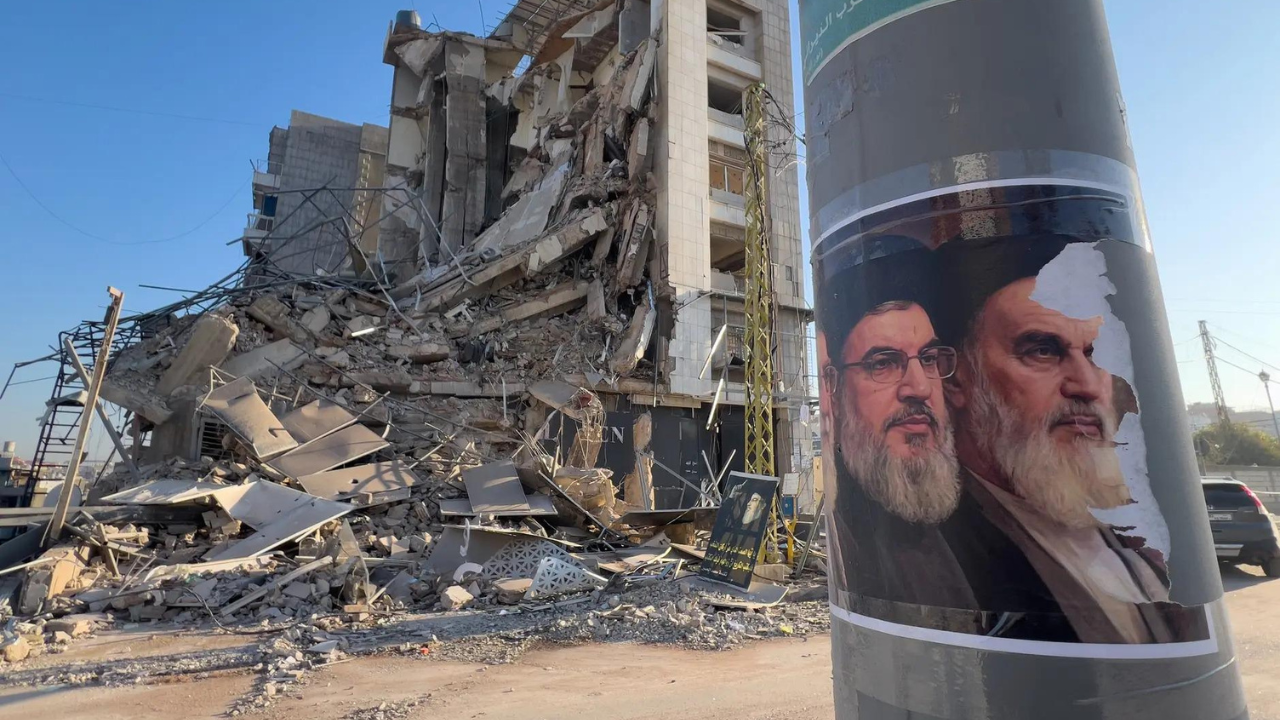
EditionININUSGCCEnglishEnglishहिन्दीमराठीಕನ್ನಡதமிழ்বাংলাമലയാളംతెలుగుગુજરાતીWeatherSign InTOIToday's ePaperLive EditionININUSGCCEnglishEnglishहिन्दीमराठीಕನ್ನಡதமிழ்বাংলাമലയാളംతెలుగుગુજરાતીWeatherSign In TOIToday's ePaperLive NewsWhat is the US-Israel-Lebanon deal? Hezbollah warns of 'civil war' over 'disarmament of non-state armed groups'What is the US-Israel-Lebanon deal? Hezbollah warns of 'civil war' over 'disarmament of non-state armed groups'TOI World Desk / TIMESOFINDIA.
COM / Jun 27, 2026, 07:49 ISTCommentsShareAA+Text SizeSmallMediumLarge Hezbollah warns of 'civil war' over 'disarmament of non-state armed groups' (AP) The US-Israel-Lebanon trilateral framework unveiled on Saturday (local time) calls for the complete and verified disarmament of all "non-state armed groups" across Lebanon as part of a roadmap towards ending decades of conflict, but Hezbollah swiftly rejected the agreement, warning that attempts to enforce it could trigger "civil war."Signed in Washington in the presence of US secretary of state Marco Rubio, the 14-point framework commits Israel and Lebanon to work towards formally ending their state of war through direct negotiations, with the United States acting as mediator and guarantor of implementation.While the document does not explicitly name Hezbollah, it repeatedly commits the Lebanese government to establishing a state monopoly on the use of force by achieving the "complete and verified disarmament of all non-state armed groups" and dismantling their military infrastructure across the country.
The framework also envisages a phased Israeli military redeployment from Lebanese territory, linked to verified disarmament and the deployment of the Lebanese Armed Forces (LAF) in designated pilot zones. A US-supported military coordination group will oversee implementation, while Washington also pledged humanitarian and reconstruction assistance to Lebanon.The agreement says Lebanon will ensure that non-state armed groups have "no military or security role and no armed capabilities anywhere in Lebanon" and reaffirms that only the Lebanese state has the authority to make decisions on war and peace.
What Hezbollah saidHezbollah rejected the US-backed Israel-Lebanon framework, saying it would neither accept the agreement nor give up its weapons.Hassan Fadlallah, a member of Hezbollah's parliamentary bloc, warned that Lebanese authorities would be unable to enforce the agreement "unless they go, with American support, to civil war." He also rejected the direct negotiations between Lebanon and Israel that produced the framework, calling the Washington agreement "an attempt to disrupt the Islamabad path" -- a reference to the parallel US-Iran understanding aimed at ending the wider regional conflict.
Hezbollah supporters took to the streets of Beirut to protest the agreement. Lebanon's state-run National News Agency (NNA) reported that supporters rode motorbikes through central Beirut and along the airport road, while protesters blocked at least one major road with burning tyres.Hezbollah supporters rode through the group's southern Beirut stronghold before heading towards the city centre, chanting slogans.
Lebanese army personnel set up temporary checkpoints across parts of the capital and later dispersed protesters who had blocked the main road leading to Beirut's airport, reopening the route, according to AFP.Hezbollah has consistently opposed proposals requiring it to disarm across Lebanon, maintaining that previous agreements and UN resolutions only require it to withdraw its weapons from areas south of the Litani River near the Israeli border.Read full text of frameworkThe Government of Israel and the Government of Lebanon, with the full support of the United States under President Donald J Trump, affirm their shared goal of achieving lasting peace and security.
As reflected in this Trilateral Framework (“Framework”), and through future agreements, the two countries declare their ambition to end conflict between them, ensure the sovereignty and security of both countries, and establish peaceful neighborly relations between the two countries.Israel and Lebanon affirm the right of each state to exist in peace, and their mutual desire to live in security as neighboring sovereign states. Israel and Lebanon hereby declare their intent to conclusively end the conflict, address its underlying causes, and to therewith formally conclude any state of war between them.
This Framework, reached after multiple rounds of direct negotiations between the parties, builds upon previous successful agreements and understandings, and expresses a determination to make irreversible progress towards the comprehensive resolution of all issues between the two countries. Both countries affirm their intention to resolve these issues as sovereign states through direct bilateral negotiations, with the mediation and support of the United States.The Government of Israel and the Government of Lebanon commit to a reciproca
Đọc thêm từ Thế giới
Barack Obama and Larry David are TV comedy’s most intriguing odd couple
The Obamas have moved on from sober dramas and documentaries to dip their toes in the world of comedy. But is their sketch show funny? And what does this unexpected collaboration mean? Louis Chilton shares his verdict

It’s one of the most talked-about women’s supplements right now – but does inositol live up to the hype?
Social media testimonies are extolling the benefits of inositol for women with PMOS or hormonal acne, but so many claims online often fail to stand up to scrutiny. Katie Rosseinsky asks the experts to sort the viral misinformation from reality

Volkswagen T-Roc: Class action
VW’s newest compact SUV is a winner for all the right reasons, says Sean O’Grady – especially its penchant for nicely weighted, old-fashioned controls

We’re always trying to save Frida Kahlo from commodification – just ask Salma Hayek
Battles have long raged over how the Mexican artist should be represented in the public sphere. As Tate Modern unveils a new exhibition showcasing (some of) her work and the many products that have made her ‘a global brand’, Adam White looks back at the disturbing making of the 2