US-Iran war escalates as fractured diplomacy leaves crypto markets on edge
The ongoing conflict and failed diplomacy heighten geopolitical instability, impacting global markets and increasing crypto's appeal as a hedge. The post US-Iran war escalates as fractured diplomacy leaves crypto markets on edge appeared first on Crypto Briefing.
US-Iran war escalates as fractured diplomacy leaves crypto markets on edge Repeated ceasefire failures and Strait of Hormuz disruptions are pushing investors toward Bitcoin as a potential geopolitical hedge Share Add us on Google by Editorial Team Jul. 13, 2026 The conflict set in motion by the October 7, 2023, Hamas attack on Israel has now drawn the United States and Iran into direct military confrontation, with consequences rippling into the portfolios of crypto investors watching Bitcoin’s every move. US and Israeli airstrikes on Iran began on February 28, 2026.
Since then, the conflict has followed a pattern of strikes, retaliation, brief pause, and repeat. A ceasefire playbook that keeps failing A two-week ceasefire was declared in early April 2026. A memorandum of understanding followed on June 14–17, 2026, brokered with involvement from mediating countries including Pakistan and Qatar.
That, too, collapsed shortly after it was signed. Advertisement By July 2026, Iranian missile exchanges and US counter-responses had resumed, confirming that the June agreement was more a pause than a resolution. The Strait of Hormuz has faced repeated disruption throughout the conflict, adding an energy price dimension to an already complicated geopolitical picture.
What the war means for crypto markets Bitcoin traded at approximately $74,335 in April 2026, a period that coincided with the brief ceasefire window. Ether, Solana, and Dogecoin all exhibited sharper volatility during the same stretch of military developments, while Bitcoin held comparatively steadier ground. The initial market reaction to escalating strikes was a risk-off selloff across crypto assets, particularly during missile strikes reported in May.
Macro strategist Mark Connors has pointed to a longer-term thesis: prolonged conflict tends to push governments toward higher spending and expanded liquidity measures. That kind of fiscal expansion historically puts downward pressure on fiat currencies and can increase the appeal of scarce, non-sovereign assets. Bitcoin, with its fixed supply and independence from any central bank, fits that description.
What investors should watch from here The Strait of Hormuz situation deserves particular attention. Any prolonged closure or significant disruption to oil flows through that corridor would push energy prices higher globally, accelerate inflationary pressure, and likely trigger central bank responses that would affect liquidity conditions across all markets, crypto included. The divergence between Bitcoin and altcoins during stress events is a useful signal.
When Bitcoin holds while Ether and Solana drop harder, it suggests institutional rotation toward the asset perceived as most defensible, not broad crypto optimism. Qatar and Pakistan have both engaged as potential intermediaries. However, the pattern of June’s memorandum collapsing almost immediately after signing suggests that any near-term agreement would face an extremely high bar to hold.
Disclosure: This article was edited by Editorial Team. For more information on how we create and review content, see our Editorial Policy. MACRO US-Iran war escalates as fractured diplomacy leaves crypto markets on edge Repeated ceasefire failures and Strait of Hormuz disruptions are pushing investors toward Bitcoin as a potential geopolitical hedge by Editorial Team Jul.
13, 2026 Share Add us on Google The conflict set in motion by the October 7, 2023, Hamas attack on Israel has now drawn the United States and Iran into direct military confrontation, with consequences rippling into the portfolios of crypto investors watching Bitcoin’s every move. US and Israeli airstrikes on Iran began on February 28, 2026. Since then, the conflict has followed a pattern of strikes, retaliation, brief pause, and repeat.
A ceasefire playbook that keeps failing A two-week ceasefire was declared in early April 2026. A memorandum of understanding followed on June 14–17, 2026, brokered with involvement from mediating countries including Pakistan and Qatar. That, too, collapsed shortly after it was signed.
Advertisement By July 2026, Iranian missile exchanges and US counter-responses had resumed, confirming that the June agreement was more a pause than a resolution. The Strait of Hormuz has faced repeated disruption throughout the conflict, adding an energy price dimension to an already complicated geopolitical picture. What the war means for crypto markets Bitcoin traded at approximately $74,335 in April 2026, a period that coincided with the brief ceasefire window.
Ether, Solana, and Dogecoin all exhibited sharper volatility during the same stretch of military developments, while Bitcoin held comparatively steadier ground. The initial market reaction to escalating strikes was a risk-off selloff across crypto assets, particularly during missile strikes reported in May. Macro strategist Mark Connors has pointed to a longer-term thesis: prolonged conflict tends to push governments towar
Đọc thêm từ Tiền số / Crypto

US attacks IRGC sites on Kish Island amid regional tensions
The attack risks escalating U.S.-Iran tensions, potentially destabilizing the region and impacting global markets and diplomatic relations. The post US attacks IRGC sites on Kish Island amid regional tensions appeared first on Crypto Briefing.
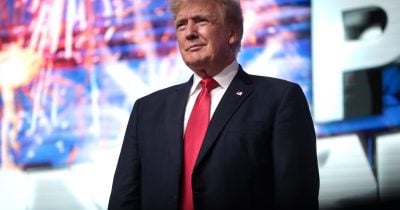
US launches new airstrikes in Iran despite Trump hinting at possible deal
The U.S. airstrikes may exacerbate regional instability, impacting Iran's political future and complicating diplomatic efforts. The post US launches new airstrikes in Iran despite Trump hinting at possible deal appeared first on Crypto Briefing.

Bahrain claims interception of Iranian air attacks amid regional tensions
The interception claim, if true, may stabilize regional tensions, reducing the likelihood of Iran closing its airspace amid ongoing conflicts. The post Bahrain claims interception of Iranian air attacks amid regional tensions appeared first on Crypto Briefing.
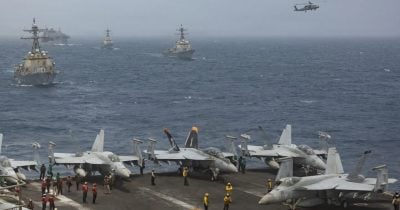
Gold declines as US rate hike expectations rise amid Strait of Hormuz tensions
Rising US rate hike expectations amid geopolitical tensions could weaken gold's appeal, impacting global markets and inflation dynamics. The post Gold declines as US rate hike expectations rise amid Strait of Hormuz tensions appeared first on Crypto Briefing.