US housing starts collapse to lowest level since COVID in May
The sharp decline in US housing starts signals potential economic slowdown, impacting construction jobs and housing affordability amid rising costs. The post US housing starts collapse to lowest level since COVID in May appeared first on Crypto Briefing.
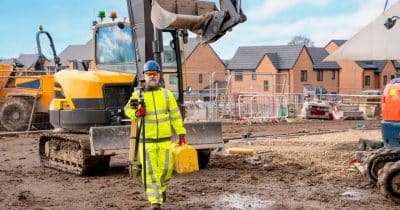
US housing starts collapse to lowest level since COVID in May New construction plunges 15.4% in a single month as mortgage rates and affordability woes choke the building pipeline Share Add us on Google by Editorial Team Jun. 16, 2026 The US housing market just hit a wall.
Privately-owned housing starts plummeted to a seasonally adjusted annual rate of 1,177,000 units in May, according to data released by the US Census Bureau and HUD on June 16. That’s a 15.4% nosedive from April’s revised figure of 1,392,000 units, and the weakest reading since the early days of the COVID-19 pandemic brought construction to a standstill.
To put that decline in perspective: the housing sector shed more than 200,000 units of annualized construction activity in a single month. March had clocked in at 1,502,000 units, meaning the trajectory from March to May represents a stunning deterioration in just two months. Advertisement The breakdown tells a broad story Single-family starts fell to 882,000 units, a 1.
9% decline from April. The real carnage showed up in multi-family construction. Starts for buildings with five or more units dropped to just 284,000 in May.
Building permits, often viewed as a leading indicator for future construction, also slipped. May permits came in at 1,413,000, down 0.7% from April.
April’s housing starts figure itself came with an asterisk. Revisions placed the number in a range between 1,392,000 and 1,465,000, depending on which revision you reference. Why this is happening Mortgage rates remain stubbornly planted above 6%.
A $400,000 home at a 3% rate costs roughly $1,686 per month in principal and interest. At 6.5%, that same house runs about $2,528.
Same house, same neighborhood, nearly $850 more per month. Labor shortages continue to plague the construction industry, pushing project timelines longer and costs higher. Material expenses, while off their pandemic peaks, haven’t returned to pre-2020 levels either.
Disclosure: This article was edited by Editorial Team. For more information on how we create and review content, see our Editorial Policy. MACRO US housing starts collapse to lowest level since COVID in May New construction plunges 15.
4% in a single month as mortgage rates and affordability woes choke the building pipeline by Editorial Team Just now ago Share Add us on Google The US housing market just hit a wall. Privately-owned housing starts plummeted to a seasonally adjusted annual rate of 1,177,000 units in May, according to data released by the US Census Bureau and HUD on June 16. That’s a 15.
4% nosedive from April’s revised figure of 1,392,000 units, and the weakest reading since the early days of the COVID-19 pandemic brought construction to a standstill. To put that decline in perspective: the housing sector shed more than 200,000 units of annualized construction activity in a single month. March had clocked in at 1,502,000 units, meaning the trajectory from March to May represents a stunning deterioration in just two months.
Advertisement The breakdown tells a broad story Single-family starts fell to 882,000 units, a 1.9% decline from April. The real carnage showed up in multi-family construction.
Starts for buildings with five or more units dropped to just 284,000 in May. Building permits, often viewed as a leading indicator for future construction, also slipped. May permits came in at 1,413,000, down 0.
7% from April. April’s housing starts figure itself came with an asterisk. Revisions placed the number in a range between 1,392,000 and 1,465,000, depending on which revision you reference.
Why this is happening Mortgage rates remain stubbornly planted above 6%. A $400,000 home at a 3% rate costs roughly $1,686 per month in principal and interest. At 6.
5%, that same house runs about $2,528. Same house, same neighborhood, nearly $850 more per month. Labor shortages continue to plague the construction industry, pushing project timelines longer and costs higher.
Material expenses, while off their pandemic peaks, haven’t returned to pre-2020 levels either. Disclosure: This article was edited by Editorial Team. For more information on how we create and review content, see our Editorial Policy.
Đọc thêm từ Tiền số / Crypto

HIVE Digital Technologies highlights early AI factory development with massive Toronto gigafactory plans
HIVE's AI gigafactory plans could bolster Canada's tech sovereignty and renewable energy use, reshaping the AI infrastructure landscape. The post HIVE Digital Technologies highlights early AI factory development with massive Toronto gigafactory plans appeared first on Crypto Brie

German investor confidence turns positive as ZEW index hits 10.5
The positive shift in German investor confidence could boost European markets, but remains vulnerable to geopolitical and economic uncertainties. The post German investor confidence turns positive as ZEW index hits 10.5 appeared first on Crypto Briefing.
Bittensor pulls back after 27% surge: Bearish reversal or time to buy TAO’s dip?
TAO's consolidation holds as the AI sector rotation and the liquidity supports its upside case.

Inveniam to acquire MANTRA, combining tokenized asset infrastructure with AI-ready private market data
Inveniam Capital Partners announces acquisition of MANTRA and expansion of institutional blockchain infrastructure. Inveniam Capital Partners today announced plans to acquire MANTRA and its affiliated entities in a transaction expected to close by June 30, 2026. The agreement fol