US and Iran sign initial peace deal, lifting oil sanctions and reopening Strait of Hormuz
The deal's potential to stabilize global markets and reshape geopolitical alliances hinges on successful nuclear negotiations within 60 days. The post US and Iran sign initial peace deal, lifting oil sanctions and reopening Strait of Hormuz appeared first on Crypto Briefing.
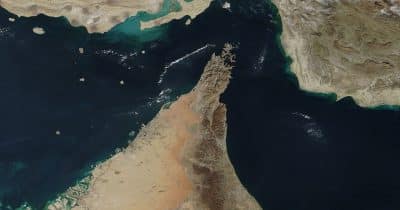
US and Iran sign initial peace deal, lifting oil sanctions and reopening Strait of Hormuz The 14-point memorandum of understanding ends nearly a year of hostilities and sets a 60-day window for nuclear negotiations, sending oil prices to three-month lows and Bitcoin past $65K Share Add us on Google by Editorial Team Jun. 18, 2026 The US and Iran have signed a 14-point memorandum of understanding designed to end nearly a year of military conflict between the two nations. The deal, signed on June 17 at the Palace of Versailles by President Donald Trump and Iranian President Masoud Pezeshkian, took immediate effect and includes two provisions that matter enormously for global markets: the reopening of the Strait of Hormuz for commercial shipping and the lifting of US sanctions on Iranian oil exports.
Oil prices promptly fell to three-month lows. Global stock markets hit record highs. And Bitcoin surged past $65,000.
What the deal actually says The MoU is an interim framework, not a final treaty. The agreement halts active military operations across multiple fronts, including Lebanon, and establishes a 60-day negotiation window to tackle the genuinely hard stuff: Iran’s nuclear program, uranium enrichment levels, and the broader architecture of a lasting peace. Iran will be allowed to sell oil freely once sanctions are lifted.
The Strait of Hormuz, through which roughly 20% of the world’s oil passes on any given day, will reopen to commercial shipping immediately. Advertisement The deal contemplates the potential release of up to $25 billion in frozen Iranian assets. A proposed $300 billion reconstruction fund is part of the broader framework, though the details of who funds it and how remain subjects for the 60-day negotiation period.
Iran has committed to not developing nuclear weapons under the terms of the agreement. An official ceremony had been planned for June 19, but it was canceled. The signing at Versailles on June 17 served as the operative event.
Why crypto markets are reacting Bitcoin’s move past $65,000 reflects a broader pattern that crypto traders know well. Geopolitical de-escalation tends to push capital toward risk assets, and crypto sits firmly in that category for most institutional allocators. The oil angle adds another layer.
Cheaper energy prices act as a de facto stimulus for the global economy, with lower input costs for businesses and lower fuel costs for consumers. Lifting US sanctions on Iranian oil exports could eventually reshape how certain countries interact with the dollar-denominated financial system. Iran has historically explored alternative payment rails, including crypto-adjacent mechanisms, to circumvent sanctions.
What this means for investors The 60-day negotiation window is the number to circle on your calendar. Markets have priced in the optimism of the initial deal, but the nuclear negotiations could easily produce the kind of headline risk that sends prices in the opposite direction. The $25 billion in frozen assets and the proposed $300 billion reconstruction fund represent real capital that will need to move through the global financial system if the deal holds.
The 60-day window means we should know by mid-August whether this framework has legs. Disclosure: This article was edited by Editorial Team. For more information on how we create and review content, see our Editorial Policy.
MACRO US and Iran sign initial peace deal, lifting oil sanctions and reopening Strait of Hormuz The 14-point memorandum of understanding ends nearly a year of hostilities and sets a 60-day window for nuclear negotiations, sending oil prices to three-month lows and Bitcoin past $65K by Editorial Team Jun. 18, 2026 Share Add us on Google The US and Iran have signed a 14-point memorandum of understanding designed to end nearly a year of military conflict between the two nations. The deal, signed on June 17 at the Palace of Versailles by President Donald Trump and Iranian President Masoud Pezeshkian, took immediate effect and includes two provisions that matter enormously for global markets: the reopening of the Strait of Hormuz for commercial shipping and the lifting of US sanctions on Iranian oil exports.
Oil prices promptly fell to three-month lows. Global stock markets hit record highs. And Bitcoin surged past $65,000.
What the deal actually says The MoU is an interim framework, not a final treaty. The agreement halts active military operations across multiple fronts, including Lebanon, and establishes a 60-day negotiation window to tackle the genuinely hard stuff: Iran’s nuclear program, uranium enrichment levels, and the broader architecture of a lasting peace. Iran will be allowed to sell oil freely once sanctions are lifted.
The Strait of Hormuz, through which roughly 20% of the world’s oil passes on any given day, will reopen to commercial shipping immediately. Advertisement The deal contemplates the potential release of up to $25 billion in frozen Iranian assets. A proposed $300
Đọc thêm từ Tiền số / Crypto
Google fought US warrant for user data on Capitol riot searches
Google's legal battle underscores the ongoing struggle between tech firms and governments over privacy, potentially reshaping data policies. The post Google fought US warrant for user data on Capitol riot searches appeared first on Crypto Briefing.
Europe's Crypto Firms Face Squeeze as MiCA Transition Period End Looms
As the MiCA grace period closes, only a fraction of registered firms hold full licenses, setting up the prospect of a wave of consolidation.

AMI Labs’ Yann LeCun makes the case for ‘world models’ as AI’s next frontier at VivaTech
LeCun's push for 'world models' in AI could redefine tech investment, emphasizing real-world interaction over language model scaling. The post AMI Labs’ Yann LeCun makes the case for ‘world models’ as AI’s next frontier at VivaTech appeared first on Crypto Briefing.

Accenture shares plunge 18% on lowered revenue outlook
Accenture's revenue outlook cut highlights potential sector-wide impacts from geopolitical tensions and AI's disruptive influence on consulting. The post Accenture shares plunge 18% on lowered revenue outlook appeared first on Crypto Briefing.