UK lenders accuse Bank of England of flawed capital comparison
UK banks' challenge to BoE's capital analysis highlights ongoing tensions in regulatory standards, potentially impacting global financial stability. The post UK lenders accuse Bank of England of flawed capital comparison appeared first on Crypto Briefing.

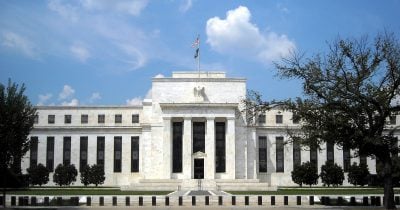
Photo: Doyle of London / Wikimedia Commons / CC BY-SA 4.0 (https://creativecommons.org/licenses/by-sa/4.
0) UK lenders accuse Bank of England of flawed capital comparison Britain's biggest banks say the BoE is comparing apples to oranges when stacking UK capital rules against US requirements Share Add us on Google by Editorial Team Jul. 27, 2026 Britain’s largest banks have a bone to pick with the Bank of England, and it is not a small one. Major lenders including Barclays, HSBC, and Lloyds are pushing back hard against a Bank of England analysis they say fundamentally misrepresents how UK capital requirements stack up against those faced by their American competitors.
What the Bank of England actually said The BoE’s Financial Policy Committee published its December 2025 capital review, cutting the benchmark for Tier 1 capital from 14% to around 13% of risk-weighted assets. That is the first reduction in a decade, walking back a threshold that had been in place since 2015. The BoE’s review also included cross-jurisdictional comparisons designed to show where UK requirements sit relative to other major banking systems, particularly the United States.
The central bank’s position is that simple cross-border comparisons are misleading without adjustments, and that once you make those adjustments, UK requirements do not look dramatically out of line with US rules. Advertisement UK banks read that conclusion differently. Their argument is that the BoE’s adjusted figures actually understate how stringent UK requirements are relative to the US, not the other way around.
The methodology dispute, unpacked The debate hinges on how risk-weighted assets are calculated in each country. RWAs are not a straightforward measure of a bank’s total assets. They are adjusted to reflect the riskiness of different asset classes, so a mortgage on a stable residential property carries less weight than, say, a leveraged loan to a highly indebted company.
The problem is that the US and UK apply different rules for calculating those weights. UK banks argue that the BoE’s comparison uses figures that do not fully account for these structural differences, effectively making American banks look more burdened than they actually are, or making British banks look lighter than they feel from the inside. Major institutions have contended that the analysis disregards the competitive advantages held by American banks, particularly around capital access and the structural features of the US financial system that allow banks there to operate with seemingly comparable ratios while facing less real-world constraint.
A pattern of pushback The December 2025 review was not the first flashpoint. In February 2026, UK banks resisted BoE proposals to further cut capital buffers as a mechanism to promote lending into the broader economy. That resistance was notable: banks typically welcome regulatory loosening.
The fact that major lenders pushed back against reductions signals something more nuanced than simple opposition to oversight. Disclosure: This article was edited by Editorial Team. For more information on how we create and review content, see our Editorial Policy.
MACRO UK lenders accuse Bank of England of flawed capital comparison Britain's biggest banks say the BoE is comparing apples to oranges when stacking UK capital rules against US requirements by Editorial Team Jul. 27, 2026 Share Add us on Google Photo: Doyle of London / Wikimedia Commons / CC BY-SA 4.0 (https://creativecommons.
org/licenses/by-sa/4.0) Britain’s largest banks have a bone to pick with the Bank of England, and it is not a small one. Major lenders including Barclays, HSBC, and Lloyds are pushing back hard against a Bank of England analysis they say fundamentally misrepresents how UK capital requirements stack up against those faced by their American competitors.
What the Bank of England actually said The BoE’s Financial Policy Committee published its December 2025 capital review, cutting the benchmark for Tier 1 capital from 14% to around 13% of risk-weighted assets. That is the first reduction in a decade, walking back a threshold that had been in place since 2015. The BoE’s review also included cross-jurisdictional comparisons designed to show where UK requirements sit relative to other major banking systems, particularly the United States.
The central bank’s position is that simple cross-border comparisons are misleading without adjustments, and that once you make those adjustments, UK requirements do not look dramatically out of line with US rules. Advertisement UK banks read that conclusion differently. Their argument is that the BoE’s adjusted figures actually understate how stringent UK requirements are relative to the US, not the other way around.
The methodology dispute, unpacked The debate hinges on how risk-weighted assets are calculated in each country. RWAs are not a straightforward measure of a bank’s total assets. They are adjusted to reflect the riskiness of diff
Đọc thêm từ Tiền số / Crypto

US-Iran peace optimism boosts market risk appetite amid ongoing tensions
Market optimism reflects potential economic benefits of US-Iran peace, but fragile diplomacy and military tensions pose significant risks. The post US-Iran peace optimism boosts market risk appetite amid ongoing tensions appeared first on Crypto Briefing.

South Korea seeks Silicon Valley VC backing as NPS signs investment MOUs
South Korea has moved to deepen venture capital ties with Silicon Valley as President Lee Jae-myung has urged six of the world’s largest venture capital firms to invest in Korean startups while the National Pension Service has signed long-term investment…

Trump administration launches global partnership for 6G development, aiming to counter China’s telecom influence
The coalition's efforts could redefine global telecom standards, impacting market dynamics and technological leadership for decades. The post Trump administration launches global partnership for 6G development, aiming to counter China’s telecom influence appeared first on Crypto
Federal Reserve’s inflation stance may lower long-term bond yields, and crypto markets are paying attention
The Fed's strict inflation policy could lower bond yields, impacting mortgage rates and boosting crypto by reducing the opportunity cost of holding it. The post Federal Reserve’s inflation stance may lower long-term bond yields, and crypto markets are paying attention appeared fi