Trump’s cuts to Bears Ears and Grand Staircase-Escalante are part of a century-old pattern
The government has recognized this land’s importance longer than almost any place it manages
President Donald Trump signed proclamations on July 13, 2026, cutting the size of Utah’s Bears Ears and Grand Staircase-Escalante national monuments by roughly 90% – meaning nearly 3 million acres will lose monument status and revert to ordinary public lands management in September. The Antiquities Act of 1906 requires presidents to use proclamations to establish or modify national monuments.The cuts followed a long campaign by Utah’s Republican leadership to remove the designation and reopen the land for mining.
Gov. Spencer Cox and members of the state’s congressional delegation stood with Trump at the signing, and Sen. Mike Lee said he had been working toward the reduction for roughly 18 months.
They argue that the original monuments were far larger than the Antiquities Act allows, since the law limits a monument to the “smallest area compatible” with protecting the objects inside it. Grand Staircase-Escalante was designated by Bill Clinton in 1996, and Bears Ears by Barack Obama in 2016. Cutting the monuments’ size opens the excluded land to mining.
The Bears Ears proclamation points to the minerals underneath, including copper and uranium, as critical to national security.The tribal nations that consider these lands sacred say they were not consulted. The Grand Staircase-Escalante Inter-Tribal Coalition condemned what it called a move to “virtually eliminate” the monuments.
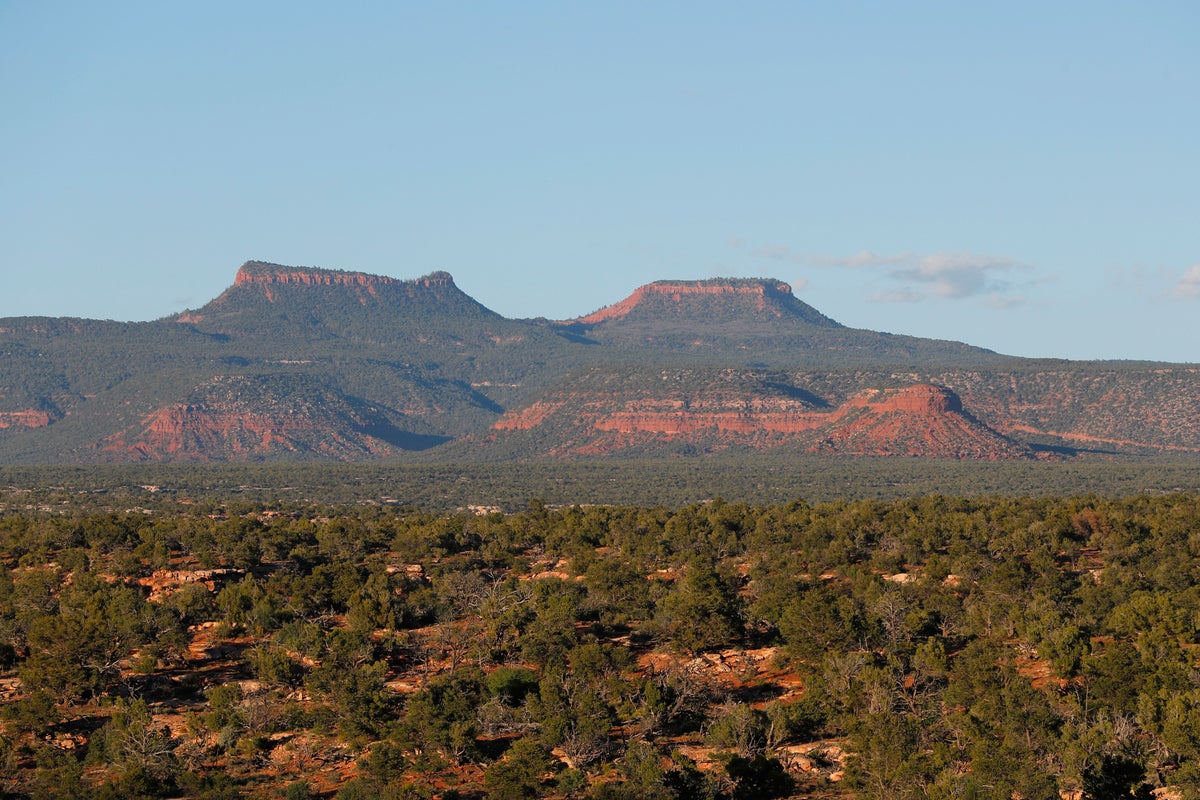
open image in galleryTrump signed proclamations on July 13, 2026, cutting the size of Utah’s Bears Ears and Grand Staircase-Escalante national monuments by roughly 90% (AFP via Getty Images)As a scholar of Native American and Indigenous Studies I see this decision as part of a pattern that is more than a century old: the United States repeatedly acknowledges that these lands are sacred. Yet, that recognition never comes with lasting protections.What makes these places sacredBears Ears takes its name from twin buttes that resemble the head and ears of a bear rising above the canyon country of southeastern Utah.
The nations that hold the land sacred each know the name Bears Ears in their own languages: Hoon’Naqvut in Hopi, Shash Jaa’ in Navajo, Kwiyagatu Nukavachi in Ute, and Ansh An Lashokdiwe in Zuni.For the Pueblo nations among them, the Hopi and Zuni, Bears Ears is inseparable from their own origin stories. The Zuni account of their origin holds that people came up into this world from beneath it, arriving in the Grand Canyon, and that the long migration afterward carried them across the plateau and into the Bears Ears country.
The Zuni built villages, shrines and altars in that country, and what they built stayed sacred. “Once those structures were built, they were consecrated,” Jim Enote, a Zuni tribal member and former director of the A:shiwi A:wan Museum, told National Geographic in 2018. “Once they’re consecrated they become sacred forever.
We never consider them abandoned.” The Zuni still return, making pilgrimages to the region to affirm what their oral history tells them, reading petroglyphs – images carved into the rock by their ancestors – that match those at their present-day home of Zuni Pueblo in New Mexico.Anthropologists working with the Kaibab Paiute tribe and the monument’s own staff reported that Southern Paiutes understand their traditional lands as a “holy land” where the Creator originally placed them, and that Grand Staircase is part of it.
The bond, the tribe believes, was established at Creation and passes to every generation that follows. The federal government funded that research.The practices continue across Bears Ears.
Members of the five nations gather ceremonial plants, minerals and water, and cut herbs, firewood and cedar poles for ceremonies, as they have for generations. A 2021 study in the Proceedings of the National Academy of Sciences found that at least 31 culturally significant species, among them the Four Corners potato, grow abundantly at the ancient habitation sites and are rare elsewhere, evidence that the people who lived there planted them. Each summer, runners carry prayers more than 50 miles from the town of Bluff, Utah, to the high country below the buttes, and the White Mesa Ute community beside the monument holds its Bear Dance each year.
Southern Paiutes still travel to ancestral sites across Grand Staircase for ceremonies, prayer and gathering, and they understand the plants and water of the Holy Land as living beings, able to speak to people and willing to give life to them.Not a point on a mapBoth monuments also hold a history of refuge. In the 1860s, the U.
S. Army forced the Diné, also known as the Navajo, from the Four Corners country where the borders of present-day Utah, Colorado, Arizona and New Mexico meet, marching thousands of people more than 300 miles (480 km) east to Bosque Redondo in what became known as the Long Walk.Families who evaded the removal hid in the Bears Ears canyons, where they found deer and roots for food and plants for medicine.
The Paiute, whose sacred p
Đọc thêm từ Thế giới

Lisa Nandy’s reappointment to the DCMS welcomed by Betting and Gaming Council
The UK's Betting and Gaming Council pointed to Nandy’s track record on the regulated gambling sector

Why Ukraine struck Wildberries, Russia’s largest online marketplace
Kyiv’s drones first hit the sites over the weekend in Elektrostal, just east of Moscow, and in the Tambov region, killing eight people and injuring scores more.
Tensions reportedly growing after Markwayne Mullin made decisions without Trump’s approval
White House is already mad at DHS head Markwayne Mullin just months into the job: report
Houthi attacks raise fears of wider Middle East conflict and more global economic damage
The Iran-backed group in Yemen has threatened to target Saudi vessels in a vital shipping route.