Trump prefers US exit from USMCA trade pact, sends mixed signals on renewal deadline
Trump's stance on USMCA renewal could destabilize North American trade, leading to market volatility and potential tariff escalations. The post Trump prefers US exit from USMCA trade pact, sends mixed signals on renewal deadline appeared first on Crypto Briefing.
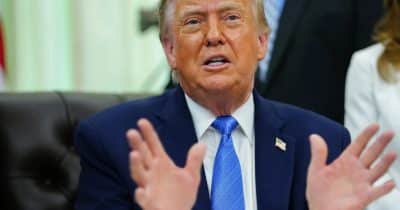
Trump prefers US exit from USMCA trade pact, sends mixed signals on renewal deadline The president says he's 'not looking to renew' the trilateral trade agreement that governs roughly $2 trillion in annual commerce, but non-renewal wouldn't kill the deal immediately. Share Add us on Google by Editorial Team Jun. 17, 2026 President Donald Trump declared on June 11 that the US should not renew the US-Mexico-Canada Agreement, the trilateral trade pact that replaced NAFTA and governs roughly $2 trillion in annual trade among the three North American economies.
The statement lands less than three weeks before the July 1, 2026 review deadline, a date baked into the agreement when it first took effect in 2020. What Trump actually said, and what it means During remarks on June 11, Trump said he is “not looking to renew” the USMCA. He argued that the US has little need for Canadian or Mexican goods and that the country would perform better independently.
Advertisement Non-renewal doesn’t mean the agreement vanishes overnight. The USMCA was designed with a six-year review cycle, and if the parties don’t formally renew it by the deadline, the pact shifts into a series of annual reviews that can stretch for up to a decade. Even if Trump refuses to sign off on renewal, the agreement could technically limp along until 2036 before actually expiring.
Trump also sent mixed signals during his remarks, engaging in what he described as ongoing discussions with Canadian and Mexican leaders while simultaneously suggesting the US might walk away. The US Trade Representative has indicated the US could withdraw entirely if terms prove unsatisfactory, a negotiating posture Trump has deployed in previous trade disputes. The stakes behind $2 trillion in trade The USMCA is the framework underpinning approximately $2 trillion in annual trade among the US, Canada, and Mexico.
The agreement covers everything from automotive manufacturing rules to agricultural exports to digital commerce provisions. It was specifically designed to modernize NAFTA’s aging provisions while giving each country periodic opportunities to renegotiate terms through that six-year review mechanism. Canada has requested a renewal of the USMCA for an additional 16 years, signaling that Ottawa views the pact as foundational to its economic relationship with the US.
Options available at this juncture include a full 16-year renewal extending to 2042, modifications to existing terms, or an automatic shift to annual reviews if consensus is not reached. What this means for investors Trump’s comments did not reference Bitcoin, stablecoins, or blockchain technology in any capacity. Short-term volatility in equities and currencies is the most immediate risk.
The US dollar, Canadian dollar, and Mexican peso all react to USMCA headlines. The agreement currently sets rules that limit arbitrary tariff escalation among the three countries. Without it, or with a weakened version limping through annual reviews, the door opens for more aggressive unilateral tariff actions.
The July 1 deadline is the next concrete milestone to watch. If Trump’s rhetoric hardens into a formal refusal to renew, expect market reactions across asset classes as traders reprice the risk of a North American trade framework. Disclosure: This article was edited by Editorial Team.
For more information on how we create and review content, see our Editorial Policy. MACRO Trump prefers US exit from USMCA trade pact, sends mixed signals on renewal deadline The president says he's 'not looking to renew' the trilateral trade agreement that governs roughly $2 trillion in annual commerce, but non-renewal wouldn't kill the deal immediately. by Editorial Team Just now ago Share Add us on Google President Donald Trump declared on June 11 that the US should not renew the US-Mexico-Canada Agreement, the trilateral trade pact that replaced NAFTA and governs roughly $2 trillion in annual trade among the three North American economies.
The statement lands less than three weeks before the July 1, 2026 review deadline, a date baked into the agreement when it first took effect in 2020. What Trump actually said, and what it means During remarks on June 11, Trump said he is “not looking to renew” the USMCA. He argued that the US has little need for Canadian or Mexican goods and that the country would perform better independently.
Advertisement Non-renewal doesn’t mean the agreement vanishes overnight. The USMCA was designed with a six-year review cycle, and if the parties don’t formally renew it by the deadline, the pact shifts into a series of annual reviews that can stretch for up to a decade. Even if Trump refuses to sign off on renewal, the agreement could technically limp along until 2036 before actually expiring.
Trump also sent mixed signals during his remarks, engaging in what he described as ongoing discussions with Canadian and Mexican leaders while simultaneously suggesting the US might walk away. The US Trade Representa
Đọc thêm từ Tiền số / Crypto

ORE smart contract bug let attacker drain 25.5 SOL from staking program
The incident underscores the critical need for rigorous security audits in DeFi, highlighting vulnerabilities even in actively managed protocols. The post ORE smart contract bug let attacker drain 25.5 SOL from staking program appeared first on Crypto Briefing.

England asserts control early against Croatia in World Cup clash
England's early dominance highlights their tactical prowess, but defensive lapses suggest vulnerabilities that could impact future matches. The post England asserts control early against Croatia in World Cup clash appeared first on Crypto Briefing.

OpenAI joins push for safety testing of advanced AI models
The increased government involvement in AI safety testing signals a shift towards more regulated oversight, impacting future AI innovation dynamics. The post OpenAI joins push for safety testing of advanced AI models appeared first on Crypto Briefing.
FOMC holds interest rates steady as dot plot reveals hawkish shift under new Chair Warsh
The hawkish shift signals potential challenges for speculative investments, as higher rates may drive investors toward safer assets. The post FOMC holds interest rates steady as dot plot reveals hawkish shift under new Chair Warsh appeared first on Crypto Briefing.