Trump orders massive military response against Iran if assassinated
Trump's directive risks escalating US-Iran tensions, potentially destabilizing global markets and inviting regulatory scrutiny on prediction platforms. The post Trump orders massive military response against Iran if assassinated appeared first on Crypto Briefing.
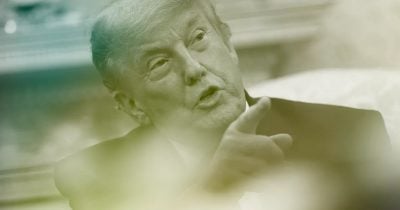
Trump orders massive military response against Iran if assassinated Standing orders to 'obliterate' Iran resurface as Israeli intelligence warns of fresh assassination plot targeting the president Share Add us on Google by Editorial Team Jul. 10, 2026 President Trump has reportedly issued standing military orders directing an unprecedented US strike against Iran in the event of his assassination, a directive that has taken on renewed urgency after Israeli intelligence flagged a fresh Iranian plot targeting him as recently as July 2026. The orders, which Trump first articulated publicly in February 2025, amount to a geopolitical dead man’s switch.
If anything happens to him at Iran’s hands, the response would be total. His word, not ours: “obliterate.” The standing order and its escalation Trump initially laid out the military response framework in early 2025, during executive order signings and public remarks that left little room for diplomatic ambiguity.
The message to Tehran was straightforward: any assassination attempt would trigger what he described as a “maximum-force” military response. Advertisement In January 2026, Trump reaffirmed the stance, claiming Iran would face “total destruction” if any harm came to him. The threats trace a direct line back to January 2020, when a US drone strike killed Iranian General Qasem Soleimani, the commander of Iran’s Quds Force.
Tehran has never let that go. Iran’s leadership has repeatedly framed retaliation against Trump personally as unfinished business. Then on July 6, 2026, Israeli intelligence reportedly warned US officials of a new Iranian plot specifically targeting Trump.
Why this matters beyond the obvious Prediction markets, the blockchain-based platforms where users wager on real-world outcomes, have seen considerable trading activity around Iran-related scenarios. Bets on regime change, military strikes, and broader geopolitical outcomes in the region have attracted substantial volumes, particularly throughout 2026. The Commodity Futures Trading Commission has historically taken a dim view of prediction markets that touch on warfare and assassination, and a surge in Iran-related contracts could invite fresh scrutiny of platforms facilitating those bets.
The broader geopolitical chessboard Trump’s public articulation of these standing orders serves a dual purpose. It functions as deterrence, designed to make Tehran calculate that the cost of any operation against him would be existential. But it also locks in a response framework that limits the flexibility of military and diplomatic advisors.
Prediction market platforms could face a particularly interesting moment. If trading volumes on Iran-related contracts spike further, regulatory intervention becomes more likely, which could affect the broader DeFi and prediction market ecosystem. Polymarket, Kalshi, and similar platforms have spent years building legitimacy.
Contracts that look like they’re betting on whether a president gets assassinated could undo a lot of that work overnight. Disclosure: This article was edited by Editorial Team. For more information on how we create and review content, see our Editorial Policy.
MACRO Trump orders massive military response against Iran if assassinated Standing orders to 'obliterate' Iran resurface as Israeli intelligence warns of fresh assassination plot targeting the president by Editorial Team Jul. 10, 2026 Share Add us on Google President Trump has reportedly issued standing military orders directing an unprecedented US strike against Iran in the event of his assassination, a directive that has taken on renewed urgency after Israeli intelligence flagged a fresh Iranian plot targeting him as recently as July 2026. The orders, which Trump first articulated publicly in February 2025, amount to a geopolitical dead man’s switch.
If anything happens to him at Iran’s hands, the response would be total. His word, not ours: “obliterate.” The standing order and its escalation Trump initially laid out the military response framework in early 2025, during executive order signings and public remarks that left little room for diplomatic ambiguity.
The message to Tehran was straightforward: any assassination attempt would trigger what he described as a “maximum-force” military response. Advertisement In January 2026, Trump reaffirmed the stance, claiming Iran would face “total destruction” if any harm came to him. The threats trace a direct line back to January 2020, when a US drone strike killed Iranian General Qasem Soleimani, the commander of Iran’s Quds Force.
Tehran has never let that go. Iran’s leadership has repeatedly framed retaliation against Trump personally as unfinished business. Then on July 6, 2026, Israeli intelligence reportedly warned US officials of a new Iranian plot specifically targeting Trump.
Why this matters beyond the obvious Prediction markets, the blockchain-based platforms where users wager on real-world outcomes, have seen considerable tradi
Đọc thêm từ Tiền số / Crypto
Intel’s comeback play: US government takes 10% stake as Apple and Nvidia partnerships reshape chip supply chains
Intel's strategic pivot, bolstered by government equity, could redefine US tech sovereignty but risks political and market-driven challenges. The post Intel’s comeback play: US government takes 10% stake as Apple and Nvidia partnerships reshape chip supply chains appeared first o

US grants Ukraine license to produce Patriot missiles in historic NATO summit decision
Ukraine's ability to produce Patriot missiles could enhance its defense autonomy, potentially altering regional security dynamics and NATO relations. The post US grants Ukraine license to produce Patriot missiles in historic NATO summit decision appeared first on Crypto Briefing.

SEC tightens rules on activist investor filings, expanding disclosure requirements
The SEC's expanded disclosure rules may deter activist investors from engaging deeply, potentially reducing their influence on corporate governance. The post SEC tightens rules on activist investor filings, expanding disclosure requirements appeared first on Crypto Briefing.

Muse Spark 1.1 scores 69 on Artificial Analysis Coding Agent Index, nipping at GPT-5.5’s heels
Meta's strategic shift to monetized AI services with Muse Spark 1.1 could reshape the competitive landscape, challenging existing market leaders. The post Muse Spark 1.1 scores 69 on Artificial Analysis Coding Agent Index, nipping at GPT-5.5’s heels appeared first on Crypto Brief