These are the corporate gamblers who never waste a good energy crisis
Big oil’s secretive trading arms are having an extraordinary year, trading far more of the stuff than they actually produce.
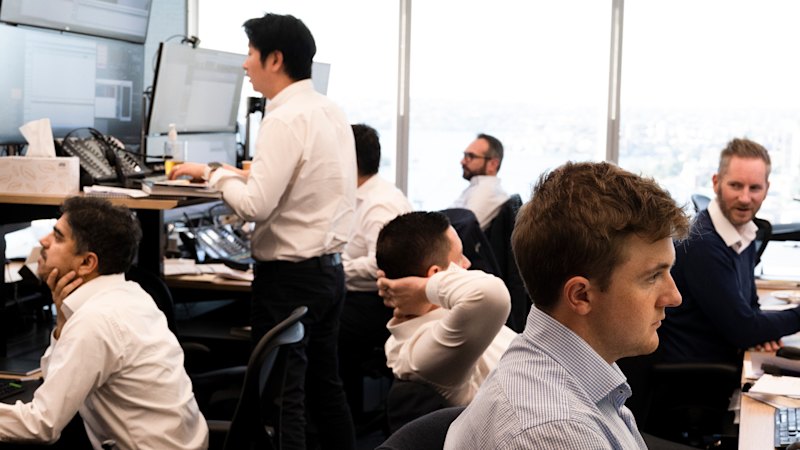
Oil majors have two ways to make big money during an energy shock. One is to sell the hydrocarbons they pump and refine themselves. The other is to buy barrels that rival companies produce and flog them to whoever wants them the most.
The third Gulf war has now demonstrated just how important the latter has become as a source of profit for the industry – particularly in Europe. Trading used to be the majors’ dirty little secret for topping up their returns. It is not little anymore.
The volume of hydrocarbons traded by BP, Shell and TotalEnergies – the equivalent to 40-50 million barrels of oil per day – is five to 10 times what they produce. Nor is the contribution to their profitability a mere rounding error. Our calculations suggest that the trading arms of these three companies could be on course to increase their average return on capital by roughly a third or more this year.
Yet secretive these activities remain. The majors disclose plenty about their production and distribution businesses. But information about their trading arms is, in effect, classified.
Opacity helps protect their competitive edge. Trading profits alone explain why European majors, whose valuations have long trailed those of their American cousins, have outperformed Exxon and Chevron since the end of February. To understand how they mint so much money – and whether it can last – The Economist spoke to a range of insiders from across the industry.
Our findings indicate that the golden geese still have eggs to lay. But foxy competitors are circling. Europe’s trading nous is a product of history and geology.
American oilmen always had ample resources and a vast domestic market. European ones, which lacked both, lost their equity stakes in Middle Eastern crude during the nationalisations of the 1970s. That shock forced them to buy third-party barrels rather than just sell their own.
BP pioneered trading in the 1980s, when OPEC’s grip on prices collapsed. Amid a glut of cheap oil, the firm began buying barrels it didn’t need, betting it could sell them at a profit. Shell and Total began to grow their own arms through the 1990s, when low oil prices squeezed upstream margins and also pushed the majors to look elsewhere for returns.
Trading - which profits from volatility and spreads, not just price levels - became the answer. The majors’ traders can harness volatility in part because they possess unmatched intelligence on supply, demand and the direction of prices thanks to the vast operations of their employers, encompassing oil and gas fields, refineries, terminals, storage facilities and more. Over the past 15 years the opportunity has expanded.
Banks, hamstrung by regulation, have retreated from commodity trading. America’s shale bonanza, Japan’s pivot away from nuclear power and the Russian-gas crisis have also turned liquefied natural gas (LNG) into a booming global market. Traders are still expected to help place their own companies’ “equity” barrels, but their growing contribution to overall profits has bought them greater independence.
Around nine-tenths of what they shift now comes from outside the firms. The Iran war and the energy crunch it has caused look set to make this a banner year for trading, even as prices normalise. The majors hide trading profits by bundling them with those of other units.
But projections we assembled suggest BP, Shell and Total may earn $US15 billion-$US20 billion in pre-tax profit from trading in 2026. Taking the lower end of that range, and assuming this year resembles 2023 – when Brent crude averaged $US83 a barrel, roughly in line with current forecasts – trading could come to represent between 15 per cent and 20 per cent of the trio’s combined profits. Because trading is asset-light, its contribution to return on capital is even greater.
Michele Della Vigna of Goldman Sachs, an investment bank, estimates that, from roughly one percentage point in decades past, trading now adds two percentage points to the European majors’ return on capital in a typical year – and perhaps three this year. What is even more striking than the scale of profits is their resilience. In any other trading business, luck eventually runs out and punters book losses.
The majors’ arms, by contrast, “rarely lose money”, says Mr Della Vigna – they just make less in worse years. Three ingredients explain it: a nimble structure, skilled staff and enough firepower to place outsized bets when it counts. Start with structure.
Trading divisions don’t circulate organisational charts. Only BP publicly names who runs the show: Carol Howle, its deputy chief executive – a clear signal that trading is central to the firm. At the others, “trading dots into the chief financial officer”, reckons Alastair Syme of Citigroup, another bank.
Below that, the global head of trading oversees leads for each product: crude oil, light ends (petrol), middle distillates (diesel, jet fuel), heavy ends and gas. At the base of the pyramid sit specialists
Đọc thêm từ Thế giới

Lindsey Graham likely died from aortic rupture, medical examiner says
US Senator Lindsey Graham, a close ally of President Donald Trump and a leading Republican voice on foreign policy, died on Saturday after a brief illness, his office said. He was 71. The District of Columbia medical examiner said the preliminary cause of death was an aortic diss

미군 "이란에 추가공습 개시…호르무즈 상선 공격역량 약화"
(워싱턴=연합뉴스) 백나리 특파원 = 미군 중부사령부는 12일(현지시간) 호르무즈 해협에서 상선을 위협하는 이란을 상대로 추가 공습을 개시했다고...
Australia news live: auction clearances nudge up after weeks under 50%; state farewell for Richard Scolyer
Almost 55% of homes at auction were sold, weekend figures show. Follow today’s news liveGet our breaking news email, free app or daily news podcastRichard Scolyer to have state memorial service at Sydney Opera HouseRichard Scolyer, the 2024 Australian of the Year, will be honoure
![[유형재의 새록새록] 숲속 육아 전쟁, 어미 꾀꼬리의 세상 가장 고운 노래](https://img.yna.co.kr/etc/inner/KR/2026/07/09/AKR20260709160500062_01_i_P2.jpg)
[유형재의 새록새록] 숲속 육아 전쟁, 어미 꾀꼬리의 세상 가장 고운 노래
(강릉=연합뉴스) 유형재 기자 = 어미 꾀꼬리가 갓 태어난 새끼가 있는 둥지로 돌아가기 직전 세상 가장 아름답고 부드러운 소리를 내며 작은 숲을...