The pressure to have baby boys can harm African mothers' health
In Congo and other parts of Africa, some women are having baby after baby under cultural pressure to produce a male heir, even risking their health
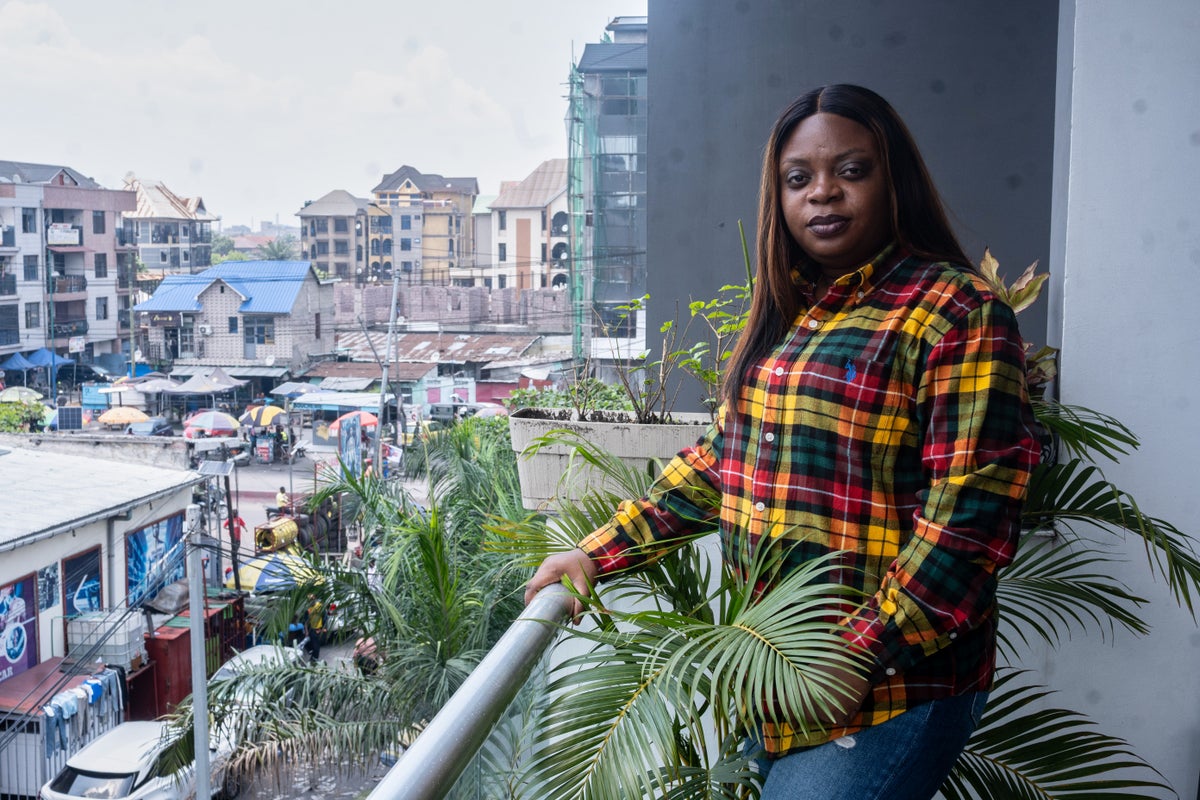
When Prosper Mbumba married, he expected to have only two children. But one had to be a son. Four daughters later, he and his wife were still trying.
Mbumba was eager to produce a male heir according to the customary demands of his Luba people in Congo.“In my tribe, in my culture, that was like an insult, having only daughters,” the human rights activist said. “I should do my best to get more children, expecting to have a boy.”
He and his wife, Régine Ntumba, said they were relieved when the first of two sons was born. Mbumba, sitting with his wife in an open-air bar in the Congolese capital of Kinshasa, described finally feeling a “little satisfied.”Ntumba, a housewife, said she was “very happy to learn that finally I have a boy.”
___This is part of a series on maternal mortality in sub-Saharan Africa, which has the world’s fastest-growing population and accounts for 70% of global maternal deaths. Around 180,000 pregnancy deaths are recorded every year across the continent.___Africa has the world's fastest-growing population.
But many of those births occur in conditions that would be challenging anywhere in the world, from the lack of medical workers on hand to limited resources for managing complicated births, especially in rural areas. Africa accounts for 70% of global maternal deaths, according to the World Health Organization, even as those deaths have been declining.The Associated Press is exploring why so many African women continue to die in childbirth.
The reasons exist before pregnancy, including difficulties in obtaining contraception. And now some of the continent's most prominent donors, especially the United States under the Trump administration, are sharply pulling back on the assistance that helps to keep mothers and babies safe. Families ‘ keep trying’ for boys, putting some women at risk Complicating the risks for women in many parts of sub-Saharan Africa is the pressure — heaped more on women than men — to produce male heirs to perpetuate clan lines.
Because daughters often marry men from different clans or tribes, sons are seen as necessary to sustain their forefathers’ legacies. The belief is so entrenched that many women accept it as justified, even if repeated pregnancies endanger their health.Congo has one of the highest fertility rates anywhere in the world, at 5.
9 children per woman, according to United Nations figures. The rate is largely fueled by cultural considerations that favor early marriage and large families, in addition to inadequate access to contraception.The quest for male heirs is woven into a societal fabric that exposes many women to unwanted childbearing, said Patrick Djemo, a physician who leads MSI Reproductive Choices in Congo.
The organization provides counseling, contraception and safe, legally permissible abortions to women in seven of the country's 26 provinces. Many clients are married, but others are young women who want to postpone childbearing.“A lot of pressure is exerted on couples, and, as you know, mostly it is the woman who is blamed for giving birth to a girl," Djemo said.
Men often seek to block their partners from using family planning by asserting their right to make decisions, he said.Roughly 29% of Congolese women of reproductive age cite an “unmet need" for family planning, whether to space births or to stop having kids, according to the U.N.
Population Fund.Congolese authorities sought to rectify that in a five-year strategic plan aiming to provide “access to affordable, quality family planning services" to all women of childbearing age by 2026. But it remains an enormous task in a country the size of Western Europe, with poor infrastructure and armed rebellion in the east.
A woman in labor pleads to know the gender Annie Tshiamala, the head of an association of Congolese midwives, she said she encounters too many women desperate to have sons.She still remembers the day over three decades ago when a woman, bloodied in a difficult labor while having her ninth baby, asked whether it was a boy or a girl. The woman, in her 40s, had eight girls and was desperate.
Tshiamala, not wanting to disappoint the mother, didn’t respond, but a colleague said it was another girl.“And she was disappointed. She said, ‘Oh, my Lord.
Why?’”The woman later confided that her marriage was in danger because she had not produced a son.Tshiamala said she herself had been pressured by her mother-in-law, who wanted more than the four sons she has.
Backed by her husband, she refused. One man threatens to get a girlfriend if no son is born Even today in Congo's capital, educated women face pressure over the lack of a son.“When you don’t have boys, you are not worth respect,” Gloria Masanka, a radio presenter with Congo’s national broadcaster, said of her in-laws' family.
She said that with girls, there is fear of losing the family name.Masanka, the mother of two young daughters, has been married for a decade. She said the couple would be happier if they had a son, even though sh
Đọc thêm từ Thế giới

Tesco sales growth slows amid ‘uncertainty’ linked to Iran conflict
The retailer revealed that total sales increased by 1% to £16.8 billion over the 13 weeks to May 30, compared with a year earlier.
North Korea recalls UK ambassador over sanctions against ‘Kremlin-run’ children’s camp
In May, London designated the camp as a part of Kremlin-run youth programmes and entities involved in the deportation and indoctrination of Ukrainian children

KF아세안문화원, 말레이·인니·태국·베트남어 여름 강좌 개설
(서울=연합뉴스) 강성철 기자 = 한국국제교류재단(KF·이사장 송기도) 산하 부산 해운대구 소재의 아세안문화원은 말레이·인도네시아어, 태국어, ...
