The Odyssey: 'A story of sex, strategy and power'
The epic 2,800-year-old poem is so much more than a standard tale of heroism
'A story of sex, strategy and power': How women shape the plot of Homer's Odyssey58 minutes agoShareSaveAdd as preferred on GoogleDaisy DunnAlamyThe epic 2,800-year-old poem – now adapted for the big screen – is so much more than a straightforward tale of heroism. The protagonist Odysseus is a heroic male – but the story is shaped by the stratagems, subterfuge and seductions of the women, nymphs, sorceresses and goddesses he meets along the way. It's what makes him seem so human.
The epic poem The Odyssey tells of the mythical Greek soldier Odysseus's quest to return to his kingdom of Ithaca after years of fighting in the Trojan War. His perilous, decade-long voyage home is full of gruelling challenges and hazards – which this month play out on the big screen in Christopher Nolan's adaptation, starring Matt Damon among many other stars. The protagonist may be male, but The Odyssey is a story in which women predominate.
Our hero's quest to return to and regain his kingdom is shaped at every turn by the stratagems and seductions of the women, nymphs and goddesses he meets along the way. The Odyssey is not a straightforward tale of heroism, but a story of sex, strategy and power that still resonates today.The poem begins in medias res – in the middle of things – with Odysseus weeping on the coastline of Ogygia, where he has been living with the nymph Calypso for the past seven years.
For all that he proved himself a hero on the Trojan battlefield, he now looks utterly powerless, an impression that is reinforced by the fact that it takes a council of the gods to secure his release from the island.AlamyOdysseus and the nymph Calypso – at the start of the poem they have been living together for seven years (Credit: Alamy)But Odysseus is not a prisoner of Calypso so much as of himself. The modern reader might reasonably diagnose his inertia – his inability to press on and fulfil his homecoming – as a symptom of PTSD.
Which is not to diminish the hold that Calypso has on him. As Odysseus readily admits to the nymph, his wife Penelope cannot compare to her in beauty, for she is a mere mortal.Odysseus's wife Penelope has been far from passive during her husband's long absence.
She has valiantly and cleverly resisted the advances of 108 suitors who have descended upon the palace in their eagerness to marry her and become the new king of Ithaca. Penelope's weaving of a funeral shroud for her father-in-law Laertes – and her unpicking of the tapestry by night – is one of the most memorable episodes in the poem. She is, so to speak, a moving target, whose success in warding off the suitors will have a direct bearing upon Odysseus's ability to reclaim his kingship.
Athena knows only too well that it is men who hold power on earth, but women who shape events through subterfugeIt is significant that Odysseus's chief supporter among the divinities is a goddess. The strategic Athena aided him at Troy and took the initiative in urging his homecoming. Then when he washes up in a vulnerable state on the Phaeacians' land, she cleverly orchestrates his rescue, masks his vulnerability and enhances his appearance so that he appears god-like and worthy of their legendary hospitality.
This helps him to win over the seafaring Phaeacians, who then provide him with shelter, treasure and a safe passage home to Ithaca.Getty ImagesThe mesmerising song of the Sirens has the power to seduce men to their deaths (Credit: Getty Images)Tellingly, in most instances in which she appears to Odysseus and his son Telemachus, Athena disguises herself as a man. She poses, for example, as Mentes, a king friendly to Ithaca, and as a male herald of the Phaeacians.
Athena knows only too well that it is men who hold power on earth, but women who shape events through subterfuge.One need only consider the characters Odysseus meets along the way. Having landed among the Phaeacians, he narrates his own encounters so far – from the Lotus Eaters to the Cyclops – to his royal hosts.
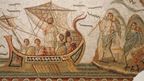
Odysseus's tales of mythical women often prove the most eerie owing to the non-threatening nature of their appearance.Sweet facadesOdysseus readily admits to his hosts, for example, that he has been eager to hear the song of the Sirens, who inhabit an isolated, perilously rocky island in the western sea. In later tradition and Greek art, the Sirens would be represented as bird-like women or mermaids, but Odysseus focuses on describing their honey-sweet song, which has the power to seduce men to their deaths.
AlamyIn Homer's poem, the dangerous sorceress Circe conceals her magical powers (Credit: Alamy)In front of the Sirens sprawls a meadow containing the bones of the many men who had paused to hear their song in the past. Odysseus is prepared to take the risk: he has his men tie him to the mast of his ship so that he could not jump overboard in pursuit of the haunting music. As beautiful as they sound, the Sirens are deadly.
Odysseus's susceptibility to the seductions of other women – and o
Đọc thêm từ Văn hóa

Curator Ingrid Schaffner Talks Hauser & Wirth’s Henry Taylor—James Jarvaise Show
The show reframes Taylor's practice in eye-opening ways.
Gertrude Abercrombie’s Band of Midwest Magic Realists
A pair of exhibitions at the Milwaukee Art Museum underscores the support, comradeship, and spirit of rebellion shared by the Surrealist and her friends.
Photographer Accuses Mickalene Thomas of Copyright Infringement in New Lawsuit
Barbara Karant alleged that Thomas repeatedly used her photographs with attribution or permission.
Italy Advances Legislation on Restitution of Nazi-Looted Art
A 2024 study found that Italy had made only “some progress” on looted cultural property over the past 25 years