The multibillion-dollar cost of students who can’t – or won’t – engage with school
Victorian children who disengage through the middle years of school are costing the state economy billions. A high-profile former principal has called for cultural change in education to catch the missed productivity.
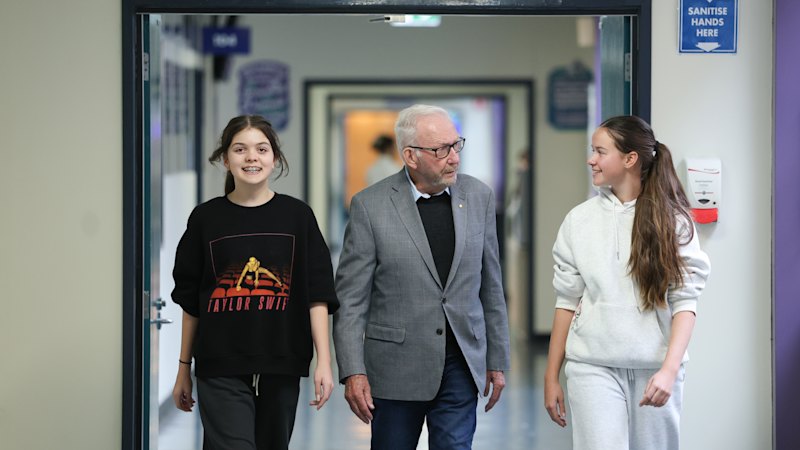
The 26,457 Victorian year 8 students who are disengaged from school this year will cost the state economy $33 billion over the course of their lives, research has estimated. One in three students are not engaged in their schooling during years 7 to 9, which costs the state 5 per cent of GDP and each household more than $13,000, according to a report by the Institute for Educational Reform released on Wednesday. The figure includes students who are absent from school and those who are present but falling behind in class because of disengagement, as well as those who are gifted but disengaged.
It estimates the potential lost personal income, productivity and taxes, as well as the social costs including through the health and justice systems, over the 45-year working life of those students. It also accounts for students who regain focus in later life. “The cost is $33 billion because once these kids become adults and enter the workforce, about a quarter never enter the workforce in a formal way,” said former NSW Treasury chief economist Stephen Walters, who calculated the figure.
“And of the rest who do work over their lives, a lot of it is intermittent. “So what that leaves over the 45 years or so of their working lives is a big forgone income because they could have been working at a higher level.” Walters has estimated this cost for the first time at a state level, finding the biggest losses come from low wages and missed productivity rather than the excess burden on the Victorian taxpayer or forgone taxes.
“The social costs outweigh the direct fiscal costs by a factor of five to one,” he said. “There’s a massive social benefit [to students being engaged] because it generates income in the economy – that generates investment, it generates more jobs.” Australian students are estimated to miss about four weeks of schooling a year on average, adding up to a year between the first day of school and the end of year 10.
In Victoria, attendance rates for years 7 to 10 dropped from 92.4 per cent in 2016 to 86.9 per cent in 2025.
The scale of disengagement also appears in the state government’s Attitudes to School Survey, released in March, which showed 50.2 per cent of students in years 7 to 9 had a sense of belonging in their school, and only 52.8 per cent said their teachers made them interested in learning.
Institute for Educational Reform chair David Loader, a former principal of 32 years, said the cost was a wake-up call that leaving behind students in their middle years was a missed opportunity. “If they were more involved, our community would benefit enormously,” he said. Giving principals more autonomy to speak up about fixes in schools and ensuring teachers had the time and resources to focus on individual students were part of the solution, Loader said.
However, he acknowledged there wasn’t a silver bullet. As a principal, Loader introduced residential education programs including at MLC, where year 9 students live together in Marshmead in East Gippsland for eight weeks, and at Wesley College, where students go to Clunes, north of Ballarat. He said these programs helped students gain personal growth outside academic learning in years when they were at risk of disengagement at school.
“A school that’s helping young people to grow as opposed to a school that’s focused on a number at year 12 is a very different thing,” he said. “That’s the cultural change we’re looking for – we no longer look at students as a number, but we look for personal growth.” A Victorian government spokesperson did not directly respond to questions about student disengagement in the classroom but acknowledged that regular attendance was critical to success.
Since 2023, Victoria’s year 12 completion rates have grown to 97 per cent, up 5 percentage points, and the year 10 to 12 retention rate of 85 per cent is the highest in eight years. The vocational major is also reshaping the pathways students take to the workforce. “We’ve made a record investment in student mental health, putting mental health workers in every public school,” the government spokesperson said.
“Victoria’s school attendance rates continue to improve, thanks to the exceptional efforts of teachers and school leaders who work hard to ensure every student is engaged in their learning and feels like they belong at their school.” Opposition education spokesperson Brad Rowswell blamed Education Minister and now Premier Ben Carroll for “declining school attendance, falling student engagement, collapsing teacher morale, and serious safety concerns in early childhood services”. Start the day with a summary of the day’s most important and interesting stories, analysis and insights.
Sign up for our Morning Edition newsletter. You have reached your maximum number of saved items. Remove items from your saved list to add more.
More:
Đọc thêm từ Thế giới

‘Evidence’ of Taguig anomalies now with Ombudsman – Lacson
Sen. Panfilo “Ping” Lacson on Tuesday said pieces of evidence gathered by his office about alleged anomalies behind infrastructure projects in Taguig City, the political bailiwick of Senate Minority Leader Alan Peter Cayetano, are now with the Ombudsman. “This morning, we turned

‘보완수사권 폐지’ 형사소송법 개정안 소위 통과…민주당 주도
본문정치정치일반‘보완수사권 폐지’ 형사소송법 개정안 소위 통과…민주당 주도고한솔,최하얀기자수정 2026-07-29 00:36펼침0:00Your browser does not support theaudio element.구글 선호 매체 등록서울 영등포구 국회의사당 전경.
조정식 “현직 대통령 연임, 개헌 논의대상 아냐…오해 불러 유감”
본문정치정치일반조정식 “현직 대통령 연임, 개헌 논의대상 아냐…오해 불러 유감”최하얀기자수정 2026-07-29 00:48펼침0:00Your browser does not support theaudio element.구글 선호 매체 등록조정식 국회의장이 지난 28일 서울 여의도 국회 사랑재에서 취임 후 첫 기자간담회를 하고 있다.
Thousands protest in eastern Congo over any presidential third term
DAKAR, July 28 - Thousands of people rallied in the eastern Congolese cities of Goma and Bukavu on Tuesday to protest against proposed constitutional changes that could pave the way for President Felix Tshisekedi to run for a third term.