The City of Boston Discovered One of the Oldest Known Gravestones of a Free Black American, Who Shared a Name With the Massachusetts Capital
Also known as Sebastian, he died in 1729 and is buried alongside Samuel Adams, John Hancock and Paul Revere. His life tells a story of slavery and freedom in the North before the American Revolution
/https://tf-cmsv2-smithsonianmag-media.s3.amazonaws.com/filer_public/1c/28/1c28233b-9560-4b0f-a27e-5308bc455605/usa-granary_burying_ground0.jpg)
Established in 1660, the Granary Burying Ground is Boston’s third-oldest cemetery. Ingfbruno via Wikimedia Commons under CC BY-SA 3.0 For hundreds of years in Boston’s Granary Burying Ground cemetery, a simple headstone marked with the name “Boston” stood inconspicuously.
Over time, it slumped onto its side, neglected and covered in dirt. In a cemetery of an estimated 5,000 historic graves and 2,345 gravestones and tombs, the slate marker was overshadowed by the resting places for signers of the Declaration of Independence—Samuel Adams, John Hancock and Robert Treat Paine—as well as for Paul Revere, James Otis and Crispus Attucks, who is thought to be the first casualty of the Boston Massacre. “It sounds silly, but they all look the same,” Kelly Thomas, director of historic burying grounds for the Boston Parks and Recreation Department, tells WBZ NewsRadio’s James Rojas.
“They’re all grey, dirty stones. And I don’t mean that with any disrespect, but there’s thousands of them.” The monument to John Hancock, photographed in the cemetery in 1898.
Public domain via Wikimedia Commons But when restorers recently started work in the cemetery—the city’s third-oldest, founded in 1660—the small headstone captured their attention. They noted that its lack of a surname likely meant that the man buried there had been enslaved at some point. Curiosity spurred an effort to identify him through research.
Now, historians are finally able to tell the story of “Boston,” also known as “Sebastian” or “Bastian,” a formerly enslaved man who died free in 1729. “That discovery is likely one of the oldest gravestones of a free Black person in America,” said Boston Mayor Michelle Wu in an Independence Day address. “It’s been there all along.
We just had to go look and share the story.” The grave of Mary “Mother” Goose is one of the more famous markers in the Granary Burying Ground. Swampyank via Wikimedia Commons under CC BY-SA 3.
0 Records and scholarship reveal Boston was married to a woman named Jane Lake, who gave birth to their daughter, also named Jane, around 1701. Samuel Sewall, a well-known Boston merchant and judge, noted in his diary that the infant was baptized in her father’s arms in November 1701 at Boston’s First Church, writing that “Bastian holds her up,” according to research by historian Gloria McCahon Whiting published in the Journal of American History in 2016. Both Boston and the elder Jane were enslaved at the time.
Boston—who was called Sebastian while enslaved—lived in the home of John Waite, a merchant, while Jane lived in the home of Deborah Thayer, a widow. “The two homes were close to one another, but no evidence indicates that Sebastian and Jane were able to cohabit,” Whiting wrote. Fun fact: Symbols of death A common decorative motif on 17th-century gravemarkers in Boston was the “death’s head,” a stylized skull that often featured wings or crossed bones.
Others included hourglasses, coffins, fruit, foliage, imps and dragons. Boston was freed sometime between 1702—when Waite died—and 1708, when a list of free Black people was published that included the name Boston. According to Whiting’s research, Boston earned a reputation as a handyman and after his death in 1729 even had an obituary published in the New-England Weekly Journal.
In addition to his name, Boston’s gravestone is marked with the death’s head, common iconography for the era. A five-line epitaph, translated to modern English, reads: “Here lies the / body of Boston / aged 70 years / deceased February the 28 / 1728,” reports LiveScience’s Kristina Killgrove. Boston’s death year was engraved according to the Julian calendar, in which a new year begins on March 25.
By Gregorian calendar standards used today, he died in 1729. “Every kid growing up in our city should know what’s possible here,” Wu said in her address. “If a child in Roxbury or Chinatown or Mattapan learns that people like them built this country and this city, then leading it doesn’t sound so crazy.”
You Might Also Like With Birchbark and Breath, Sierra and Hawk Henries Bring Intergenerational Artistry to the ‘Dawnland’ July 8, 2026 'Like an Explosion in a Glass Factory': Frank Gehry's Seven-Ton 'Icehenge' Desk That Once Graced a Skyscraper Lobby Is Up for Auction July 8, 2026 Did This Duke Poison His Brother? A New DNA Analysis May Solve the Centuries-Old Medici Mystery July 8, 2026 The Arctic Ocean May Have Passed a Crucial Tipping Point That Could Harm Food Webs and Worsen Climate Change July 8, 2026 Our Ancestors Loved Shell Trinkets, Just Like Neanderthals. New Research Suggests It's a Sign of Shared Culture Across Species July 8, 2026 Christian Thorsberg | Read More Christian Thorsberg is an environmental writer and photographer from Chicago.
His work, which often centers on freshwater issues, climate change and subsistence, has appeared in Circle of Blue, Sierra magazine, Discover magazine and Alaska Sporting Journal. Get the latest stories in your inbox every weekday. Emai
Đọc thêm từ Khoa học

Japanese company books 1,100 pounds of cargo space on SpaceX Starship mission to the moon
The Japanese company ispace is expanding its already extensive moon plans to include SpaceX's Starship megarocket.
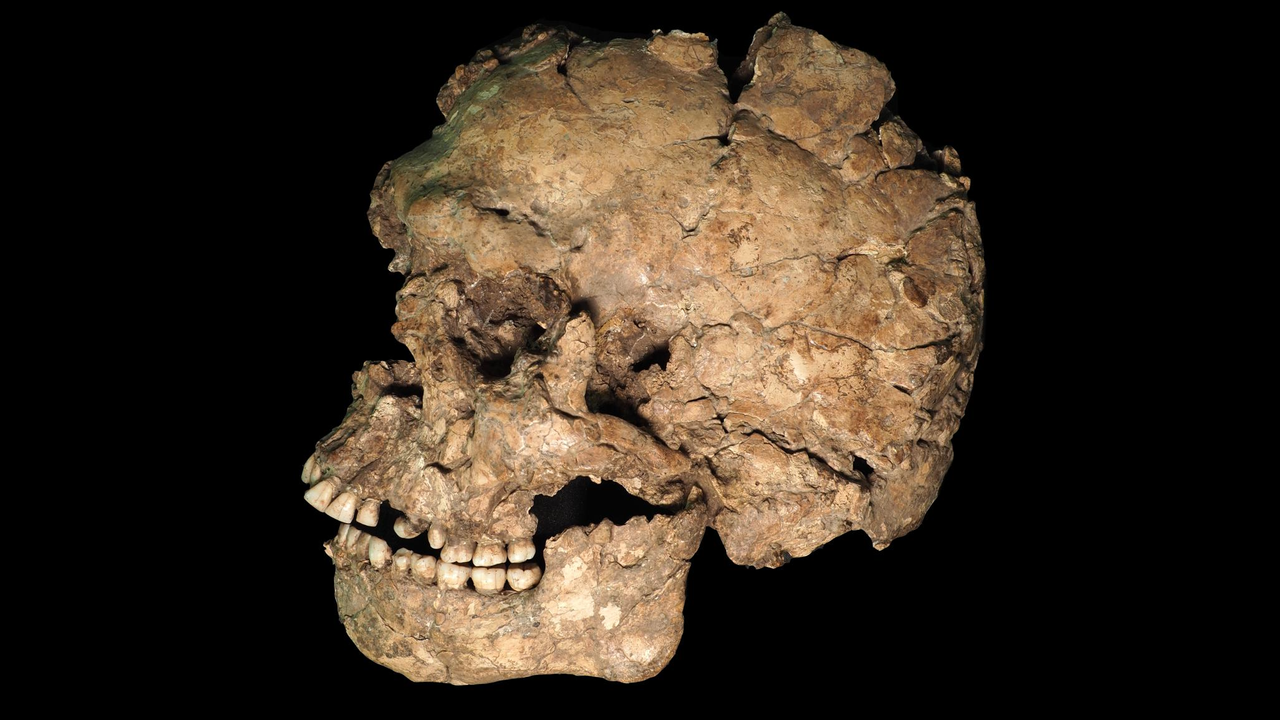
100,000 years ago, one of the earliest Homo sapiens outside Africa was stabbed in the face, analysis finds
A microscopic analysis of the skull of Qafzeh 25 revealed a cut mark likely made by a stone tool 100,000 years ago.
/https://tf-cmsv2-smithsonianmag-media.s3.amazonaws.com/filer_public/f9/18/f9188b50-57ac-41f6-b2ee-7950a7407a6a/07sci-torifune-lmpq-superjumbo.png)
New Images Reveal That This Asteroid Is Actually Two Conjoined Space Rocks That Form a Peanut-Shaped Object Called a 'Contact Binary'
A flyby conducted by the Japanese spacecraft Hayabusa2 uncovered the asteroid's strange shape. Data gathered by the probe will also help defend the planet against potentially threatening space rocks
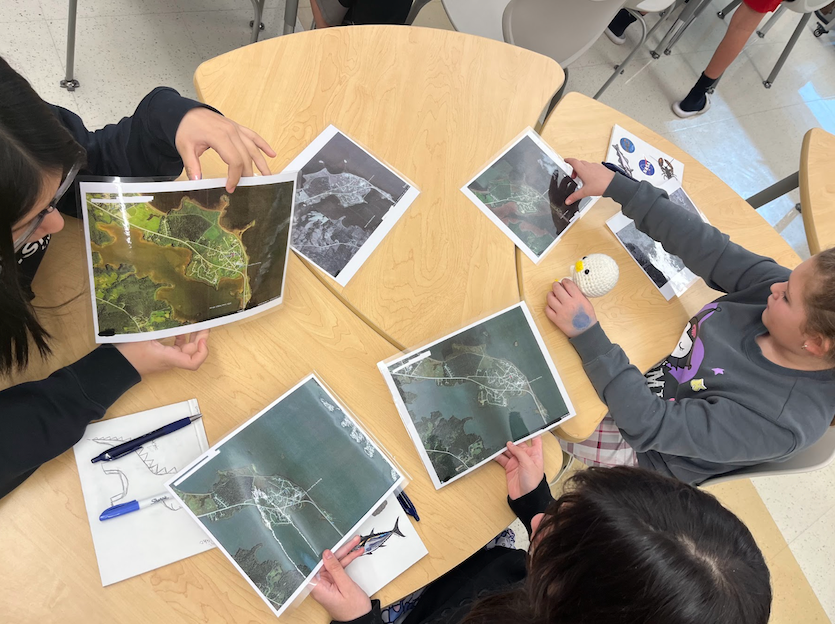
Students Connect NASA Science With Indigenous Knowledge to Study Coastal Erosion
Story by Keri Moskowitz, Gulf of Maine Research Institute For the Pleasant Point Passamaquoddy Reservation, or Sipayik, the ocean has always been a teacher. Situated in what is known as Downeast Maine, along the shores of Passamaquoddy Bay, generations of Indigenous people have l