Tether Data Pushes AI Off the Cloud With New 460M Parameter Vision Model
Tether Data has open-sourced a 460-million-parameter vision-language model built to run directly on smartphones instead of relying on cloud servers. Released Wednesday by the company’s AI research arm, QVAC, VisionPsy-Nano can examine images, documents, and charts, then answer qu
Tether Data has open-sourced a 460-million-parameter vision-language model built to run directly on smartphones instead of relying on cloud servers. Key TakeawaysTether’s QVAC unit open-sourced a 460-million-parameter vision model on July 29, 2026.The model beat Liquid AI and Hugging Face rivals across 16 of 17 benchmark tests.
Its Flash version ran up to 36 times faster than SmolVLM2-500M on an iPhone 15. Released Wednesday by the company’s AI research arm, QVAC, VisionPsy-Nano can examine images, documents, and charts, then answer questions without sending the source material to a remote system. The phone handles both the input and response, allowing the software to operate offline and keep data on the device.
QVAC says Tether AI Research’s model recorded the highest overall score among vision-language systems with fewer than 500 million parameters. Across 17 benchmarks, it beat competing models on 16. How It Stacks Up The model posted a normalized score of 62.
3, compared with 59.6 for Liquid AI’s LFM2.5-VL-450M and 52.
5 for Hugging Face’s SmolVLM2-500M. QVAC’s earlier nanoVLM-460M-8k base model scored 54.9.
The Tether Data release comes in two versions. The standard build prioritizes accuracy, while Flash gives up a small amount of quality for faster responses. QVAC says Flash retains about 99% of the full model’s performance while producing its first output up to 23 times faster than SmolVLM2-500M on Android phones and up to 36 times faster on an iPhone 15.
That response time matters on mobile hardware. A compact model can score well in testing but still feel impractical if users must wait while the device processes an image. Flash is designed to reduce that initial delay.
The artificial intelligence (AI) system also supports document analysis and optical character recognition, extracting text and structure from financial reports, flowcharts and infographics. QVAC says the model beat similarly sized competitors by an average of 7.4% on visual reasoning tests.
It also outperformed models more than twice its size on MM-IFEval and POPE, including releases from Qwen and InternVL. Why the Small Footprint Matters Moving image processing from a data center to a phone introduces strict limits around memory, heat, battery use, and computing power. Compact models often handle plain text but lose accuracy when reading dense charts, tables, or scanned documents.
QVAC’s benchmark results suggest the model preserved much of that capability while remaining small enough for consumer devices. Local processing also means documents do not need to be uploaded, and the software can continue working without a network connection. Built for Several Deployment Options Developers can access the model through Hugging Face Transformers, a quantized GGUF version for llama.
cpp or a vLLM backend for higher-volume server use. QVAC also published its benchmark configurations through VLMEvalKit, allowing outside researchers to repeat the tests. Both versions use the Apache 2.
0 license, permitting commercial use, modification, and redistribution. Part of Tether’s Wider AI Strategy Tether CEO Paolo Ardoino said the release supports the company’s push toward local, efficient AI systems. “Achieving best-in-class quality and performance on general vision tasks at just 460 million parameters proves that local-first, highly efficient AI is a viable pathway,” Ardoino said.
The model follows several QVAC releases dating to October 2025, including synthetic training datasets, a cross-platform software development kit, and medical models designed for phones and wearable devices. For developers, the release offers offline image analysis without usage-based API costs. Businesses can keep sensitive documents on the device, while consumers can use AI features without a signal.
Researchers can independently test the company’s performance claims using the published configurations. Tether has financed its AI expansion with profits from its USDT stablecoin business. It has also invested in AI infrastructure, biotechnology, and robotics, including a Series C investment in NEURA Robotics valued at up to $1.
4 billion. ‘I Don’t Have Time to Try to Convince You’ — Satoshi’s Famous Line Turns 16Sixteen years ago on this day, Bitcoin's creator ran out of patience with a critic on a forum, and the…Read Now‘I Don’t Have Time to Try to Convince You’ — Satoshi’s Famous Line Turns 16Sixteen years ago on this day, Bitcoin's creator ran out of patience with a critic on a forum, and the…
Read Now‘I Don’t Have Time to Try to Convince You’ — Satoshi’s Famous Line Turns 16Read NowSixteen years ago on this day, Bitcoin's creator ran out of patience with a critic on a forum, and the… Tether’s QVAC unit open-sourced a 460-million-parameter vision model on July 29, 2026. The model beat Liquid AI and Hugging Face rivals across 16 of 17 benchmark tests.
Its Flash version ran up to 36 times faster than SmolVLM2-500M on an iPhone 15. AI Giants Unleash 4 Frontier Models in 3 Weeks as
Đọc thêm từ Tiền số / Crypto

American Arbitration Association launches Web3 Panel for crypto disputes
The AAA's Web3 Panel could standardize crypto dispute resolution, influencing global legal frameworks and enhancing trust in digital transactions. The post American Arbitration Association launches Web3 Panel for crypto disputes appeared first on Crypto Briefing.
Institutions sell HYPE as Multicoin Capital deposits $8M into Coinbase Prime
Institutional selling of HYPE may undermine investor confidence, highlighting potential volatility and trust issues in crypto markets. The post Institutions sell HYPE as Multicoin Capital deposits $8M into Coinbase Prime appeared first on Crypto Briefing.
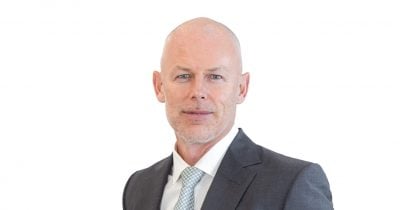
Stonepeak CEO says AI infrastructure financing shows ‘very little sign of slowing down’
AI infrastructure financing's momentum suggests sustained growth and innovation, but raises sustainability concerns and shifts focus from crypto. The post Stonepeak CEO says AI infrastructure financing shows ‘very little sign of slowing down’ appeared first on Crypto Briefing.
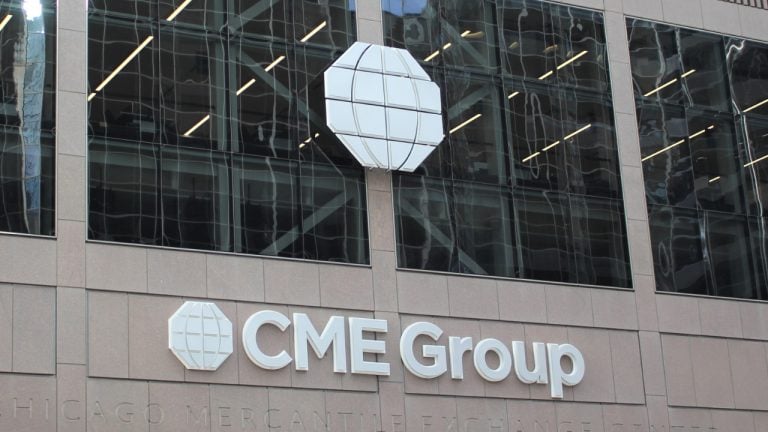
CME Group Targets $650 Billion Sports Industry With First Sports Index Futures
CME Group announced plans to launch futures tied to sports performance indexes, opening the $650 billion global sports industry to exchange-based risk management. The first cash-settled contracts are expected this summer, pending regulatory review. CME Targets an Unhedged Sports