Tassat wants to help smaller banks tap the trillion-dollar stablecoin boom before Wall Street lock them out
FinanceTassat wants to help smaller banks tap the trillion-dollar stablecoin boom before Wall Street lock them outThe former Signet developer aims to launch early next year a marketplace connecting stablecoin issuers with regional lenders to manage reserves.By Krisztian Sandor|Ed

FinanceTassat wants to help smaller banks tap the trillion-dollar stablecoin boom before Wall Street lock them outThe former Signet developer aims to launch early next year a marketplace connecting stablecoin issuers with regional lenders to manage reserves.By Krisztian Sandor|Edited by Nikhilesh De Jul 23, 2026, 6:10 p.m.
2 min readMake preferred on ShareShare this articleCopy linkX iconX (Twitter)LinkedInFacebookEmailMake preferred on Tassat CEO Glen Sussman (Tassat)SummaryShowTassat has launched Project NENYA, a stablecoin reserve management platform designed to help regional and midsize U.S. banks compete for deposits now concentrated at a few specialist institutions.
The platform, expected to begin pilot activity in early 2027, will create a shared marketplace where regulated stablecoin issuers can allocate reserves across banks and tokenized high-quality liquid assets while monitoring pricing, liquidity and counterparty risk.Tassat’s CEO argues that as the stablecoin market grows toward multi-trillion-dollar scale, spreading reserves beyond a small circle of large banks is necessary to reduce liquidity and deposit risks and to keep smaller banks from being shut out of the system.Tassat, the fintech firm behind Signature Bank's former Signet blockchain payments network, is building a stablecoin reserve management platform aimed at helping regional and midsize U.
S. banks compete for stablecoin reserves as the sector is projected to grow into a multi-trillion-dollar market.The company unveiled Project NENYA — otherwise referred to as its Smart Reserve Management & Execution Engine — on Thursday alongside a white paper outlining the initiative.
Tassat said it expects the platform to launch in early 2027 after pilot programs begin in the first half of the year.The project targets smaller banks that often lack the technology, compliance infrastructure and staff needed to service stablecoin issuers.It is designed to connect regulated stablecoin issuers with banks through a shared marketplace for allocating reserves across cash deposits and tokenized high-quality liquid assets.
Participating banks could bid for deposits, while issuers could spread reserves across institutions and monitor pricing, liquidity and counterparty exposure.“There are banks saying: ‘We would love to participate in this. We don’t have the infrastructure.
We don’t have the compliance. We wouldn’t even know how to price these reserve deposits,’” Tassat CEO Glen Sussman told CoinDesk in an interview.The announcement comes as stablecoins move further into mainstream finance following the passage of the GENIUS Act.
Wall Street firms and banks are expanding stablecoin initiatives, while Citi projects the market could reach roughly $4 trillion by 2030.At that scale, Sussman said, concentrating reserves among a few institutions could create liquidity and deposit risks.“If you assume stablecoins scale to $5 trillion or $10 trillion, then there has to be something that helps the market reach equilibrium,” Sussman said.
“It can’t just live in a really small circle because that will compound the risk on both sides.”The platform itself will not run on a blockchain, though Tassat plans to connect it with tokenized asset and deposit networks. Sussman said that approach lowers the technical burden for smaller banks.
“There is a real risk that vast swaths of the U.S. banking ecosystem get left out in the cold,” he said.
“I don’t think that’s healthy politically for the United States. I don’t think it’s healthy economically.”StablecoinsLatest Crypto News 1Coinbase's corporate customers can now accept payments from AI agents1 hour ago2The SEC settles with Coinbase over its missing Gary Gensler texts2 hours ago3Crypto for Advisors: It’s time for tokenization to get to work3 hours ago4Uniswap pushes deeper into tokenized assets with permissioned trading pools4 hours ago5Goldman Sachs CEO backs Clarity Act despite banking industry's concerns over stablecoin rules4 hours ago6The KIDS Act is way worse than digital carding — it is a mass surveillance system5 hours ago7BlackRock, Coinbase, Strategy in a new group pledging $15 million to prepare Bitcoin for quantum threats5 hours ago8Abu Dhabi's Mubadala Capital joins tokenization push as Coinbase takes stake in onchain fund6 hours ago9Polymarket to challenge France’s nationwide website block6 hours ago10Bulls face a test unlike anything in bitcoin's 17-year history7 hours agoLatest Research Crypto Flows, Share and the Selective RotationCrypto Flows, Share and the Selective RotationMarkets repositioned since June, but Binance held share (~55% user funds, ~24% spot) and drew net inflows in early July while the tracked market saw outflows.
By CoinDesk ResearchJul 22, 2026Markets repositioned since June, but Binance held share (~55% user funds, ~24% spot) and drew net inflows in early July while the tracked market saw outflows.Why it matters:Markets repositioned since June, but Binance held share (~55% user funds, ~24
Đọc thêm từ Tài chính
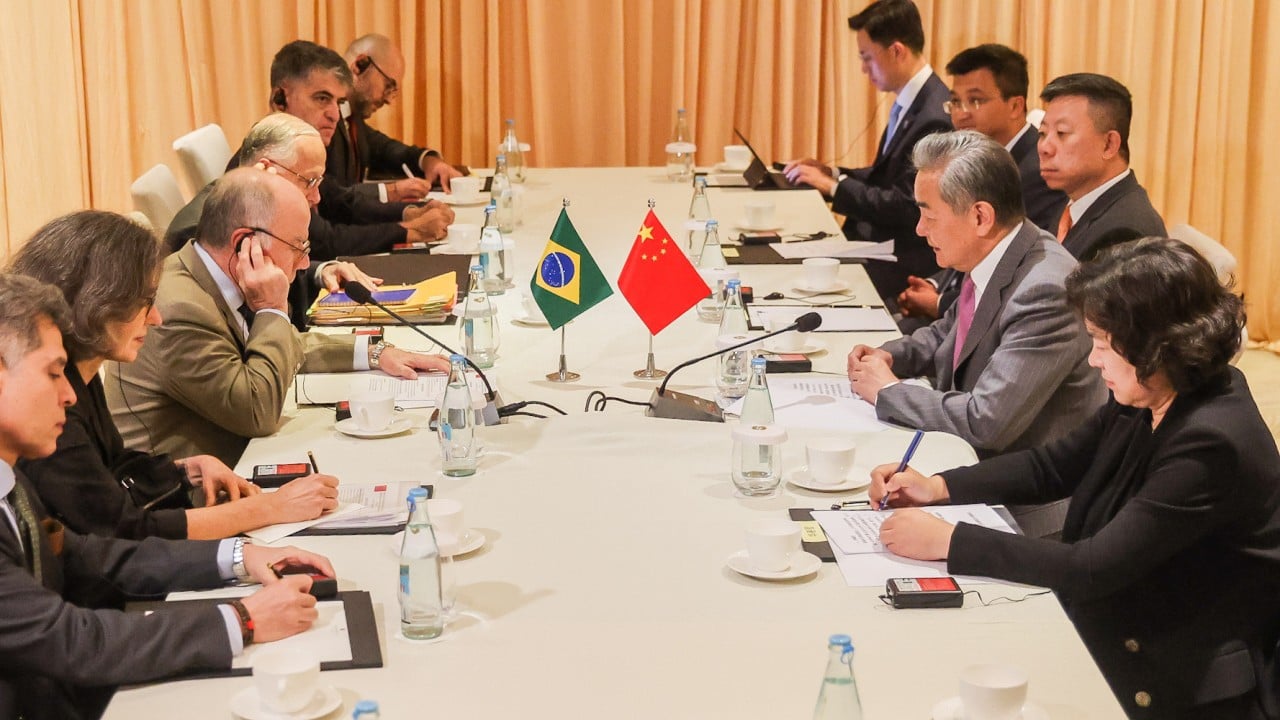
China vows to defend Brazil’s sovereignty as Trump’s 25% tariff bites
Chinese Foreign Minister Wang Yi told Brazil that Beijing would continue to support its sovereignty, security, and development interests, hours after a 25 per cent US tariff on Brazilian goods took effect. Wang met Brazilian Foreign Minister Mauro Vieira on Wednesday in Manila, o


A ‘generational buying opportunity’ guarantees inflation plus 3% a year, says this hedge-fund manager
Bob Elliott sparks buzz highlighting the bargain level of TIPS.