Sunhil Sippy’s vanishing Mumbai | ‘EASTWARD’ at Galerie Mirchandani + Steinruecke
The photographer’s first solo exhibition, EASTWARD: Explorations Along Mumbai’s Eastern Seaboard, distils years of walking the seafront, recording a side of the city that is rapidly slipping from view

Mangroves under threat of vanishing along Mumbai’s eastern seafront, salt pans stretching across the horizon that may soon give way to housing societies. Photographer Sunhil Sippy’s first solo exhibition, EASTWARD: Explorations Along Mumbai’s Eastern Seaboard, documents a lesser-seen part of the city, giving visitors a sense of beauty in decay and the resilience of nature.Many of the exhibition’s images depict spaces in transition; landscapes suspended between abandonment and development.
“I wish there was a bench to sit there for an hour and feel it,” theatre actor Sanjana Kapoor told Sippy after visiting the exhibition. Others have called the images “haunting”. Much of the reaction to this stark yet deeply human body of work lies in how Sippy approached the archive and its curation.
Photographer Sunhil Sippy has been visiting Mumbai’s Eastern Seaboard for over a decade | Photo Credit: Courtesy Sunhil Sippy Darukhana, 2015 (archival inkjet print on Hahnemühle photo rag; from 35mm B&W Negative) | Photo Credit: Sunhil Sippy The show is the result of a journey with no theme or agenda in mind. His images were shot over 12 years without a fixed plan, accumulating gradually through repeated returns to the eastern seaboard — the final project, Eastward, emerging retrospectively rather than by design. ‘Portrait of an Artist’ takes you inside the studios of India’s renowned painters and sculptorsWhat strikes first is how differently Sippy shoots Mumbai.
The images are raw, the resilience of nature taking over decay a resonant one — trees coil around crumbling structures, roots penetrate concrete, and mangroves persist at the edge of urban expansion. Yet, the human element, of labour in the margins of a constantly moving city, is never far from the frame, reminding us that these too are inhabited spaces.EASTWARD: Explorations Along Mumbai’s Eastern Seaboard at Galerie Mirchandani + Steinruecke | Photo Credit: Courtesy Galerie Mirchandani + Steinruecke Breaking free of the studioSippy comes from Bollywood pedigree.
He is the grandson of producer G.P. Sippy (think Sholay).
He admits that while his western style of storytelling probably did not work in the early 2000s when he made his debut feature film Snip!, its visual language helped him transition to advertising, where he remains much in demand. His commissions include ongoing archival work for designer Sabyasachi Mukherjee, Chatterjee & Lal, and the Film Heritage Foundation.
Sippy grew up in London and would visit industrial sites connected to his family’s steel business during childhood. He remembers the visual intensity of those environments — furnaces, heat, fire and cranes. When he returned decades later, he found abandoned, decaying spaces instead.
The contrast between memory and present neglect heightened his interest in time and fragility. Sewri, 2013 (archival inkjet print on Hahnemühle photo rag; from 6x6 B&W negative) | Photo Credit: Sunhil Sippy Hay Bunder, 2025 (archival inkjet print on Hahnemühle photo rag; from 6x6 B&W negative) | Photo Credit: Sunhil Sippy But the photographs in the show are not attempts to visualise personal memories. Like his two photobooks, The Opium of Time (2022; an exploration of life on Mumbai’s streets) and RACEDAY (2026; a decade-long documentation of Mahalaxmi Racecourse), Eastward is the work of a flâneur intuitively observing his muse: Mumbai.
EASTWARD at Galerie Mirchandani + Steinruecke | Photo Credit: Courtesy Galerie Mirchandani + Steinruecke His photography journey, he shares, was born partly as a reaction to the arrival of the digital format. The shift from 35mm film to digital monitors allowed clients and agencies to scrutinise and influence the creative process on set, diminishing the chain of trust that once existed between director and cinematographer. “I was shooting in the most constructed atmosphere.
With the most perfect light, the most perfect everything,” he says. “But when it came to my moment, after everyone had set up theirs, I wasn’t getting time to craft a narrative.” Wadala Salt Pans, 2019 (archival inkjet print on Hahnemühle photo rag) | Photo Credit: Sunhil Sippy Darukhana, 2015 | Photo Credit: Sunhil Sippy He began walking the streets of Mumbai as a response to the controlled environment of the studio.
“I needed to break out of that environment,” he says. A brutal accident while shooting a road safety commercial in Noida in 2012 became the inflection point for the final shift. “It took multiple surgeries and six months before I could properly wear a shoe again.
Walking was extremely painful, but it was the only thing that was going to heal me. That’s when I really started taking photography much more seriously.”A living, unfinished processEastward arrives at a moment when much of the eastern seaboard stands on the cusp of transformation.
New infrastructure links are connecting Mumbai’s eastern and western halves. For Sippy, however, the issue is not development itself. “It’s how they get develo
Đọc thêm từ Thế giới

The youth should be protected against violence, neglect --Marcos
President Ferdinand “Bongbong” Marcos Jr. on Saturday called for stricter protection of the youth in the country against violence and neglect following recent school incidents that resulted in tragic loss.
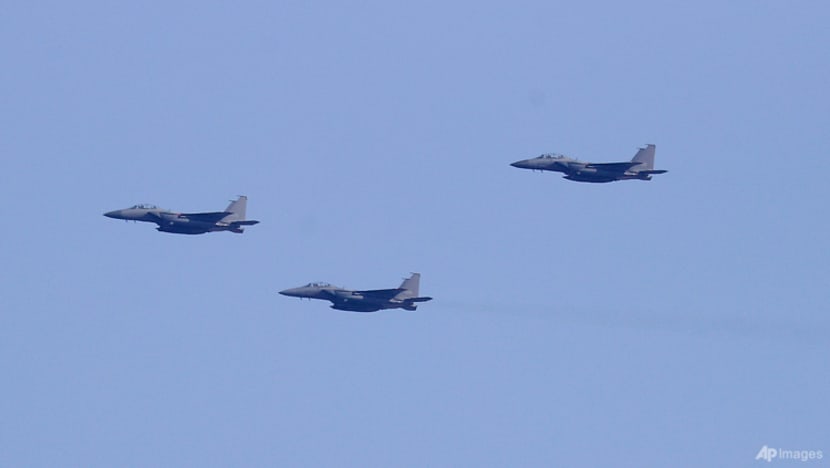
Seoul says Chinese, Russian military aircraft enter its air defence zone
Close Top Stories Asia East Asia Singapore World Commentary CNA Explains Sustainability Business Sport Latest News Insider TODAY Big Read Up Close In Pixels Ground Up Voices Adulting Mental Health Matters Watch Live TV News Reports Documentaries & Shows TV Schedule Listen CNA938

Ashok Gehlot questions ‘elusive’ justice in Kanhaiya Lal murder case, says BJP used issue for elections
The Congress leader stated that despite the NIA investigating and a special court hearing the case, there has been no significant progress under BJP governments at the Centre and State

Meldingen som åpnet det lukkede trossamfunnet: «Jeg er minstedatteren til en av de største imamene i Norge.»
I flere norske byer går tenåringer på døgnåpne koranskoler.Vi har ikke visst hvordan det er å bo i disse moskeene.Før nå.