Spain’s 16,500-kilometer World Cup odyssey highlights the logistics gamble of FIFA’s expanded tournament format
The expanded World Cup format strains teams with uneven travel demands, potentially impacting player performance and competitive fairness. The post Spain’s 16,500-kilometer World Cup odyssey highlights the logistics gamble of FIFA’s expanded tournament format appeared first on Cr

Spain’s 16,500-kilometer World Cup odyssey highlights the logistics gamble of FIFA’s expanded tournament format The 2026 World Cup's sprawling North American footprint is testing teams, broadcasters, and the multi-billion dollar sports betting markets built around fair competition. Share Add us on Google by Editorial Team Jul. 13, 2026 Spain has traveled more than 16,500 kilometers and crossed six time zones just to reach the semi-finals of the 2026 FIFA World Cup.
Their opponent, France, has had a considerably lighter travel schedule. Advertisement The semi-final takes place in Dallas, the latest stop on a continental road trip that has taken Spain across the United States, Canada, and Mexico, the three co-hosts of the first-ever 48-team World Cup. France, meanwhile, has benefited from a far more consolidated travel path.
A World Cup built for scale, not for players Spain’s journey is the poster child for that tradeoff. Over 16,500 kilometers of air travel since the tournament began, with six time-zone changes stacked on top. France, by contrast, appears to have drawn a friendlier hand from the scheduling gods.
Their travel logistics have been described as significantly lighter, a gap that becomes material when you’re talking about elite athletes performing at the highest level every few days. Disclosure: This article was edited by Editorial Team. For more information on how we create and review content, see our Editorial Policy.
SOCCER Spain’s 16,500-kilometer World Cup odyssey highlights the logistics gamble of FIFA’s expanded tournament format The 2026 World Cup's sprawling North American footprint is testing teams, broadcasters, and the multi-billion dollar sports betting markets built around fair competition. by Editorial Team Jul. 13, 2026 Share Add us on Google Spain has traveled more than 16,500 kilometers and crossed six time zones just to reach the semi-finals of the 2026 FIFA World Cup.
Their opponent, France, has had a considerably lighter travel schedule. Advertisement The semi-final takes place in Dallas, the latest stop on a continental road trip that has taken Spain across the United States, Canada, and Mexico, the three co-hosts of the first-ever 48-team World Cup. France, meanwhile, has benefited from a far more consolidated travel path.
A World Cup built for scale, not for players Spain’s journey is the poster child for that tradeoff. Over 16,500 kilometers of air travel since the tournament began, with six time-zone changes stacked on top. France, by contrast, appears to have drawn a friendlier hand from the scheduling gods.
Their travel logistics have been described as significantly lighter, a gap that becomes material when you’re talking about elite athletes performing at the highest level every few days. Disclosure: This article was edited by Editorial Team. For more information on how we create and review content, see our Editorial Policy.
Đọc thêm từ Tiền số / Crypto

US attacks IRGC sites on Kish Island amid regional tensions
The attack risks escalating U.S.-Iran tensions, potentially destabilizing the region and impacting global markets and diplomatic relations. The post US attacks IRGC sites on Kish Island amid regional tensions appeared first on Crypto Briefing.

US launches new airstrikes in Iran despite Trump hinting at possible deal
The U.S. airstrikes may exacerbate regional instability, impacting Iran's political future and complicating diplomatic efforts. The post US launches new airstrikes in Iran despite Trump hinting at possible deal appeared first on Crypto Briefing.

Bahrain claims interception of Iranian air attacks amid regional tensions
The interception claim, if true, may stabilize regional tensions, reducing the likelihood of Iran closing its airspace amid ongoing conflicts. The post Bahrain claims interception of Iranian air attacks amid regional tensions appeared first on Crypto Briefing.
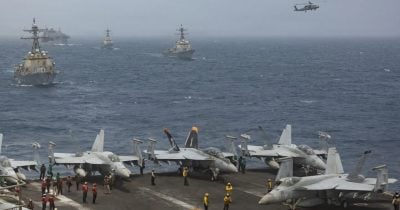
Gold declines as US rate hike expectations rise amid Strait of Hormuz tensions
Rising US rate hike expectations amid geopolitical tensions could weaken gold's appeal, impacting global markets and inflation dynamics. The post Gold declines as US rate hike expectations rise amid Strait of Hormuz tensions appeared first on Crypto Briefing.