Seven National Academies of Science Summit in Paris — Joint declaration on three themes: satellites, the Arctic, and brain health
The G-Science Academies (S7) adopted a joint declaration for the G7 Summit at their Paris meeting and handed it to President Emmanuel Macron.
The G-Science Academies (S7) adopted a joint declaration for the G7 Summit at their Paris meeting and handed it to President Emmanuel Macron. As part of the G7 Summit hosted by the chair country, the S7 is organized by the science academies of the participating nations to compile major scientific priorities and recommendations. According to the Élysée Palace, at a time when independent research is increasingly under threat, Macron met with the S7 rapporteurs to discuss the recommendations and reaffirmed his commitment to open and free science, which is one of the cornerstones of democracy.
The joint statement addressed three themes: "Large Satellite Constellations: Perspectives and Challenges," "The Global Arctic: Unprecedented Changes, Global Stakes," and "Advancing Brain Health (including Mental Health) for Global Societal Resilience." While large satellite constellations offer significant benefits and possibilities, such as communication, sensing, and internet expansion, they act as disruptive factors for optical and radio astronomy and bring adverse effects, including debris generation risks and impacts on the upper atmosphere. The recommendations include strengthening research and development and uncertainty quantification regarding large satellite constellations, evaluating and mitigating impacts on the upper atmosphere, improving space traffic management, and considering these issues under international treaties.
While disadvantages such as economic losses caused by brain disorders are increasing, breakthrough advances in neuroscience, technology, and AI are creating unprecedented opportunities for research and innovation toward promoting brain health. The S7 put forward six recommendations for the G7 to seize this opportunity to reduce disability-related costs, preserve brain capital for education and productive employment, and foster growth in new business sectors for brain healthcare technology and services. Specifically, they recommend making brain health a cross-cutting priority across the entire G7 agenda, establishing a permanent advisory board on brain health, and launching an investment and innovation program to attract private investment, promote cross-border research, data utilization, and AI-driven data integration.
They also call for establishing a brain health observatory, leading the brain research and innovation agenda, and expanding these efforts beyond the G7. The Arctic region is the area on Earth most affected by environmental changes, and its impacts are extending outside the region. It must be viewed as an alarm bell region for evaluating the stability of Earth's entire system.
The recommendations call for mitigating environmental changes through immediate reductions in greenhouse gases, strengthening international scientific cooperation, promoting evidence-based adaptation measures, deepening research into systemic risks, and enabling indigenous peoples and local communities in the Arctic to participate in international governance and decision-making. Policy & Society This article has been translated by JST with permission from The Science News Ltd. (https://sci-news.
co.jp/). Unauthorized reproduction of the article and photographs is prohibited.
This article has been translated by JST with permission from The Science News Ltd. (https://sci-news.co.
jp/). Unauthorized reproduction of the article and photographs is prohibited.
Đọc thêm từ Khoa học
Tokai University and partners survey 100 suicide attempt survivors — Inability to confide leading cause in teens
A joint research group including Professor Katsunaka Mikami of the Department of Psychiatry, Department of General Medicine, Tokai University School of Medicine, and Chief Masahide Usami of the Department of Child and Adolescent Psychiatry, National Kohnodai Medical Center, Japan
Institute of Science Tokyo and TMiMS discover method for sustaining functional recovery after cerebral infarction
A research group including Assistant Professor Jun Tsuyama and Professor Takashi Shichita of the Department of Neuroinflammation and Repair at the Medical Research Laboratory, Institute of Integrated Research at the Institute of Science Tokyo, in collaboration with the Tokyo Metr
Unmanned reaction condition experiments for small molecule drugs jointly developed by Shimadzu and Astellas
Shimadzu Corporation, in collaboration with Astellas Pharma Inc., has developed "AtmosOrchestra," a robotic High-Throughput Experimentation (HTE) automation device designed for screening reaction conditions of small and medium molecule pharmaceuticals.
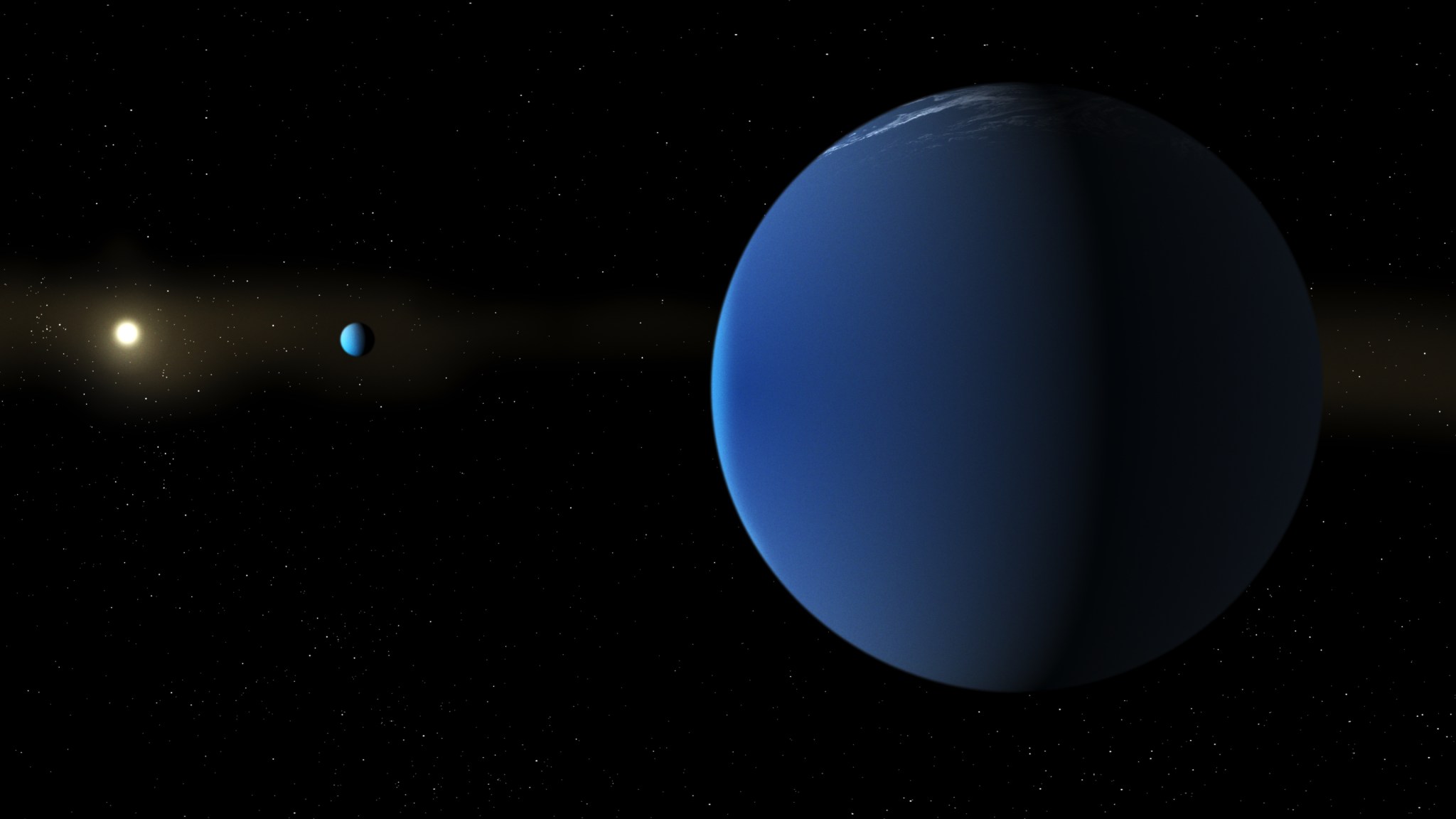
NASA’s TESS Mission Reveals the “Puffiest” Planets Ever Found
NASA has revealed two new “super-puff” planets, giant worlds so light that their density is comparable to cotton candy. Scientists calculate that these Jupiter-sized planets are the “puffiest” worlds ever found.