Scott Bessent assures Americans Fort Knox gold is still there — then reminds them the dollar is no longer backed by it
Moneywise and Yahoo Finance LLC may earn commission or revenue through links in the content below. Is Fort Knox's gold still there? It's a question that has long fascinated Americans — including President Donald Trump (1).
Moneywise and Yahoo Finance LLC may earn commission or revenue through links in the content below. Is Fort Knox's gold still there? It's a question that has long fascinated Americans — including President Donald Trump (1).
Treasury Secretary Scott Bessent now says he has an answer. Must Read Jeff Bezos backs a platform that lets anyone invest in rental homes for as little as $100 — 6 ways to build wealth like a landlord without actually being one JPMorgan still sees gold hitting $5,000/oz by Q4 — and savvy investors are protecting their wealth with a tax-advantaged Gold IRA. Learn more with a free guide from Priority Gold The tax breaks in Trump's 'big beautiful bill' expire after 2028 — and experts say most people won't act in time.
What to do before the window closes During a recent conversation (2) with Fox News, host Jesse Watters asked Bessent bluntly, "Have you visited Fort Knox?" "I haven't. People on my staff have," Bessent replied.
"The treasurer has been to Fort Knox, and I'm happy to say all gold is present and accounted for." Built in 1936, the Fort Knox Bullion Depository is a highly fortified vault adjacent to the U.S.
Army post in Fort Knox, Kentucky. According to the U.S.
Mint (3), the facility currently holds 147.3 million ounces of gold, doesn't allow visitors and has only removed "very small quantities" of bullion for purity testing during audits. But Fort Knox holds only part of America's gold reserves.
"The U.S. has the largest pile of gold in the world — over $1 trillion at current market value," Bessent added.
The U.S. does hold more gold than any other country.
But while the metal remains in government vaults, it no longer backs the dollars Americans carry in their wallets. That became clear when Watters asked Bessent about framed displays of earlier U.S.
currencies hanging on the wall. "These are the displays of our currency over the years. We used to have silver certificates.
We used to be backed by silver, sometimes gold. And then in the '70s, we just went to what was called fiat currency — where you didn't have to keep gold or silver in the vault," Bessent explained. For decades after World War II, the dollar sat at the center of the Bretton Woods monetary system.
Foreign governments could exchange U.S. dollars for gold at a fixed price of $35 an ounce, requiring Washington to maintain enough bullion to support confidence in the currency.
That arrangement ended in August 1971, when President Richard Nixon closed the "gold window" and stopped foreign central banks from converting dollars into U.S. gold.
The move ended the dollar's last official tie to gold and marked the beginning of today's fiat system, where the currency is backed by the "full faith and credit" of the U.S. government rather than a fixed amount of gold.
Story Continues And while the U.S. remains an economic powerhouse, critics of fiat currency have long warned that because the Federal Reserve can essentially print money in unlimited quantities, too much money creation can fuel inflation and erode the dollar's purchasing power over time.
Americans have already felt that erosion firsthand. According to the Federal Reserve Bank of Minneapolis Inflation Calculator (4), $100 in 2026 has the same purchasing power as just $12.25 did in 1971.
That's right. $100 became $12 in real terms — even though the gold at Fort Knox never left the vault. Read More: Millionaires under 43 hold only 25% of their wealth in stocks.
Here's where their money is actually going The asset central banks can't print During the conversation with Fox News, Watters told Bessent that he had heard the U.S. was receiving more gold from Venezuela.
Bessent confirmed it. "We are getting a lot from Venezuela. We are getting gold," he said.
And the U.S. is far from the only country adding to its reserves.
According to the World Gold Council (5), central banks around the world have purchased an average of roughly 1,000 metric tons of gold annually over the past four years — about double the average recorded during the previous decade. That buying spree sends a clear signal: Even in a world dominated by fiat currencies, governments still see value in owning an asset that can't be printed at will or created at the push of a button. Everyday Americans may not have a vault like Fort Knox, but they can apply the same principle on a smaller scale.
Adding some gold to a diversified portfolio can offer a potential hedge against inflation, currency weakness and periods of market or geopolitical stress. Ray Dalio, founder of the world's largest hedge fund, Bridgewater Associates, told CNBC (6) in 2025 that "people don't have, typically, an adequate amount of gold in their portfolio," adding that "when bad times come, gold is a very effective diversifier." Over the past five years, as inflation continued to chip away at the purchasing power of the dollar, gold has climbed around 120% (7).
Other prominent voices see further potential. JPMorgan Chase CEO Jamie Dimon ha
Đọc thêm từ Tài chính

Tai Po fire inquiry panel to delay submitting final report to late October: source
An independent committee examining the causes of Hong Kong’s deadly Wang Fuk Court blaze will delay submitting its final report to late October, a month later than expected, citing the need for more time to review documents, the South China Morning Post has learned. A source conf
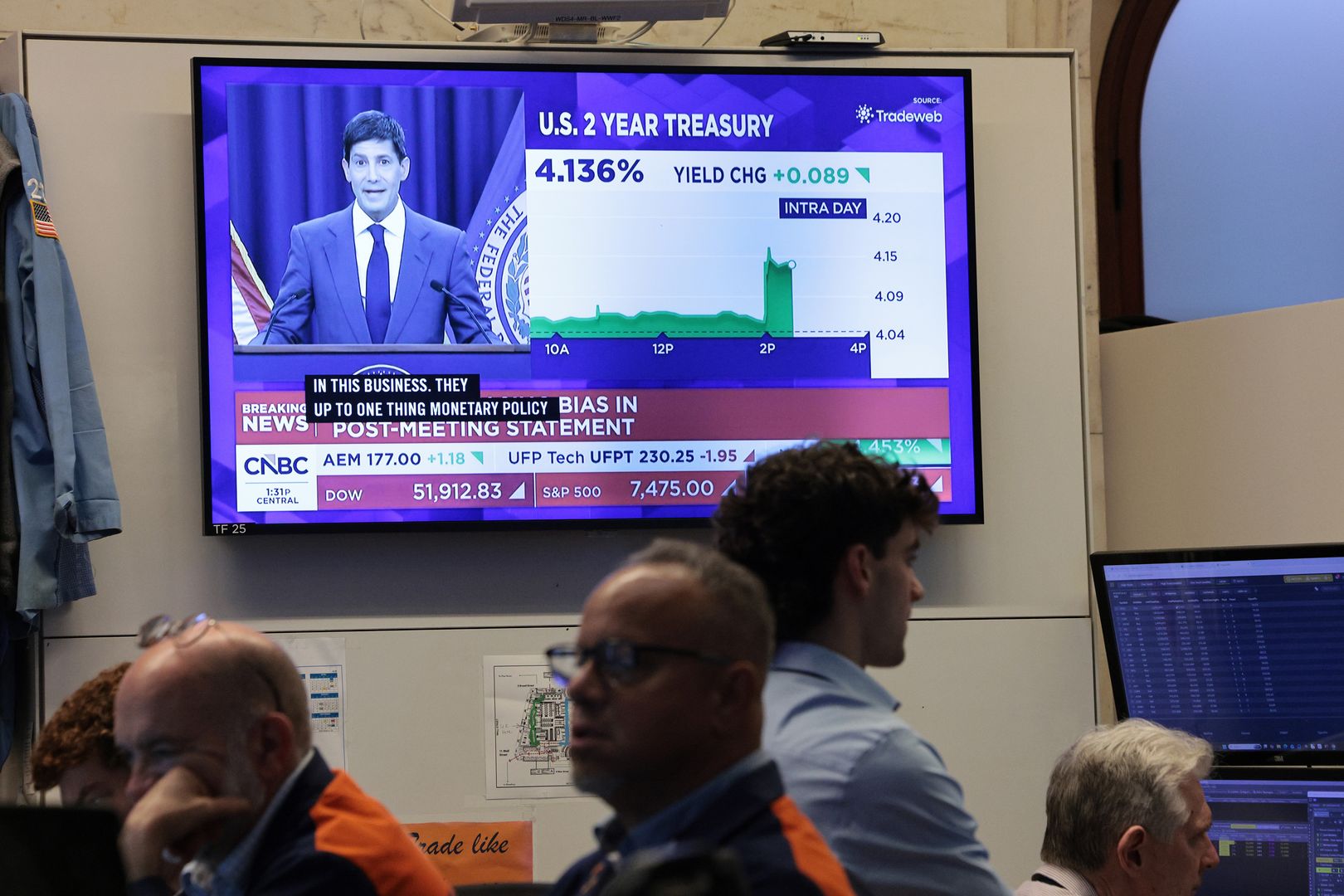
Massive bitcoin call spreads target $72,000 by month end, right when the Fed meets
MarketsMassive bitcoin call spreads target $72,000 by month end, right when the Fed meetsLarge traders are betting on a BTC price rise to $72,000 by the end of the month, latest options market flow suggests.By Omkar Godbole|Edited by Aoyon Ashraf Jul 18, 2026, 2:15 p.m.
CEO: SpaceX's record IPO was the space economy's opening act. Here's what comes next.
Chad Anderson is the founder and CEO of Space Capital, where he has been pioneering investment in the space economy for over a decade. He is also the author of "The Space Economy," published by Wiley. Disclosure: Anderson is an early investor in SpaceX, along with dozens of other
Why data may become China’s most durable advantage in the AI race
The global AI race is no longer just about chips or models. Increasingly, it is also about data – namely, the language resources that feed and train them. Beijing has identified that layer as a new strategic frontier, accelerating the buildout of a national ecosystem of Chinese-l