Sarah Baartman, 'Hottentot Venus', finally came home 192 years later
Sarah Baartman's life was marked by colonial violence and exploitation in South Africa. She was exhibited in Europe as the "Hottentot Venus" for voyeuristic curiosity. French scientists studied her body after her death, which fueled racial science narratives. Her remains were eve
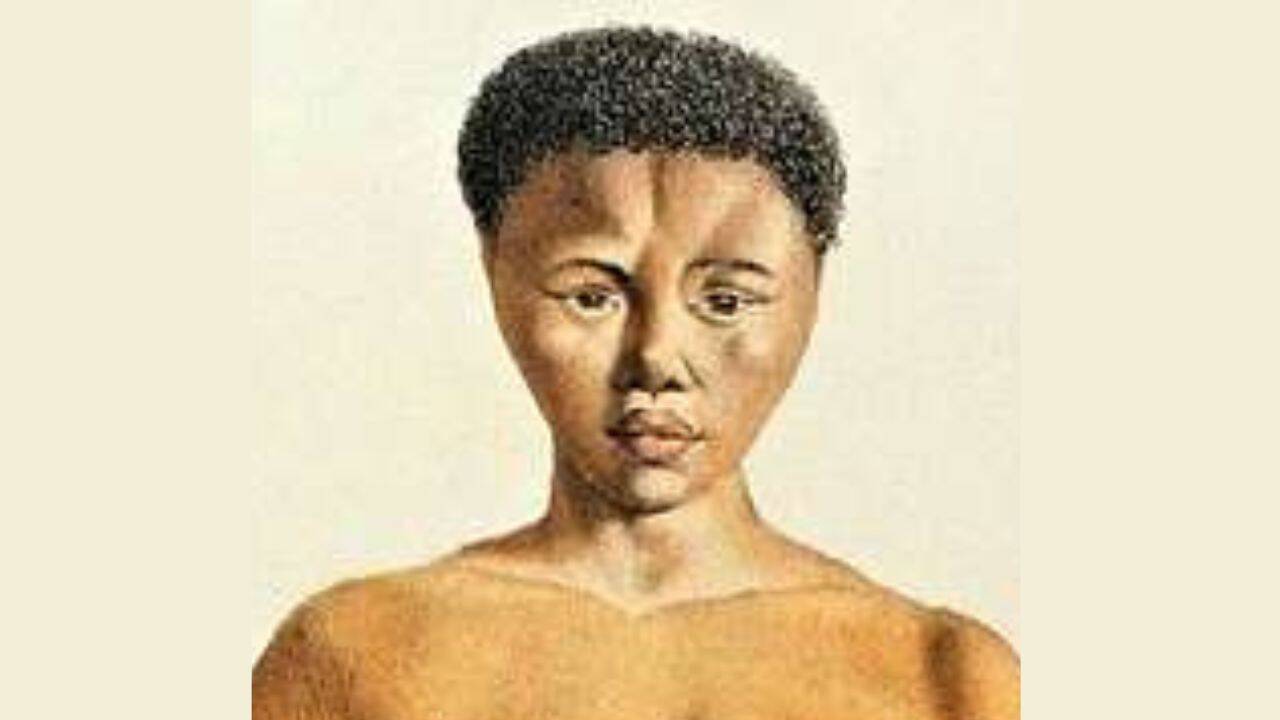
Sign InTOI TOI NewsetimeslifestyletrendingThe tragic life of Sarah Baartman: The woman exploited for her body as the ‘Hottentot Venus’ and displayed even after death, finally came home 192 years laterTrendingSocrates QuotesVande BharatRosemary Oil BenefitsAnkur WarikooAnanya BirlaSkin Barrier DamageSecurity Guard ConfessionJapanese TechniquesLazy People PsychologyOscar Wild QuoteSocrates QuotesVande BharatRosemary Oil BenefitsAnkur WarikooAnanya BirlaSkin Barrier DamageSecurity Guard ConfessionJapanese TechniquesLazy People PsychologyOscar Wild QuoteSocrates QuotesVande BharatRosemary Oil BenefitsAnkur WarikooAnanya BirlaSkin Barrier DamageSecurity Guard ConfessionJapanese TechniquesLazy People PsychologyOscar Wild QuoteThe tragic life of Sarah Baartman: The woman exploited for her body as the ‘Hottentot Venus’ and displayed even after death, finally came home 192 years laterTOI Trending Desk / etimes.in / Jul 18, 2026, 05:53 ISTCommentsShareAA+Text SizeSmallMediumLarge Sarah Baartman In the late 1700s, in what is now South Africa’s Eastern Cape, a girl named Sarah (Sara/Saartjie) Baartman was born into a world already shaped by colonial violence. Her mother died when she was two.
Her father, a cattle driver, died when she was a teenager. As a young woman, a Dutch colonist murdered her partner, and the baby they had together did not survive. Bereft of family and security, she entered domestic service in Cape Town, doing ordinary work in an increasingly brutal system.
Nothing about her early life suggested she would become one of the most talked‑about women in modern history. Yet her body, and the way others chose to see it, eventually turned her into a symbol of racism, exploitation and the dehumanising gaze that defined much of the colonial era.From Cape Town to the “Hottentot Venus”In October 1810, Sarah—illiterate and with limited options—allegedly signed a contract with English ship’s surgeon William Dunlop and Hendrik Cesars, the mixed‑race entrepreneur whose household she worked in.
The agreement said she would travel to England to take part in shows, as per reports.Sarah had steatopygia, a natural build‑up of fat leading to extremely protuberant buttocks, a trait found among some Khoisan women. At the time, in Europe, curves were fashionable and caricatured, and her body drew enormous, voyeuristic curiosity.
When she arrived in London, she was exhibited in a venue around Piccadilly Circus under the stage name “Hottentot Venus”—“Hottentot” was then a Dutch term for Khoikhoi and San peoples (now understood as derogatory), and “Venus” evoked the Roman goddess of beauty. On stage, she wore tight, flesh‑coloured clothing adorned with beads and feathers, smoked a pipe, and was invited to dance and play instruments. Wealthy patrons could pay for private “demonstrations” in their homes where guests were allowed to touch her.
Even in a London already home to various ethnic minorities, Sarah was not seen as a full participant in society; she was a spectacle.Campaigners against slavery, which Britain had officially banned in the trade (but not in practice) in 1807, were horrified. Her handlers were prosecuted for holding her against her will, but not convicted—Sarah herself testified in their favour.
Historians still debate whether she was coerced or acting under some sense of agency and hope for better prospects. As one scholar has noted, the relationship between Sarah and her promoters was never equal, even if she believed she might gain materially or otherwise from performing.Her popularity faded over time, and she went on tour around Britain and Ireland—always centred on the same voyeuristic curiosity.
Paris, “racial science,” and a brutal afterlifeIn 1814, Sarah moved to Paris with Cesars. There, she briefly became a kind of cult celebrity, frequenting the Café de Paris and attending society parties. Eventually, Cesars returned to South Africa, and Sarah fell under the control of an “animal exhibitor” known as Reaux.
Accounts suggest she drank and smoked heavily during this period and was likely prostituted by him.French scientists and artists became interested in her. She agreed to be studied and painted but refused to appear fully naked, insisting that such exposure was beneath her dignity; even in the shows, she had never been completely unclothed.
This era marked the rise of what would come to be called “racial science,” where bodies of colonised peoples were measured, classified and ranked in ways that tried to justify domination, as per the BBC.On 29 December 1815, Sarah Baartman died at about 26 years of age. The recorded cause was an “inflammatory and eruptive disease,” later speculated to be pneumonia, syphilis, alcoholism, or a combination of factors linked to her harsh life.
Death did not end her exhibition.The naturalist Georges Cuvier, who had once danced with her at a party, made a plaster cast of her body and then dissected it, the report further reveals. He preserved her skeleton and pickled he
Đọc thêm từ Thế giới

US, Iran widen attacks in return to full–blown war
US sending dozens of refueling aircraft to Israel ahead of potential attack on Iran Iran said to tell Hezbollah, allies to prepare for wider conflict 8 reported killed in overnight US strikes on Iran IRGC says it targeted US aircraft, radar systems in Jordan, Qatar; Kuwait says w

Pakistan, China sign $440m pharmaceutical agreements
Shehbaz Sharif says govt’s reforms to build self-reliant economy Urges URAAN scheme participants to contribute to Pakistan’s prosperity Directs for expediting implementation of ease of doing business Act 2025.
![[1분 쇼츠] 4600km 거리에서 찍은 화성 타임랩스](https://flexible.img.hani.co.kr/flexible/normal/300/180/imgdb/original/2026/0718/20260718500319.webp)
[1분 쇼츠] 4600km 거리에서 찍은 화성 타임랩스
본문미래&과학과학[1분 쇼츠] 4600km 거리에서 찍은 화성 타임랩스곽노필기자수정 2026-07-18 12:36펼침0:00Your browser does not support theaudio element.구글 선호 매체 등록우주탐사선 프시케, 5월 화성 근접통과시속 2만km로 날아가며 수천장 촬영미국의 소행성 탐사선 프시케가 5월15일 화성을 4600km 거리에서 시속 2만km의 속도로 통과하며 촬영한 사진. 4개의 사진을 합성한 것이다.

‘세계 최대 규모 상장’ 스페이스X, 시가총액 1500조원 증발
본문국제국제경제‘세계 최대 규모 상장’ 스페이스X, 시가총액 1500조원 증발채윤태기자수정 2026-07-18 12:38펼침0:00Your browser does not support theaudio element.구글 선호 매체 등록상장 뒤 첫 스타십 시험 비행 중단 악재스페이스엑스(X)가 2026년 4월24일(현지시각) 공개한 발사체 ‘스타십’의 시험 비행 영상. 스페이스엑스 누리집 영상 갈무리 광고세계 최대 규모 기업공개(IPO)로 화려하게 증시에 입성했던 미국 우주항공·인공지능(AI) 기업