Running in nature increases eco-friendly behavior — Lower initial awareness leads to greatest change
A research group, including Associate Professor Rei Yamashita from the Faculty of Health and Sports Sciences at Toyo University, Assistant Professor Kazunori Maeda from the School of Economics and Management at Kochi University of Technology, and Assistant Professor Kosuke Takata
A research group, including Associate Professor Rei Yamashita from the Faculty of Health and Sports Sciences at Toyo University, Assistant Professor Kazunori Maeda from the School of Economics and Management at Kochi University of Technology, and Assistant Professor Kosuke Takata from the Faculty of Sport Sciences at Waseda University (currently affiliated with Ritsumeikan University), has revealed that participating in a sports event held in a natural environment impacts daily eco-friendly behaviors. By surveying first-time participants of the River Shimanto Ultra Marathon, the team found that environmentally conscious behaviors significantly increased after the race. Notably, individuals with lower environmental intentions before the event showed the largest growth in behavior.
These findings are expected to find applications in areas such as sports tourism policy. The results were published in the Journal of Sustainable Tourism on April 8. In recent years, sports events held in nature, such as trail running and ultra-marathons, have drawn attention from the perspective of tourism and regional promotion.
However, whether these events could serve as a catalyst for raising participants' environmental awareness and eco-friendly actions remained unclear. Most conventional studies have been limited to surveys conducted at a single point in time, leaving insufficient verification as to whether they lead to actual behavioral changes in participants. To address this, the team utilized Protection Motivation Theory (PMT) as a framework to explain the background of these behavioral changes.
This theory suggests that an individual's behavioral intentions and actual actions are driven by how they perceive a problem as a threat, as well as how capable they feel of dealing with it. Based on PMT, the researchers examined how "biospheric values," which represent a mindset of valuing nature and the global environment, and "environmental self-efficacy," which is the belief that one can take action to preserve the environment, are involved in environmental considerations and actual behavioral changes. The study analyzed first-time participants in the 100-kilometer division of the 30th River Shimanto Ultra Marathon held in October 2024.
Surveys were conducted at three distinct points in time: (i) before the event, (ii) two to three weeks after the event, and (iii) four to five weeks after the event. Questionnaires were distributed to 1,500 individuals, and data from 122 participants who responded to all surveys were used for the analysis. The average age of the respondents was 46.
4 years, and 80.3% were male. The results showed that actual eco-friendly behaviors, such as recycling and saving electricity, significantly increased from before the event to two-three weeks post-event, and remained elevated four-five weeks post-event.
This confirmed that the increase in environmentally conscious actions sustained even some time after the event had concluded. Furthermore, it was confirmed that values prioritizing nature and the global environment, alongside the feeling that one can do something for the environment, acted as factors that enhanced environmental considerations. Individuals whose environmental considerations were not particularly high before the race experienced the greatest increase in eco-friendly behavior afterward.
The data demonstrates that sports events utilizing natural resources can alter environmental awareness and behavior, serving as opportunities to contribute to regional sustainability. In regions blessed with rich natural environments like the Shimanto River, such events can go beyond simply enhancing the appeal of the event itself. They can generate new social value by spreading eco-friendly practices through the participants.
Yamashita stated: "In this study, through a follow-up survey of first-time participants, we demonstrated whether taking part in a sports event within a natural environment transforms daily eco-friendly behavior. While regional revitalization utilizing sports events is currently advancing in Japan, it can do more than bring economic and social effects to a region. It is possible to transform people's behavior through sports events, and I believe this insight can be applied to various contexts.
Moving forward, I hope to continue researching how sports can help solve regional challenges." Journal Information Publication: Journal of Sustainable Tourism Title: From intention to action: a longitudinal study of pro-environmental behavior change through nature-based sporting events DOI: 10.1080/09669582.
2026.2653025 Energy & Environment Policy & Society This article has been translated by JST with permission from The Science News Ltd. (https://sci-news.
co.jp/). Unauthorized reproduction of the article and photographs is prohibited.
This article has been translated by JST with permission from The Science News Ltd. (https://sci-news.co.
jp/). Unauthorized reproduction of the article and
Đọc thêm từ Khoa học
Over 60% of Japanese firms with more than 1,000 workers use generative AI
More than 60 percent of Japanese firms with over 1,000 employees use generative artificial intelligence, a survey has found, with overall adoption at 34.5 percent and many companies reporting efficiency gains while citing accuracy concerns.
Four-month oral administration of PAI-1 inhibitor makes healthy elderly people 2-3 years younger
In a semifinal clinical trial (specified clinical trial) for "XPRIZE Healthspan," an international competition for longevity, Professor Toshio Miyata of Tohoku University Graduate School of Medicine and his collaborators at Hiroshima University, Tokai University and Renascience I
Four new species of snapping shrimp confirmed in Chiba Prefecture
A research group, including Research Director Tomoyuki Komai of the Natural History Museum and Institute, Chiba, Researcher Charles Fransen of the Naturalis Biodiversity Center in the Netherlands, Dr. Retori Hiraoka of the Marine Biological Research Institute of Japan, and former
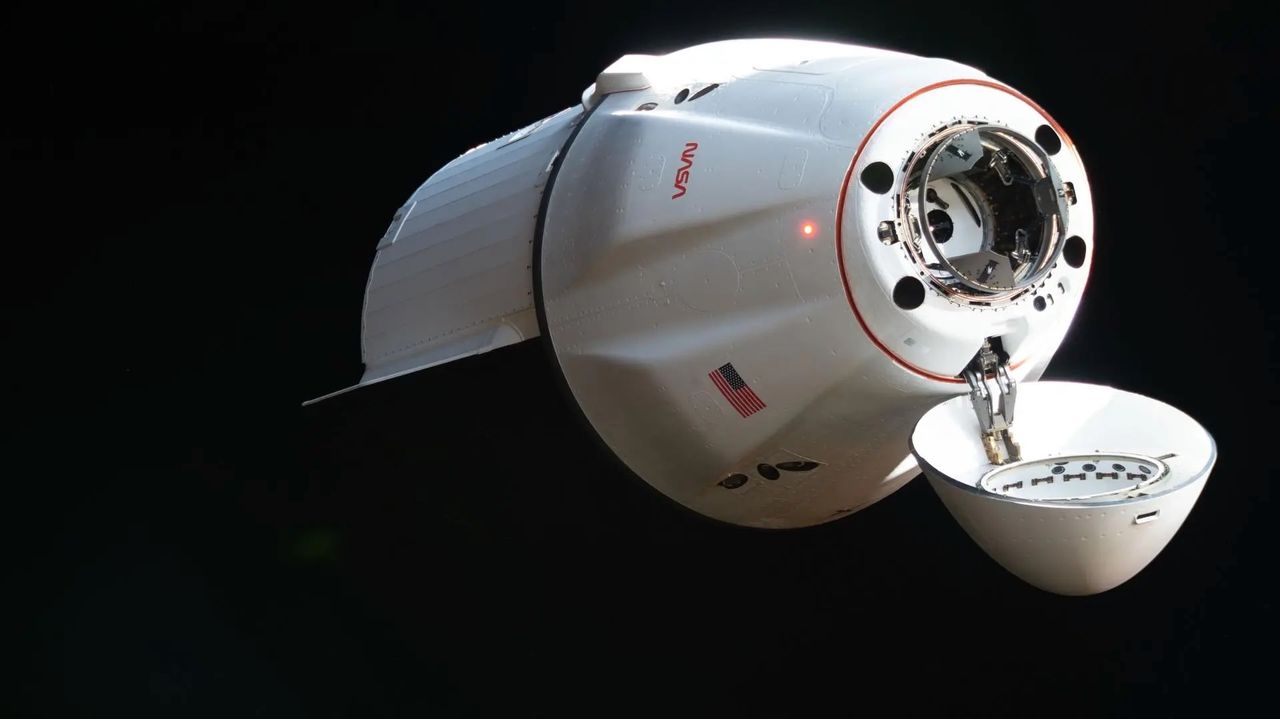
Watch SpaceX Dragon cargo capsule head home to Earth today
A SpaceX Dragon cargo spacecraft is scheduled to begin its journey back to Earth today (June 16), and you can watch the action live.