Rome and Persia history lessons for US-Iran peace deal
“Making peace with Iran may be just as painful as winning the war,” a recent CNN report noted. As negotiations roll on during a shaky ceasefire, what a deal between the US and Iran might look like and whether it holds is anyone’s guess. As a scholar of ancient Persia (which event

Support Asia Times Keep independent journalism alive Support us A public event in Tehran depicting ancient Persian warriors alongside modern Iranian forces. Image: EPA via The Conversation / Abedin Taherkenareh “Making peace with Iran may be just as painful as winning the war,” a recent CNN report noted. As negotiations roll on during a shaky ceasefire, what a deal between the US and Iran might look like and whether it holds is anyone’s guess.
As a scholar of ancient Persia (which eventually became Iran), the difficulties US President Donald Trump is now facing don’t exactly surprise me. After dozens of wars between the two ancient empires of Rome and Persia, peace deals often failed to solve problems and sometimes made the situation worse. Lurching from conflict to conflict The powerful empires of ancient Persia (ruled by the Parthians from 247 BCE to 224 CE, and then the Sasanians from 224 to 651 CE) rivaled the Roman Empire for centuries.
They often went to war and the peace deals they struck were mostly about buying time. The first major conflict between Rome and Persia was the disastrous invasion led by the Roman general Crassus in 53 BCE. Crassus himself died and thousands of Roman soldiers were killed in the plains near Carrhae in southern Turkey.
Ongoing conflict emboldened the Parthians and in 20 BCE, the Romans were forced to recognize the Euphrates River as a boundary as part of a peace agreement. For Rome, this represented a concession because up to this point its territorial expansion couldn’t be stopped. Conflict between Rome and Parthia would break out again in the middle of the first century CE.
This time, it was over the kingdom of Armenia, which sat strategically between the two empires in modern Armenia and eastern Turkey. Following the war, the Roman emperor Nero and the Parthian King, Vologases I, struck the Treaty of Rhandeia in 63 CE. Under this deal, the king of Armenia was to be nominated by the Parthians but actually crowned by the emperor in Rome.
The treaty settled the immediate dispute but over time became unwieldy. Later, when the Parthians simply brushed the treaty aside, the Roman emperor Trajan punished them with a major invasion in 114 CE. Despite some impressive initial successes, including the capture of the Parthian capital, the invasion failed.
All of Trajan’s gains were lost by the time of his death in 117 CE. Following the replacement of the Parthians by the Sasanians as rulers of Persia in 224 CE, conflict with Rome escalated even further. Control of Armenia was often the focus and formed a key element of peace agreements.
After the Roman emperor Gordian III’s death in an invasion of the Sasanian Empire in 244 CE, a fresh agreement was struck between the two powers. The Sasanians imposed financial penalties and a clause banning Roman involvement in Armenia. But within a few years Rome ignored the treaty.
This led to a series of devastating Sasanian invasions of Roman territory and the capture of the Roman emperor Valerian in 260 CE. The statue, titled Kneeling Before Iran, shows the emperor grovelling before Persian king Shapur I. Where did this imagery come from?
And why now? @Macquarie_Uni https://t.co/R7tMVBzxNf— The Conversation – Australia + New Zealand (@ConversationEDU) November 10, 2025 In the late 290s, Rome would extract some revenge with a significant victory over the Sasanian king, Narseh.
The Treaty of Nisibis that followed in 299 CE contained a number of clauses, which extended Roman power further east. It also gave control of Armenia to Rome. But this treaty sowed the seeds of considerable enmity.
When the Sasanian king Shapur II invaded Roman territory in the 350s, his main aim was to repudiate the treaty made 60 years earlier. This was reinforced when the Roman emperor Julian invaded the Sasanian Empire and suffered a heavy defeat (including his own death) in 363 CE. While the level of conflict between Rome and ancient Iran was lower in the fifth century CE, it was even more pronounced in the sixth and seventh centuries.
Rome and Iran were almost constantly at war during this period. There were numerous treaties and attempts to strike peace but none lasted. Perhaps the most futile was the so-called Eternal Peace of 532, which lasted less than eight years.
Easier to make war than peace As history shows, peace deals may be trumpeted at the time they are signed but can end up sowing the seeds of discord and future conflict. Rome and Persia’s fight over Armenia was eventually settled in an agreement to partition the kingdom between Rome and Iran in the 380s. But it took more than 400 years to achieve, despite dozens of attempts.
An ongoing ebb and flow of conflict, invasions, threats and stalemates punctuated the entire time frame before. Does a lasting peace arrangement between the US and Iran face similar prospects? Only time will tell.
Hopefully this time, it won’t take centuries to get there. Peter Edwell is associate professor in ancient history, Ma
Đọc thêm từ Thế giới

스페이스엑스, 나스닥 상장 한달도 안돼 100지수 편입
본문국제국제경제스페이스엑스, 나스닥 상장 한달도 안돼 100지수 편입신승근기자수정 2026-06-27 15:57펼침0:00Your browser does not support theaudio element.구글 선호 매체 등록편입 완화 ‘패스트트랙’ 덕분...패시브 자금 유입 등 호재뉴욕 타임스스퀘어 나스닥 마켓사이트에서 열린 스페이스X의 기업공개(IPO) 당일, 스페이스X 최고경영자(CEO) 일론 머스크의 모습을 실시간 중계 화면이 보여주고 있다.

NBI files complaint of qualified human trafficking vs Mike Defensor, 6 others
The National Bureau of Investigation-National Capital Region filed a complaint against former congressman Mike Defensor and six others on Saturday for qualified human trafficking.
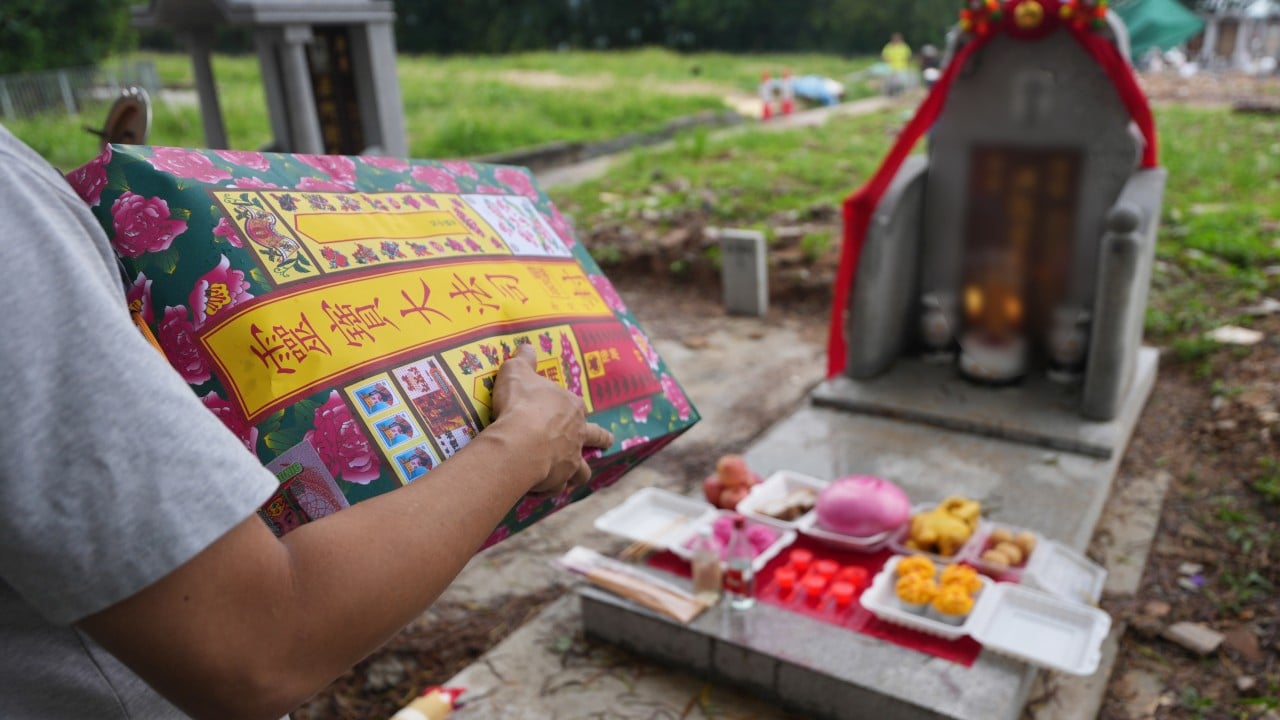
How does this NGO help Hong Kong fire victims, needy people get a dignified farewell?
On a drizzly, windy morning in June, a family gathered before a tombstone at Wo Hop Shek Cemetery in northern Hong Kong to bid farewell to a loved one who died in the Wang Fuk Court fire. Beneath the muddy grave and scattered stones lies a man surnamed Hung, in his forties, among

Sommervarmen er her. Her bør du droppe å bade.
Det er meldt nærmere 30 grader i Oslo. Vi ble med Oslos badevannsekspert for å sjekke hva som avgjør om du bør hoppe i…