Rockin’ the suburbs: The hidden factory shaping Melbourne’s music culture
This Melbourne institution curated the city’s live music culture one wall at a time. After four decades, it’s throwing open its doors.
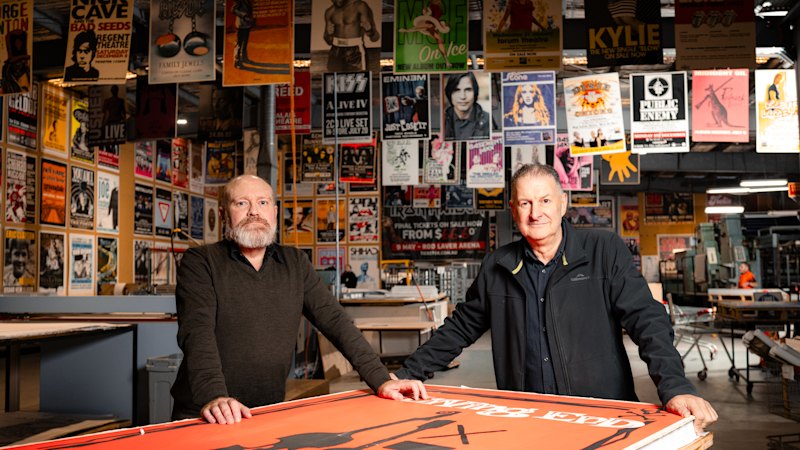
Above a circular foyer wrapped in overlapping posters of music legends, a framed photograph of one, Michael Gudinski, hangs alone in the corner of a hallway. The Mushroom Records co-founder, whom Jimmy Barnes called “the heart of Australian music”, is pictured with his arm around a beaming John D’Aquino – who stands here today, reflecting on the mantra of his friend and long-time collaborator: “Music without art is like the rock without the roll.” If Gudinski, who died five years after the picture was taken, is the heart of Australian music, D’Aquino’s Rock Posters is the brain – a timeline of the soundtrack to our lives.
It’s been 40 years since D’Aquino started the business with brother Frank, who died in 2020, and Joe Di Natale, printing their first poster in a gritty Victorian-era shopfront on Johnston Street in Fitzroy in Melbourne’s north-east. Today, Rock Posters’ operation transcends state borders, headquartered in a dark, nondescript two-storey building off the busy Normanby Avenue in Thornbury. The inside reveals a cavernous and colourful archive of music history, with tens of thousands of vintage posters stacked chest-high.
Its reserved founder, D’Aquino, has been reticent until now to allow people in. “This was his,” D’Aquino says, gesturing around the art room of the Thornbury premises, referring to his brother, Frank. The room is half taken up by two massive Canon printers, which churn out about 100 posters an hour.
“This is the heartbeat of everything we do,” D’Aquino adds. “Without this room, or the guys here, nothing else happens. It doesn’t flow.”
In decades gone by, all the posters here were screen-printed, 100 copies taking half a day to produce. The method is mostly history now, aside from the occasional job. “It’s a world that’s passed away,” D’Aquino says.
But the artistry lingers. It’s hung from the factory ceiling in dozens of screen-printed posters, which are distinguishable from their digital counterparts “from a mile away”, Rock Posters’ art director Luke Stewart says. The colour is 10 times thicker; Midnight Oil’s famed yellow hand (a favourite of D’Aquino) almost as vibrant as the day it was printed in the ’80s.
A Nick Cave and the Bad Seeds poster shows the outline of the frontman’s hair and eyes, dark against a wash of pink on the poster to promote the band’s 1994 album, Let Love In. The Sex Pistols’ poster for their legendary 1996 tour is still blazing fluorescent yellow and pink. Screen printing is labour-intensive and expensive, but the process encouraged collaboration and creativity – particularly as posters were priced by colour (so many ended up as two- and three-toned prints).
Artists themselves used to get involved, working directly with the Rock Posters team on design – another bygone interaction. Today, multinational promoters have teams dedicated to digital graphics. Where 95 per cent of Rock Posters’ output used to be music-related, that’s dwindled to less than half today – but the business has grown to produce about 8000 posters a year, promoting everything from alcohol to fashion.
“We used to have the musos come in,” Stewart says. “Ian Moss used to come in and talk posters. “You just don’t deal with them any more.”
Hulking machinery remains: great blue screen printers and a behemoth offset printer, one of six left in Australia (worth about $1.5 million new). It’s a playground for purists – among them Dave Grohl, who asked for the printing process to be documented ahead of a Foo Fighters’ album release.
The most collaborative of clients, though, was Gudinski himself. D’Aquino worked at his company, Premier Artists, before he struck out on his own. The pair of them shaped Melbourne’s culture, general manager Marcus Seal says.
“Street posters are more prolific in Melbourne than anywhere else in the world,” Seal says. “Michael and John had an awful lot to do [with that].” When Rock Posters opens to the public for the first time as part of this year’s Open House Melbourne program, D’Aquino says he wants people to get one thing out of it: nostalgia.
Looking around, he sees the past four decades of his own life … his brother, Frank, rolling posters in the art room, ready for the installers to paste them up around the city; Gudinski, dreaming up the most creative way to use the screen-printing medium. The thing about music, D’Aquino says, is it takes people back to another time.
Rock Posters will open to the public as part of the Open House Melbourne Weekend from July 24 to 26, 2026. Tickets can be bought online. Start the day with a summary of the day’s most important and interesting stories, analysis and insights.
Sign up for our Morning Edition newsletter. You have reached your maximum number of saved items. Remove items from your saved list to add more.
More:
Đọc thêm từ Thế giới
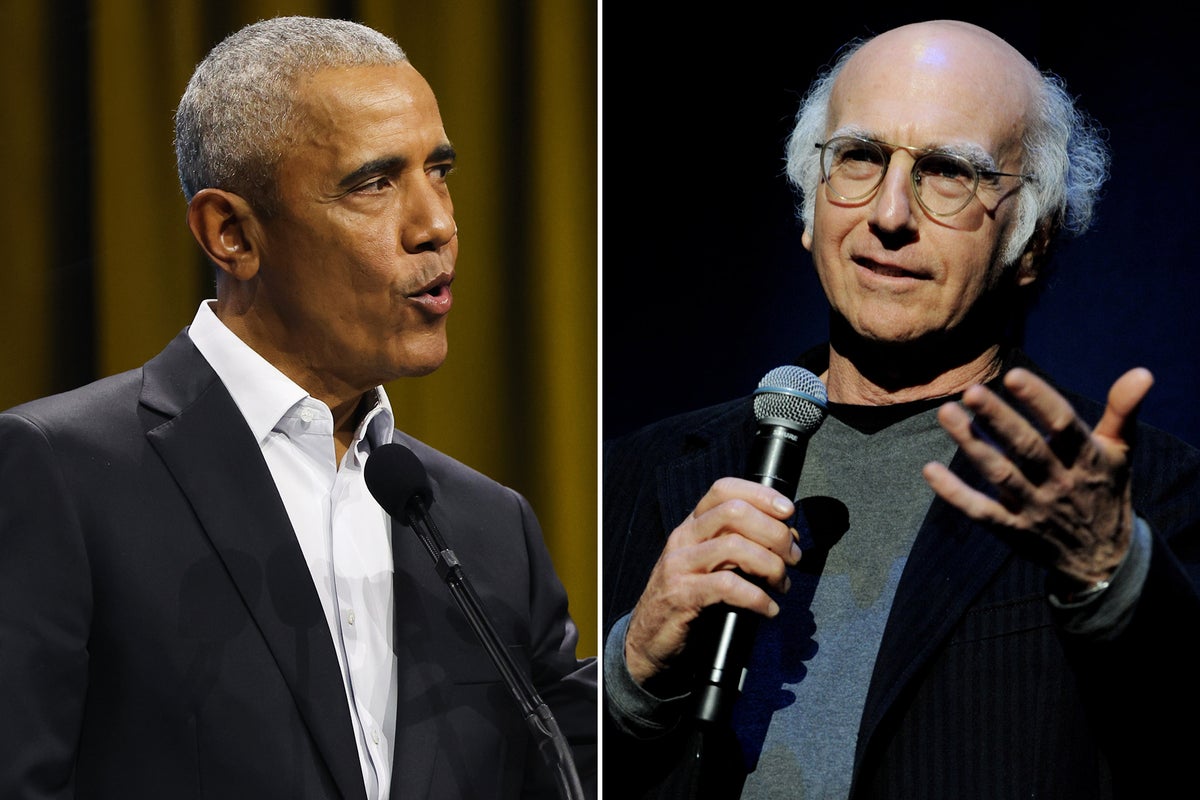
Barack Obama and Larry David are TV comedy’s most intriguing odd couple
The Obamas have moved on from sober dramas and documentaries to dip their toes in the world of comedy. But is their sketch show funny? And what does this unexpected collaboration mean? Louis Chilton shares his verdict

It’s one of the most talked-about women’s supplements right now – but does inositol live up to the hype?
Social media testimonies are extolling the benefits of inositol for women with PMOS or hormonal acne, but so many claims online often fail to stand up to scrutiny. Katie Rosseinsky asks the experts to sort the viral misinformation from reality

Volkswagen T-Roc: Class action
VW’s newest compact SUV is a winner for all the right reasons, says Sean O’Grady – especially its penchant for nicely weighted, old-fashioned controls
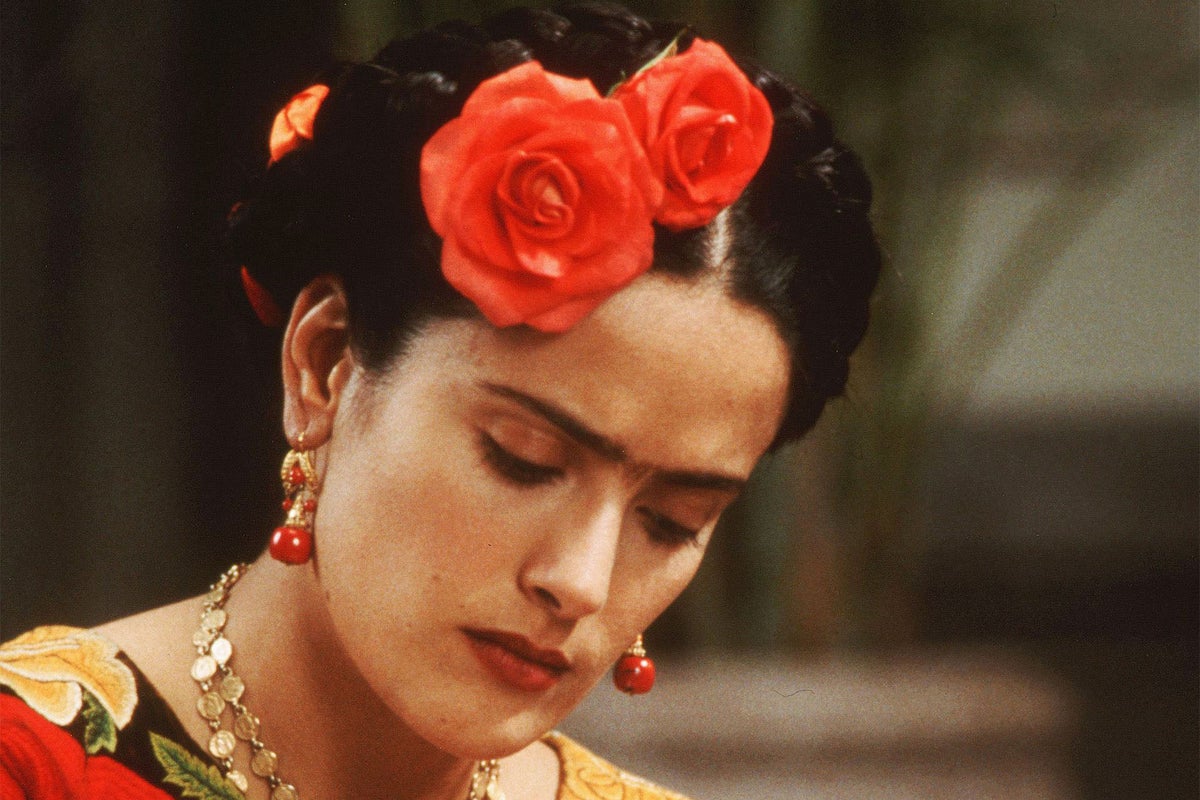
We’re always trying to save Frida Kahlo from commodification – just ask Salma Hayek
Battles have long raged over how the Mexican artist should be represented in the public sphere. As Tate Modern unveils a new exhibition showcasing (some of) her work and the many products that have made her ‘a global brand’, Adam White looks back at the disturbing making of the 2