Requiem For Long Wave, As The BBC Goes Silent
Something happened this morning which will have been unnoticed by many, but which for a certain breed of radio enthusiast marks the end of an era. The BBC stopped broadcasting …read more
Something happened this morning which will have been unnoticed by many, but which for a certain breed of radio enthusiast marks the end of an era. The BBC stopped broadcasting Radio 4 on their 198 kHz Long Wave frequency, ending over a century of transmission in the band. For now the transmitter carries a recorded message telling listeners that the service has ended, but it’s expected that this will soon be turned off.
The main 198kHz BBC transmitter, at Droitwich. Bob Nienhuis, Public domain. American readers may be unfamiliar with Long Wave as it’s a band not allocated in their region.
Covering 153 to 279 kHz, it’s a relic from the earliest days of high-power broadcasting in the 1920s, used because of the enormous distances that could be covered with its lower frequencies. The main long wave transmitter for the BBC is at Droitwich, and its demise comes because there are no more spares for its high-power transmitter tubes. It joins many Medium Wave, or AM, as it is commonly known, stations in leaving the airwaves, as increased interference from switch mode electronics and the availability of higher quality alternatives took away their listeners.
It’s fair to say that there will be few whose lives are inconvenienced by the switch-off in 2026, but it’s worth taking a moment to remember. The first BBC Long Wave transmissions in the mid-1920s were on a 1600 metre wavelength, or 187.5 kHz.
A series of international agreements saw them move to 193 kHz, and then 200 KHz or 1500 metres in 1934. They stayed on that frequency until another shift down 2 KHz to 198 kHz in 1988. They were atomic-controlled, and thus usable as a frequency standard.
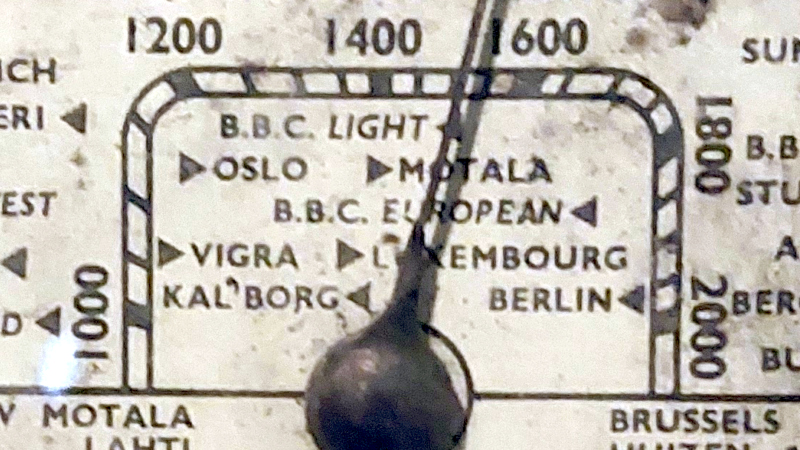
The programming started with station names redolent of their era, first the BBC National Service, then the Light Programme you’ll see on the dial in the header image, and finally the more modern-sounding Radio 4. A famous BBC programme tied to Long Wave is the Shipping Forecast, a weather bulletin for deep-sea fishermen which became c
Đọc thêm từ Công nghệ

Tesla settles lawsuit over fatal pedestrian crash involving Full Self-Driving
The lawsuit dates back to a deadly incident in Arizona in 2023.

62 Last Minute Prime Day Weekend Deals: Up to 45% Off (2026)
Prime Day is officially over, but many of our favorite, hand-picked deals are still available through the weekend.

Uber announces stronger background checks for drivers
The ride share company announced new criteria for permanent bans after recent sexual assault lawsuits.

Sakana AI's Fugu and 360's cybersecurity model Tulongfeng claim to rival Anthropic's banned Mythos and Fable 5 models amid the US export ban (Kate Park/TechCrunch)
Kate Park / TechCrunch: Sakana AI's Fugu and 360's cybersecurity model Tulongfeng claim to rival Anthropic's banned Mythos and Fable 5 models amid the US export ban — On Wednesday, Chinese cybersecurity firm 360 reportedly unveiled Tulongfeng, an AI tool it says can go head-to-he