OpenAI’s expenses reveal complex ties with investors and suppliers
OpenAI's intricate financial ties with major partners may challenge its operational independence and attract regulatory scrutiny, impacting investor confidence. The post OpenAI’s expenses reveal complex ties with investors and suppliers appeared first on Crypto Briefing.

OpenAI’s expenses reveal complex ties with investors and suppliers Nearly half of OpenAI's Q1 expenses went to related parties, raising governance questions ahead of its potential IPO Share Add us on Google by Editorial Team Jun. 23, 2026 When your biggest investor is also your biggest supplier and one of your largest customers, the accounting gets interesting. OpenAI’s confidential S-1 filing, submitted to the SEC on June 8, reveals just how tangled those relationships have become.
In the first quarter of 2026, approximately 45% of OpenAI’s total expenses were attributed to related parties. A full 72% of OpenAI’s cost of revenue in Q1 went to Microsoft and other hyperscalers. Advertisement Microsoft owns approximately 27% of OpenAI, a stake valued at around $135B after the company’s recapitalization.
Microsoft has invested a total of $13B into OpenAI, with $11.6B already deployed by late 2025. It’s also the primary provider of Azure cloud infrastructure that OpenAI runs on, and revenue-sharing agreements have historically funneled a portion of OpenAI’s earnings back to Redmond.
The related-party revenue side of the equation is growing even faster. OpenAI pulled in $758M in related-party revenue during Q1, a twelve-fold increase year-over-year. OpenAI also made $488M in non-cash equity payments for compute services during the quarter.
The infrastructure bet The filing also disclosed $665B in commitments for future chips and data centers. OpenAI has been collaborating with Oracle and SoftBank on ventures like the Stargate project. OpenAI’s losses in the quarter came in at nearly $5B, with some of those losses attributed to outside partners.
What this means for investors The S-1 filing is confidential for now, which means the full picture hasn’t reached public investors yet. When 72% of your cost of revenue goes to your investors, the independence of your financial results becomes a legitimate question. The SEC has historically scrutinized IPO candidates where revenue and expenses are heavily concentrated among entities with overlapping interests.
Disclosure: This article was edited by Editorial Team. For more information on how we create and review content, see our Editorial Policy. TECHNOLOGY OpenAI’s expenses reveal complex ties with investors and suppliers Nearly half of OpenAI's Q1 expenses went to related parties, raising governance questions ahead of its potential IPO by Editorial Team Jun.
23, 2026 Share Add us on Google When your biggest investor is also your biggest supplier and one of your largest customers, the accounting gets interesting. OpenAI’s confidential S-1 filing, submitted to the SEC on June 8, reveals just how tangled those relationships have become. In the first quarter of 2026, approximately 45% of OpenAI’s total expenses were attributed to related parties.
A full 72% of OpenAI’s cost of revenue in Q1 went to Microsoft and other hyperscalers. Advertisement Microsoft owns approximately 27% of OpenAI, a stake valued at around $135B after the company’s recapitalization. Microsoft has invested a total of $13B into OpenAI, with $11.
6B already deployed by late 2025. It’s also the primary provider of Azure cloud infrastructure that OpenAI runs on, and revenue-sharing agreements have historically funneled a portion of OpenAI’s earnings back to Redmond. The related-party revenue side of the equation is growing even faster.
OpenAI pulled in $758M in related-party revenue during Q1, a twelve-fold increase year-over-year. OpenAI also made $488M in non-cash equity payments for compute services during the quarter. The infrastructure bet The filing also disclosed $665B in commitments for future chips and data centers.
OpenAI has been collaborating with Oracle and SoftBank on ventures like the Stargate project. OpenAI’s losses in the quarter came in at nearly $5B, with some of those losses attributed to outside partners. What this means for investors The S-1 filing is confidential for now, which means the full picture hasn’t reached public investors yet.
When 72% of your cost of revenue goes to your investors, the independence of your financial results becomes a legitimate question. The SEC has historically scrutinized IPO candidates where revenue and expenses are heavily concentrated among entities with overlapping interests. Disclosure: This article was edited by Editorial Team.
For more information on how we create and review content, see our Editorial Policy.
Đọc thêm từ Tiền số / Crypto

Scotland prepares for storm delay against Brazil amid severe weather warnings in Miami
FIFA's scheduling decisions face scrutiny as severe weather risks highlight the challenges of hosting events in storm-prone regions. The post Scotland prepares for storm delay against Brazil amid severe weather warnings in Miami appeared first on Crypto Briefing.
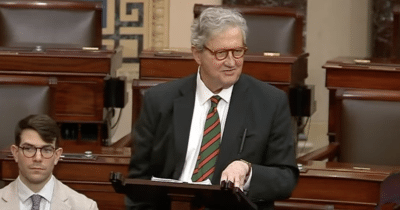
Senator Kennedy dismisses cryptocurrency’s role in US economy during affordability hearing
The hearing underscores crypto's peripheral status in economic policy, hinting at prolonged regulatory ambiguity and challenges for investors. The post Senator Kennedy dismisses cryptocurrency’s role in US economy during affordability hearing appeared first on Crypto Briefing.

Didier Deschamps to miss France’s final group game after mother’s death
Deschamps' absence could impact team morale and strategy, potentially affecting France's performance and future in the World Cup. The post Didier Deschamps to miss France’s final group game after mother’s death appeared first on Crypto Briefing.
Circle Publishes Official USDC Spec for Machine Payments Protocol, Enabling Crosschain Agent-to-Agent Commerce
Circle published a formal USDC method specification for the Machine Payments Protocol on Monday, standardizing how AI agents and automated services settle payments in USDC across EVM-compatible blockchains and Solana. The spec introduces the first crosschain MPP payment profile v