Nvidia CEO Jensen Huang takes AI regulation push to Capitol Hill
Federal AI regulation could streamline innovation and investment but risks stifling decentralized projects, impacting crypto-AI dynamics. The post Nvidia CEO Jensen Huang takes AI regulation push to Capitol Hill appeared first on Crypto Briefing.
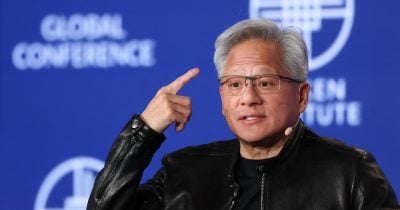
Tom's Hardware / AMD) Nvidia CEO Jensen Huang takes AI regulation push to Capitol Hill The GPU kingpin is lobbying hard for federal AI rules while projecting $1 trillion in orders for next-gen chips through 2027 Share Add us on Google by Editorial Team Jul. 27, 2026 Jensen Huang, the leather-jacket-wearing CEO of Nvidia, has been making the rounds on Capitol Hill to talk AI policy with US lawmakers. Huang’s core message to legislators has been consistent and pointed: let the federal government handle AI regulation, not individual states.
A patchwork of 50 different rule sets, he argues, would create national security vulnerabilities and slow down the very innovation that keeps the US ahead of China in the AI race. The lobbying playbook Huang’s Capitol Hill engagement is part of a broader campaign that has included a meeting with President Trump in early December 2025 to discuss export controls on advanced chips. He also participated in the White House AI Action Day and has accepted appointments to various advisory boards focused on shaping AI policy.
Advertisement At Nvidia’s June 2026 annual shareholder meeting, Huang declared that “the AI debate is over.” His point was that AI has moved from theoretical promise to practical infrastructure. It’s no longer a question of if, but of how fast.
The trillion-dollar pipeline Nvidia projects up to $1 trillion in orders for its upcoming Blackwell and Vera Rubin chip systems through 2027. To put that in perspective, that’s roughly equivalent to the entire GDP of the Netherlands. In July 2026, Huang highlighted open-weights AI models as a pathway to maintaining American leadership in the space, positioning Nvidia not just as a hardware vendor but as an ideological champion of accessible AI development.
What this means for crypto investors Nvidia’s GPUs have long been central to crypto mining operations, and the company’s pivot toward AI hasn’t severed that relationship. The intersection of AI and crypto is becoming one of the fastest-growing niches in the digital asset space. AI tokens, projects building decentralized compute networks, and protocols using machine learning for on-chain analytics all depend on the same GPU infrastructure Nvidia dominates.
Federal AI regulation could cut both ways for crypto-AI projects. A coherent national framework might provide the clarity that institutional investors crave before committing capital to AI-adjacent tokens and protocols. On the other hand, overly restrictive rules could throttle the permissionless innovation that makes decentralized AI projects appealing in the first place.
If Nvidia is funneling its best chips toward enterprise AI clients with $1 trillion in orders on the books, that could squeeze supply for smaller buyers, including crypto mining operations and decentralized compute networks. Disclosure: This article was edited by Editorial Team. For more information on how we create and review content, see our Editorial Policy.
MACRO Nvidia CEO Jensen Huang takes AI regulation push to Capitol Hill The GPU kingpin is lobbying hard for federal AI rules while projecting $1 trillion in orders for next-gen chips through 2027 by Editorial Team Jul. 27, 2026 Share Add us on Google Tom's Hardware / AMD) Jensen Huang, the leather-jacket-wearing CEO of Nvidia, has been making the rounds on Capitol Hill to talk AI policy with US lawmakers. Huang’s core message to legislators has been consistent and pointed: let the federal government handle AI regulation, not individual states.
A patchwork of 50 different rule sets, he argues, would create national security vulnerabilities and slow down the very innovation that keeps the US ahead of China in the AI race. The lobbying playbook Huang’s Capitol Hill engagement is part of a broader campaign that has included a meeting with President Trump in early December 2025 to discuss export controls on advanced chips. He also participated in the White House AI Action Day and has accepted appointments to various advisory boards focused on shaping AI policy.
Advertisement At Nvidia’s June 2026 annual shareholder meeting, Huang declared that “the AI debate is over.” His point was that AI has moved from theoretical promise to practical infrastructure. It’s no longer a question of if, but of how fast.
The trillion-dollar pipeline Nvidia projects up to $1 trillion in orders for its upcoming Blackwell and Vera Rubin chip systems through 2027. To put that in perspective, that’s roughly equivalent to the entire GDP of the Netherlands. In July 2026, Huang highlighted open-weights AI models as a pathway to maintaining American leadership in the space, positioning Nvidia not just as a hardware vendor but as an ideological champion of accessible AI development.
What this means for crypto investors Nvidia’s GPUs have long been central to crypto mining operations, and the company’s pivot toward AI hasn’t severed that relationship. The intersection of AI and crypto is becoming one of the fastest-growing nich
Đọc thêm từ Tiền số / Crypto

AMINA Bank taps Cantor for potential public listing
Cantor Fitzgerald is advising Swiss digital asset lender AMINA Bank on a possible public listing as the Wall Street firm expands its role in crypto capital markets. AMINA Bank considers a public listing According to reports, Cantor Fitzgerald is advising…

Oil prices fall as US-Iran talks suggest easing tensions
Eased U.S.-Iran tensions may stabilize oil markets, reducing geopolitical risks and influencing future price expectations and market dynamics. The post Oil prices fall as US-Iran talks suggest easing tensions appeared first on Crypto Briefing.

Anthropic CEO Dario Amodei pushes back on open-weight AI safety claims, and crypto should be paying attention
Regulatory shifts in AI model distribution could reshape decentralized AI projects, impacting innovation and security in blockchain ecosystems. The post Anthropic CEO Dario Amodei pushes back on open-weight AI safety claims, and crypto should be paying attention appeared first on
Nvidia’s potential $250 billion deal with OpenAI raises analyst concerns over tech bubble dynamics
Analysts warn that Nvidia's massive investment in OpenAI could signal risky financial practices reminiscent of past tech bubbles. The post Nvidia’s potential $250 billion deal with OpenAI raises analyst concerns over tech bubble dynamics appeared first on Crypto Briefing.