Netanyahu says Israel to remain in south Lebanon despite US-backed peace framework
Israel will keep troops in southern Lebanon until Hezbollah is disarmed, despite a new trilateral agreement with Lebanon and the US aimed at ending conflict. Prime Minister Netanyahu confirmed Israel's commitment to the security zone, while Lebanon's army will gradually take cont
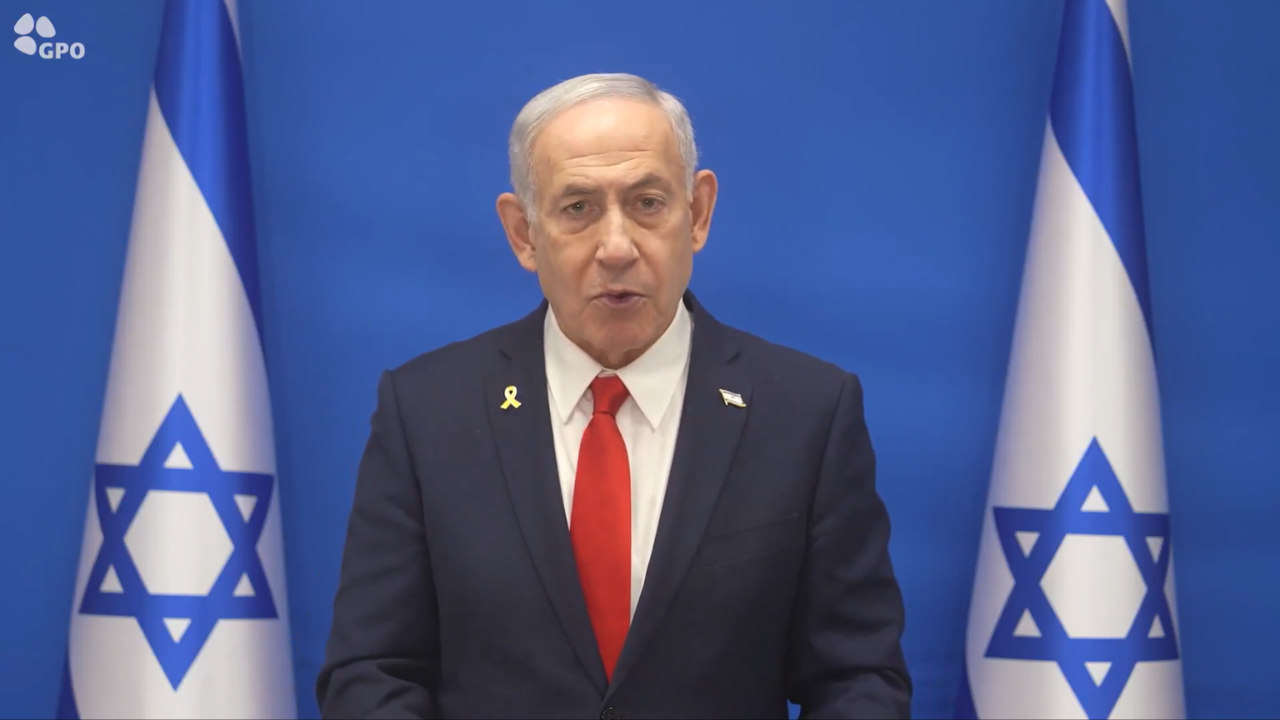
EditionININUSGCCEnglishEnglishहिन्दीमराठीಕನ್ನಡதமிழ்বাংলাമലയാളംతెలుగుગુજરાતીWeatherSign InTOIToday's ePaperLive EditionININUSGCCEnglishEnglishहिन्दीमराठीಕನ್ನಡதமிழ்বাংলাമലയാളംతెలుగుગુજરાતીWeatherSign In TOIToday's ePaperLive NewsWorld NewsMiddle East NewsNetanyahu says Israel to remain in south Lebanon despite US-backed peace frameworkTrendingUK Next PMKing CharlesJD VanceUS Iran warVenezuela EarthquakeLauren TetefF1 VisaUK Next PMKing CharlesJD VanceUS Iran warVenezuela EarthquakeLauren TetefF1 VisaUK Next PMKing CharlesJD VanceUS Iran warVenezuela EarthquakeLauren TetefF1 VisaNetanyahu says Israel to remain in south Lebanon despite US-backed peace frameworkTOI World Desk / TIMESOFINDIA.COM / Jun 27, 2026, 08:22 ISTCommentsShareAA+Text SizeSmallMediumLarge Israeli Prime Minister Benjamin Netanyahu on Friday said Israel would maintain its military presence in southern Lebanon until Hezbollah is fully disarmed, even as Israel, Lebanon and the United States signed a trilateral framework aimed at ending decades of conflict and laying the groundwork for a broader peace agreement."The most important thing is, first of all, that Israel remains in the security zone in southern Lebanon.
This is a major achievement, and we will maintain it as long as Hezbollah has not disarmed," Netanyahu said in a pre-recorded video released shortly after the agreement was signed in Washington.The framework commits Israel and Lebanon to a phased process under which the Lebanese Armed Forces (LAF) will gradually assume control over Lebanese territory after the verified disarmament of Hezbollah and other non-state armed groups. In return, the Israel Defense Forces (IDF) will progressively redeploy from Lebanese territory through a series of agreed pilot zones.
Speaking after the signing ceremony, US Secretary of State Marco Rubio described the agreement as the start of a longer peace process."Today is the beginning of the beginning," Rubio said. "There's a lot of work ahead.
We don't, in any way, underestimate the difficulty of the task ahead. But we understand the importance of it, how vital it is. And we are honored to play a part in bringing this together."
Netanyahu said Israel would begin implementing two pilot areas under the agreement, allowing the Lebanese army to take over territory that the Israeli military no longer considers strategically necessary."We are implementing two pilot areas, both at the army's recommendation. One is entirely outside the security zone and south of the Litani River, while the other is north of the Litani," he said.
The trilateral framework does not identify the two locations. It states that two initial pilot zones have been agreed by the IDF and the LAF, where phased and verified redeployments of Israeli forces will take place once the disarmament of non-state armed groups and the dismantling of their infrastructure are confirmed.Netanyahu said the withdrawals would not alter Israel's overall security posture in southern Lebanon and ruled out the return of displaced Lebanese civilians to the Israeli-controlled security zone for now."
We are maintaining the original security zone at all times, outside the range of anti-tank fire. We are not allowing Hezbollah to enter it, nor are we allowing the civilian population to enter," he said.The framework signed by Israel, Lebanon and the United States outlines a reciprocal and conditions-based roadmap aimed at ending hostilities.
It requires Lebanon to restore state authority across its territory, establish a monopoly over the use of force and ensure the complete and verified disarmament of all non-state armed groups, particularly Hezbollah.In return, Israel has committed to progressively redeploying its forces from Lebanese territory once agreed security conditions are met. The agreement also says Israel has no territorial ambitions in Lebanon and that the elimination of threats posed by Hezbollah would remove the need for any future Israeli military presence.
The framework further provides for the creation of a military coordination group with US participation, internationally supported reconstruction in areas transferred to Lebanese control, and the launch of direct negotiations toward a comprehensive peace and security agreement.Lebanon's Ambassador to the United States, Nada Hamadeh Moawad, called the accord the "first step on the road to restoring Lebanese sovereignty and territorial integrity."Lebanese President Joseph Aoun thanked the Trump administration for hosting the negotiations, saying the agreement would allow the Lebanese people to "return to their fully liberated land …
under sovereignty of a Lebanese state that has no partner in its sovereignty over its land and its people."However, Hezbollah rejected the negotiations. Hassan Fadallah, a Hezbollah member of Lebanon's parliament, criticised the talks and urged the Lebanese government to abandon them.
Speaking to the pro-Hezbollah Al-Mayadeen news channel, Fadallah said, "Whoever shakes hands wit
Đọc thêm từ Thế giới
Barack Obama and Larry David are TV comedy’s most intriguing odd couple
The Obamas have moved on from sober dramas and documentaries to dip their toes in the world of comedy. But is their sketch show funny? And what does this unexpected collaboration mean? Louis Chilton shares his verdict

It’s one of the most talked-about women’s supplements right now – but does inositol live up to the hype?
Social media testimonies are extolling the benefits of inositol for women with PMOS or hormonal acne, but so many claims online often fail to stand up to scrutiny. Katie Rosseinsky asks the experts to sort the viral misinformation from reality

Volkswagen T-Roc: Class action
VW’s newest compact SUV is a winner for all the right reasons, says Sean O’Grady – especially its penchant for nicely weighted, old-fashioned controls

We’re always trying to save Frida Kahlo from commodification – just ask Salma Hayek
Battles have long raged over how the Mexican artist should be represented in the public sphere. As Tate Modern unveils a new exhibition showcasing (some of) her work and the many products that have made her ‘a global brand’, Adam White looks back at the disturbing making of the 2