NASA Pushes New Wing Design to Find Structural Limits
NASA researchers recently put a new wing design, appearing long and thin with a lightweight structural design, through a series of grueling tests to find its structural limits. What they found left them encouraged about the wing’s potential, even when they pushed it past its inte
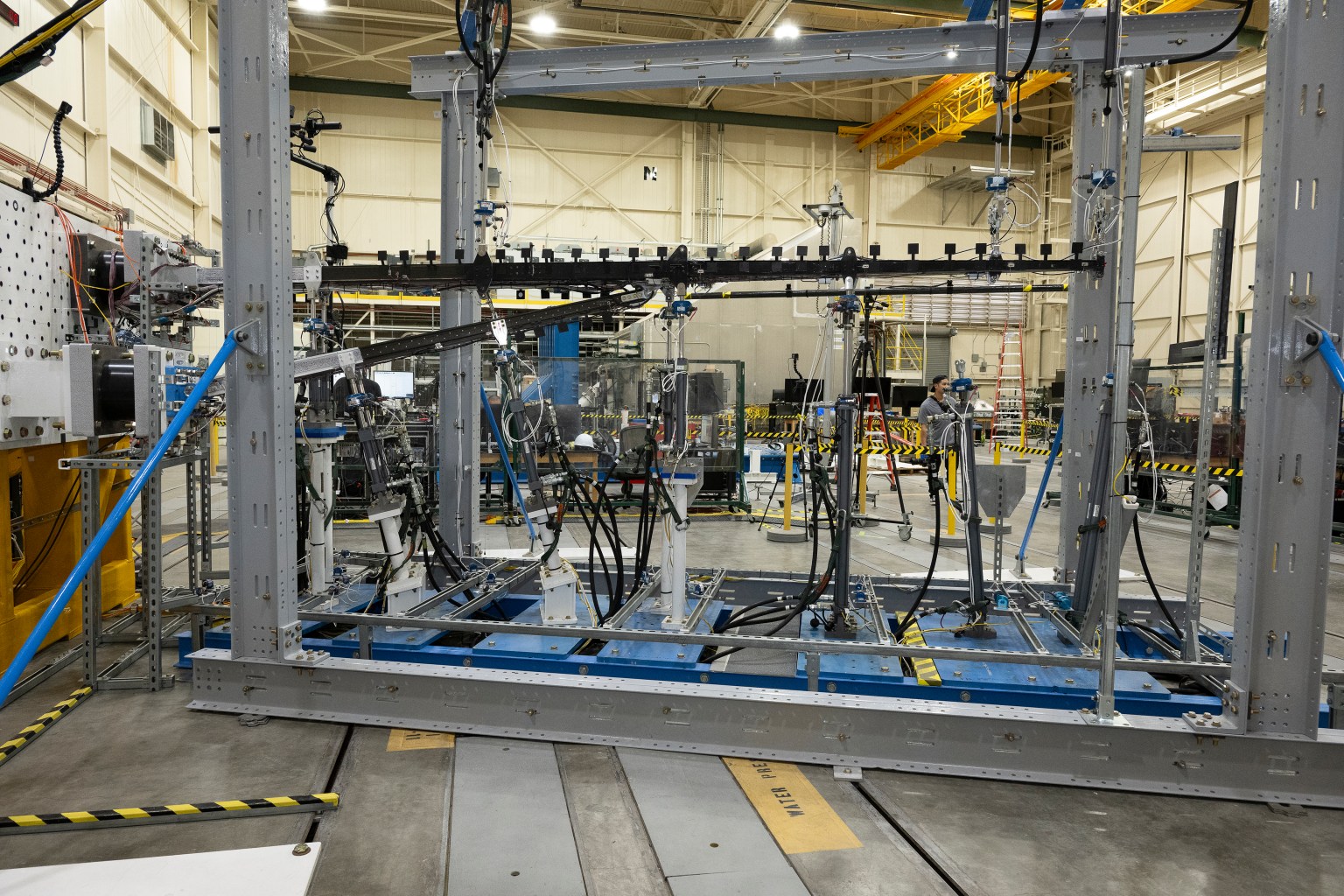
3 Min Read NASA Pushes New Wing Design to Find Structural Limits The 15-foot Structural Wing Experiment Evaluating Truss-bracing test article is fully installed in the Flight Loads Laboratory at NASA’s Armstrong Flight Research Center in Edwards, California, on Wednesday, May 20, 2026. The model is part of NASA’s research to develop technologies for future ultra-efficient aircraft. Credits: NASA/Carla Escamilla NASA researchers recently put a new wing design, appearing long and thin with a lightweight structural design, through a series of grueling tests to find its structural limits.
What they found left them encouraged about the wing’s potential, even when they pushed it past its intended limits. The 15-foot Structural Wing Experiment Evaluating Truss-bracing (SWEET-15) test article is part of NASA’s research to develop future ultra-efficient aircraft. The design incorporates a long wing supported by an aerodynamic strut, based on NASA’s earlier Transonic Truss‑Braced Wing concept.
The research team is working to understand whether SWEET-15’s design and its new lightweight structural designs could help commercial airliners save fuel. But first, they need to understand how it behaves under the kinds of force wings experience in flight. Lab technicians Phil Tofts, Chris McLain, and Jeff Howell and NASA engineers Erin Anderson and Richard Larson prepare the 15-foot Structural Wing Experiment Evaluating Truss-bracing model in the Flight Loads Laboratory at NASA’s Armstrong Flight Research Center in Edwards, California, on Thursday, Dec.
11, 2025. The model is part of NASA’s research to develop technologies for future ultra-efficient aircraft. NASA/Christopher LC Clark The SWEET-15 design originated with combining five different advanced composite manufacturing and assembly technologies that enabled the novel structural design.
The 15-foot-long test article was then designed and fabricated at NASA’s Langley Research Center in Hampton, Virginia, before traveling to NASA
Đọc thêm từ Khoa học

Jabra Evolve3 75 vs. Lenovo ThinkPad 8550 (Aura Edition) : lequel de ces deux casques destinés aux professionnels choisir ?
Voici un comparatif entre deux outils de travail haut de gamme de 2026 mais celui qui l’emporte se distingue surtout par sa fonction ANC.

Pakistan, China sign $440m pharmaceutical agreements
Shehbaz Sharif says govt’s reforms to build self-reliant economy Urges URAAN scheme participants to contribute to Pakistan’s prosperity Directs for expediting implementation of ease of doing business Act 2025.

SBI Group acquires Singapore crypto platform Coinhako
Coinhako serves over 480,000 users and holds a Major Payment Institution licence in Singapore.

Apple cites paused securities fraud case in bid to halt Epic proceedings
Apple is citing a newly paused securities fraud lawsuit to support its request to pause further lower-court proceedings in its legal battle with Epic Games while the Supreme Court reviews part of the dispute. Here are the details.