Morocco fields first all-foreign-born starting XI in national team history
Morocco's reliance on foreign-born players highlights a strategic shift in international football, impacting domestic talent development and global team dynamics. The post Morocco fields first all-foreign-born starting XI in national team history appeared first on Crypto Briefing
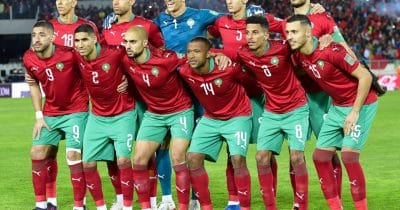
Morocco fields first all-foreign-born starting XI in national team history The Atlas Lions' latest lineup featured 11 players all born outside Morocco, a culmination of the federation's long-running diaspora strategy Share Add us on Google by Editorial Team Jun. 14, 2026 Every single player in the starting XI was born in a European country or Canada. For a nation that has been steadily leaning on its vast diaspora for years, this was less a sudden pivot and more the logical endpoint of a strategy that’s been building across multiple World Cup cycles.
The diaspora pipeline is not new, but the numbers are accelerating Look at the trajectory. At the 2018 World Cup, 17 out of 23 players on Morocco’s roster were born abroad. By the 2022 World Cup, that figure was 14 out of 26.
And for the upcoming 2026 World Cup cycle, the squad composition has pushed even further: 20 out of 26 players were born outside Morocco. That’s roughly 77% of the roster holding birth certificates from countries like France, Spain, the Netherlands, Belgium, and Canada. The remaining six players born in Morocco are now the minority on their own national team.
Advertisement This isn’t an accident, and it’s not a controversial loophole. It’s deliberate recruitment strategy executed by the Moroccan Football Federation, known as FRMF, and head coach Walid Regragui. FIFA eligibility rules allow dual-nationality players to choose which country they represent at the international level, and Morocco has been among the most aggressive nations in the world at leveraging that system.
Captain Achraf Hakimi was born in Madrid, Spain. Goalkeeper Yassine Bounou was born in Canada. Midfielder Sofyan Amrabat was born in the Netherlands.
These aren’t fringe squad players padding out the bench. They’re the spine of the team. Why Morocco’s approach works, and why others are copying it Morocco’s 2022 World Cup run in Qatar was one of the most remarkable stories in tournament history.
The Atlas Lions became the first African nation to reach a World Cup semifinal, beating Belgium, Spain, and Portugal along the way. That squad was already heavily composed of foreign-born players, and the results spoke for themselves. Coach Regragui himself is a product of the diaspora, born and raised in France to Moroccan parents.
He understands the cultural bridge these players walk, and he’s been credited with creating an environment where foreign-born players feel a genuine connection to the national team rather than treating it as a consolation prize. What this means for international football FIFA’s eligibility rules were designed to give dual nationals a meaningful choice, but the system creates interesting competitive dynamics. France, for example, has seen numerous talented players of Moroccan descent choose the Atlas Lions over Les Bleus, effectively transferring the return on its youth development investment to a rival.
For Morocco specifically, this strategy carries a risk that’s easy to overlook. Domestic player development can atrophy when the national team pathway is dominated by European-raised talent. If Moroccan-born players see the starting XI filled entirely with diaspora talent, the incentive structure for local academies and youth football shifts.
Disclosure: This article was edited by Editorial Team. For more information on how we create and review content, see our Editorial Policy. SOCCER Morocco fields first all-foreign-born starting XI in national team history The Atlas Lions' latest lineup featured 11 players all born outside Morocco, a culmination of the federation's long-running diaspora strategy by Editorial Team Just now ago Share Add us on Google Every single player in the starting XI was born in a European country or Canada.
For a nation that has been steadily leaning on its vast diaspora for years, this was less a sudden pivot and more the logical endpoint of a strategy that’s been building across multiple World Cup cycles. The diaspora pipeline is not new, but the numbers are accelerating Look at the trajectory. At the 2018 World Cup, 17 out of 23 players on Morocco’s roster were born abroad.
By the 2022 World Cup, that figure was 14 out of 26. And for the upcoming 2026 World Cup cycle, the squad composition has pushed even further: 20 out of 26 players were born outside Morocco. That’s roughly 77% of the roster holding birth certificates from countries like France, Spain, the Netherlands, Belgium, and Canada.
The remaining six players born in Morocco are now the minority on their own national team. Advertisement This isn’t an accident, and it’s not a controversial loophole. It’s deliberate recruitment strategy executed by the Moroccan Football Federation, known as FRMF, and head coach Walid Regragui.
FIFA eligibility rules allow dual-nationality players to choose which country they represent at the international level, and Morocco has been among the most aggressive nations in the world at leveraging that system. Captain Achraf Hakimi was born i
Đọc thêm từ Tiền số / Crypto

Ethereum’s Wall Street Moment: Can ETH Capture Institutional Tokenization Demand?
Broadridge $7.2T DLR volumes and a $34B RWA market put Ethereum in focus as banks test tokenization rails across public and permissioned stacks.
Bitcoin’s 48-hour macro test – Will BOJ, Fed push BTC below $60K?
Crypto heads into a high-volatility macro week as BTC debates bottom formation and risk sentiment weakens.

Self-Custody vs Exchange Custody: Comparing the Real Risks in 2026
Self-custody vs exchange custody in 2026: a balanced risk comparison. Exchange hacks and insolvency versus key-loss and user error, with the data on what users actually do.

New BSP rules put crypto tokens under deeper scrutiny in Philippines
BSP orders stricter crypto listing, monitoring and delisting standards as the Philippines tightens oversight of VASPs.