Mookhey faces not-so-hidden costs and hard calls to drive budget back into black
Even as the population grows, the state’s Labor government wants to pull back on health spending infrastructure and squeeze the pot of money it allocates for school infrastructure.
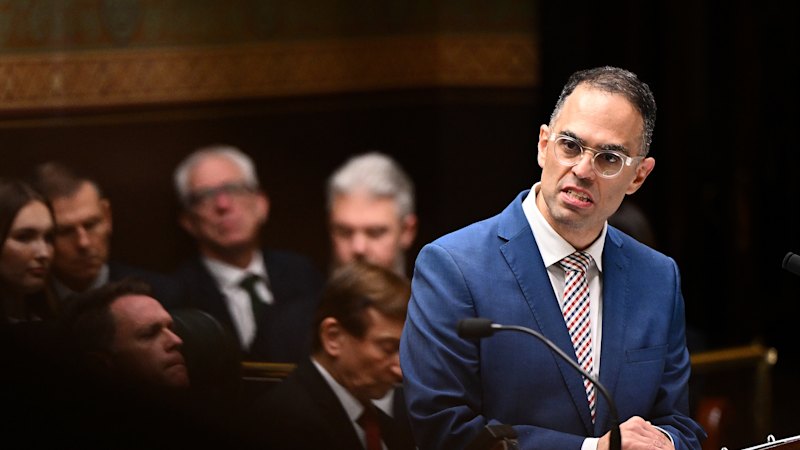
When it comes to government spending, it is often a case of damned if you do and damned if you don’t. NSW Treasurer Daniel Mookhey is actively working to get the state budget back into the black after big increases to spending largely due to COVID-19 and an ambitious public transport infrastructure program pursued by the previous Coalition government. This is the right thing to do economically.
However, trying to claw back expenditure is never easy, as every government department fights to maintain spending in its area. Now comes news that the Minns government will halve spending on health infrastructure as a percentage of the state’s economic output between 2026-27 and the end of the decade. Education capital expenditure will also take a hit over that period.
Analysis of this year’s state budget by the e61 Institute reveals that health and education infrastructure spending will decline as a proportion of the state’s annual economic output over successive years. The former will fall to the lowest level since before 2018. The falls appear to be part of Mookhey’s broader strategy to bring total infrastructure spending down to 2 per cent of gross state product, back from about 3 per cent late last decade.
The budget papers show infrastructure spending in the Health portfolio will fall from $3.5 billion this year to $2 billion in 2029-30. Similarly, spending on education and skills will decline from $3.
3 billion to $3 billion over the same period. However, these proposed infrastructure cuts in health spending come after the state set aside $3.6 billion this financial year for building or upgrading hospitals at Rouse Hill, Bankstown and Fairfield.
With the NSW population forecast to grow from 8.7 million to 9.31 million by 2031, slashing spending on infrastructure could arguably put further demands on overstretched social infrastructure, especially in high-growth areas.
For example, a NSW Health report in 2022 said activity across the state’s health system would nearly double in the decade to 2031 if recent trends in disease and demand continued. Similarly, cutting back on schools infrastructure won’t be popular. But figures show that public school enrolments overall are falling, and at some point, if there are fewer kids coming into the system, there won’t be as much demand for new classrooms and schools.
The budget papers also showed that NSW will have an eighth consecutive budget deficit next financial year, before a return to surplus in 2027-28. The state’s gross debt was a modest $39 billion in June 2019 but is forecast to hit $219 billion by June 2030. Annual interest payments by the end of the decade are tipped to hit $11 billion.
Mookhey has preached fiscal discipline since Labor took office in 2023, so the ongoing pressure on the state’s finances leaves him facing some tough decisions on where to make cuts. The other way to get the state back in the black is through economic growth, but the budget predicts anaemic growth ahead. If the government can’t work out how to increase revenue and productivity, which are two vital areas of reform, then tough choices will have to be made.
Any cuts need to be balanced against increasing public demand and guaranteeing adequate services. But some hard decisions lie ahead. Start the day with a summary of the day’s most important and interesting stories, analysis and insights.
Sign up for our Morning Edition newsletter. You have reached your maximum number of saved items. Remove items from your saved list to add more.
More:
Đọc thêm từ Thế giới

Lindsey Graham likely died from aortic rupture, medical examiner says
US Senator Lindsey Graham, a close ally of President Donald Trump and a leading Republican voice on foreign policy, died on Saturday after a brief illness, his office said. He was 71. The District of Columbia medical examiner said the preliminary cause of death was an aortic diss

미군 "이란에 추가공습 개시…호르무즈 상선 공격역량 약화"
(워싱턴=연합뉴스) 백나리 특파원 = 미군 중부사령부는 12일(현지시간) 호르무즈 해협에서 상선을 위협하는 이란을 상대로 추가 공습을 개시했다고...
Australia news live: auction clearances nudge up after weeks under 50%; state farewell for Richard Scolyer
Almost 55% of homes at auction were sold, weekend figures show. Follow today’s news liveGet our breaking news email, free app or daily news podcastRichard Scolyer to have state memorial service at Sydney Opera HouseRichard Scolyer, the 2024 Australian of the Year, will be honoure
![[유형재의 새록새록] 숲속 육아 전쟁, 어미 꾀꼬리의 세상 가장 고운 노래](https://img.yna.co.kr/etc/inner/KR/2026/07/09/AKR20260709160500062_01_i_P2.jpg)
[유형재의 새록새록] 숲속 육아 전쟁, 어미 꾀꼬리의 세상 가장 고운 노래
(강릉=연합뉴스) 유형재 기자 = 어미 꾀꼬리가 갓 태어난 새끼가 있는 둥지로 돌아가기 직전 세상 가장 아름답고 부드러운 소리를 내며 작은 숲을...