Middle East reacts cautiously to US-Iran deal as Bitcoin rallies on reduced geopolitical risk
The US-Iran deal's potential to ease tensions may stabilize oil markets and influence global investment, but regional skepticism persists. The post Middle East reacts cautiously to US-Iran deal as Bitcoin rallies on reduced geopolitical risk appeared first on Crypto Briefing.

Middle East reacts cautiously to US-Iran deal as Bitcoin rallies on reduced geopolitical risk A framework agreement to end over 100 days of armed conflict draws measured optimism from regional leaders and a risk-on surge in crypto markets Share Add us on Google by Editorial Team Jun. 15, 2026 The US and Iran have reached a preliminary framework agreement to halt hostilities that have stretched beyond 100 days. Bitcoin climbed roughly 2% to highs above $65,500 following the announcement, hitting a two-week peak as traders priced in reduced geopolitical tension and declining oil prices.
What the deal actually includes The framework, announced around June 14-15, contains three immediate provisions: an immediate ceasefire, the reopening of the Strait of Hormuz to commercial shipping, and the lifting of the US naval blockade against Iran. Roughly a fifth of the world’s oil passes through the Strait of Hormuz. Advertisement Beyond the immediate measures, the agreement establishes a 60-day negotiation window focused on Iran’s nuclear program and potential sanctions relief.
A formal signing ceremony is scheduled for June 19 in Switzerland, with Pakistan and Qatar serving as mediators. There’s also the matter of up to $25 billion in frozen Iranian assets that could be released, contingent on Iran’s compliance with the agreement’s terms. Why the Middle East isn’t celebrating yet Israel has expressed reservations, particularly regarding Hezbollah’s role in Lebanon.
Ongoing operational conflicts involving Hezbollah remain a sticking point that the framework doesn’t directly address. On the Iranian side, hardline factions have voiced their own skepticism about the deal’s terms. The 60-day negotiation window is simultaneously the deal’s most promising and most fragile component.
What this means for crypto investors Bitcoin’s move above $65,500 reflects a broader risk-on shift that tends to accompany reduced geopolitical uncertainty. Bitcoin crossing into the $65K range puts it at levels not seen in the prior two weeks. The $25 billion in potentially unfrozen Iranian assets introduces a secondary variable worth monitoring, as those funds entering global markets could create ripple effects across oil pricing, regional investment flows, and dollar dynamics.
The formal signing on June 19 in Switzerland will be the next major catalyst. The 60-day negotiation window introduces a period where any negative headline from Switzerland, Tehran, or Jerusalem could reverse sentiment rapidly. Disclosure: This article was edited by Editorial Team.
For more information on how we create and review content, see our Editorial Policy. MACRO Middle East reacts cautiously to US-Iran deal as Bitcoin rallies on reduced geopolitical risk A framework agreement to end over 100 days of armed conflict draws measured optimism from regional leaders and a risk-on surge in crypto markets by Editorial Team Just now ago Share Add us on Google The US and Iran have reached a preliminary framework agreement to halt hostilities that have stretched beyond 100 days. Bitcoin climbed roughly 2% to highs above $65,500 following the announcement, hitting a two-week peak as traders priced in reduced geopolitical tension and declining oil prices.
What the deal actually includes The framework, announced around June 14-15, contains three immediate provisions: an immediate ceasefire, the reopening of the Strait of Hormuz to commercial shipping, and the lifting of the US naval blockade against Iran. Roughly a fifth of the world’s oil passes through the Strait of Hormuz. Advertisement Beyond the immediate measures, the agreement establishes a 60-day negotiation window focused on Iran’s nuclear program and potential sanctions relief.
A formal signing ceremony is scheduled for June 19 in Switzerland, with Pakistan and Qatar serving as mediators. There’s also the matter of up to $25 billion in frozen Iranian assets that could be released, contingent on Iran’s compliance with the agreement’s terms. Why the Middle East isn’t celebrating yet Israel has expressed reservations, particularly regarding Hezbollah’s role in Lebanon.
Ongoing operational conflicts involving Hezbollah remain a sticking point that the framework doesn’t directly address. On the Iranian side, hardline factions have voiced their own skepticism about the deal’s terms. The 60-day negotiation window is simultaneously the deal’s most promising and most fragile component.
What this means for crypto investors Bitcoin’s move above $65,500 reflects a broader risk-on shift that tends to accompany reduced geopolitical uncertainty. Bitcoin crossing into the $65K range puts it at levels not seen in the prior two weeks. The $25 billion in potentially unfrozen Iranian assets introduces a secondary variable worth monitoring, as those funds entering global markets could create ripple effects across oil pricing, regional investment flows, and dollar dynamics.
The formal signing on June 19 in Switzerland will be the next majo
Đọc thêm từ Tiền số / Crypto
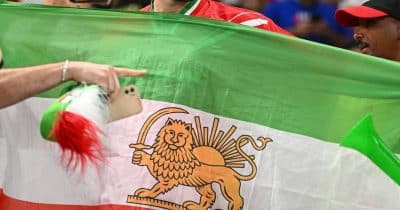
FIFA’s ban on pre-revolutionary Iranian flag upheld by Los Angeles judge hours before World Cup match
The ruling highlights the tension between international sports governance and local civil liberties, impacting diaspora communities' expression. The post FIFA’s ban on pre-revolutionary Iranian flag upheld by Los Angeles judge hours before World Cup match appeared first on Crypto

White House argues interim Iran deal will resolve global energy crisis
The interim Iran deal could stabilize energy markets, but lingering uncertainties may impact global economic recovery and crypto regulations. The post White House argues interim Iran deal will resolve global energy crisis appeared first on Crypto Briefing.
50-Person Nostrum Team Gives IREN Europe Foothold as AI Cloud Demand Fuels Stock
IREN Limited completed its acquisition of Spain-based Nostrum Group on Monday, adding 490 megawatts of secured, grid-connected power as the bitcoin miner accelerates its expansion into AI cloud infrastructure. The deal marks IREN’s entry into Europe and gives the Nasdaq-listed co

Total RWA market cap surpasses $43B as Ethereum leads with 58% share
The rapid growth of tokenized real-world assets highlights blockchain's potential to revolutionize traditional finance, despite emerging competition. The post Total RWA market cap surpasses $43B as Ethereum leads with 58% share appeared first on Crypto Briefing.