Mercedes risks US sales ban under Senate China bill targeting foreign-owned automakers
A bipartisan Senate bill would ban connected vehicle sales by automakers with over 15% Chinese ownership, putting Mercedes-Benz at risk of US The post Mercedes risks US sales ban under Senate China bill targeting foreign-owned automakers appeared first on Crypto Briefing.

Mercedes risks US sales ban under Senate China bill targeting foreign-owned automakers A bipartisan bill would ban connected vehicle sales by automakers with more than 15% Chinese ownership, and Mercedes clears that threshold by a comfortable margin. Share Add us on Google by Editorial Team Jul. 22, 2026 Mercedes-Benz, the company synonymous with German engineering and leather-scented luxury, might get kicked out of the American market.
Not because of tariffs, not because of emissions scandals, but because of who owns its stock. A bipartisan Senate bill introduced in April 2026 by Senators Elissa Slotkin (D-Mich.) and Bernie Moreno (R-Ohio) would prohibit the sale of connected vehicles in the US by any automaker where more than 15% of ownership is held by Chinese entities.
Mercedes-Benz Group AG has roughly 20% of its ownership linked to Chinese stakeholders. In English: Mercedes is over the line, and the consequences could be enormous. The ownership problem Mercedes can’t easily fix Two major Chinese stakeholders put Mercedes on the wrong side of the proposed 15% threshold.
BAIC, a Chinese state-owned automaker, holds approximately 10% of Mercedes-Benz Group. Li Shufu, the founder of Geely (the Chinese company that also owns Volvo Cars), holds another roughly 10%. Combined, that’s about 20% Chinese ownership.
Mercedes is now actively lobbying Congress to raise the ownership ceiling from 15% to 25%. The argument is straightforward: these are passive investments, not operational control. BAIC and Li Shufu aren’t designing Mercedes vehicles or accessing customer data.
They’re shareholders collecting dividends. Advertisement The Senate Commerce Committee is set to review the bill during the week of July 21, 2026, making the next few weeks a critical window for Mercedes’ lobbying operation. Why connected vehicles are the real target This bill isn’t about who makes the best sedan.
It’s about data, surveillance, and the digital infrastructure embedded in modern cars. Connected vehicles collect vast amounts of data. Location tracking, driving patterns, voice commands, camera feeds.
The concern on Capitol Hill is that Chinese-linked ownership could theoretically provide a pathway for that data to flow to Beijing. The bill follows similar proposals in the House, including the Motor Vehicle Modernization Act of 2026, which contains comparable 15% ownership restrictions. Mercedes isn’t alone in the crosshairs either.
Volvo Cars, majority-owned by Geely, has been identified as potentially affected by the proposed ownership limits. The broader US-China decoupling in autos The logic follows a familiar template: connected devices with Chinese ties represent national security risks. It’s the same reasoning that led to restrictions on Huawei and TikTok, now applied to vehicles that can record conversations, track locations, and connect to home networks.
What this means for investors The immediate market impact depends entirely on what happens in committee during the week of July 21. If the bill advances with the 15% threshold intact, Mercedes-Benz shares could face meaningful selling pressure as investors price in the risk of losing US market access. The ripple effects extend beyond Mercedes.
Any non-Chinese automaker with significant Chinese investment will need to reassess its shareholder composition. Traders should watch the Senate Commerce Committee markup closely. If Mercedes’ lobbying succeeds and the threshold moves to 25%, the company clears the bar.
If the 15% number holds, the playbook shifts to watching whether Mercedes can convince its Chinese shareholders to reduce their positions. Volvo Cars investors face an even starker calculus, given Geely’s majority ownership stake. For that company, no amount of threshold adjustment would help.
Disclosure: This article was edited by Editorial Team. For more information on how we create and review content, see our Editorial Policy. POLITICS Mercedes risks US sales ban under Senate China bill targeting foreign-owned automakers A bipartisan bill would ban connected vehicle sales by automakers with more than 15% Chinese ownership, and Mercedes clears that threshold by a comfortable margin.
by Editorial Team Jul. 22, 2026 Share Add us on Google Mercedes-Benz, the company synonymous with German engineering and leather-scented luxury, might get kicked out of the American market. Not because of tariffs, not because of emissions scandals, but because of who owns its stock.
A bipartisan Senate bill introduced in April 2026 by Senators Elissa Slotkin (D-Mich.) and Bernie Moreno (R-Ohio) would prohibit the sale of connected vehicles in the US by any automaker where more than 15% of ownership is held by Chinese entities. Mercedes-Benz Group AG has roughly 20% of its ownership linked to Chinese stakeholders.
In English: Mercedes is over the line, and the consequences could be enormous. The ownership problem Mercedes can’t easily fix Two major Chinese stakeholders put Mercedes on the w
Đọc thêm từ Tiền số / Crypto
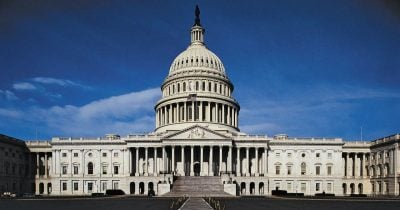
US Senate has 15 days to pass Crypto Clarity Act before recess
The CLARITY Act has 15 days to pass the Senate before August recess. Here's what the crypto market structure bill does and why the deadline The post US Senate has 15 days to pass Crypto Clarity Act before recess appeared first on Crypto Briefing.

SpaceX and xAI are building an 11-million-square-foot satellite factory in Texas to move AI computing into orbit
SpaceX and xAI's Gigasat factory in Bastrop, Texas spans 11 million sq ft and targets 1 gigawatt of orbital AI compute capacity by end of 2027. The post SpaceX and xAI are building an 11-million-square-foot satellite factory in Texas to move AI computing into orbit appeared first

Ethereum’s validator exit queue drops to zero as 2.48M ETH waits to enter staking
Ethereum's validator exit queue has dropped to zero while 2.48M ETH awaits entry into staking, signaling strong holder conviction and reduced The post Ethereum’s validator exit queue drops to zero as 2.48M ETH waits to enter staking appeared first on Crypto Briefing.
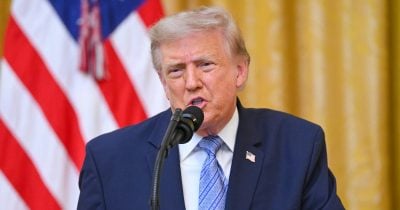
Trump threatens retaliatory strikes on key Iranian infrastructure as crypto markets brace for impact
Trump threatens strikes on Iranian infrastructure after declaring ceasefire over. Bitcoin fell below $62K as crypto liquidations hit $450 The post Trump threatens retaliatory strikes on key Iranian infrastructure as crypto markets brace for impact appeared first on Crypto Briefin