Make a plan for your digital photos after you die
Consider adding a Digital Executor to your will so your memories aren't lost forever. The post Make a plan for your digital photos after you die appeared first on Popular Science.
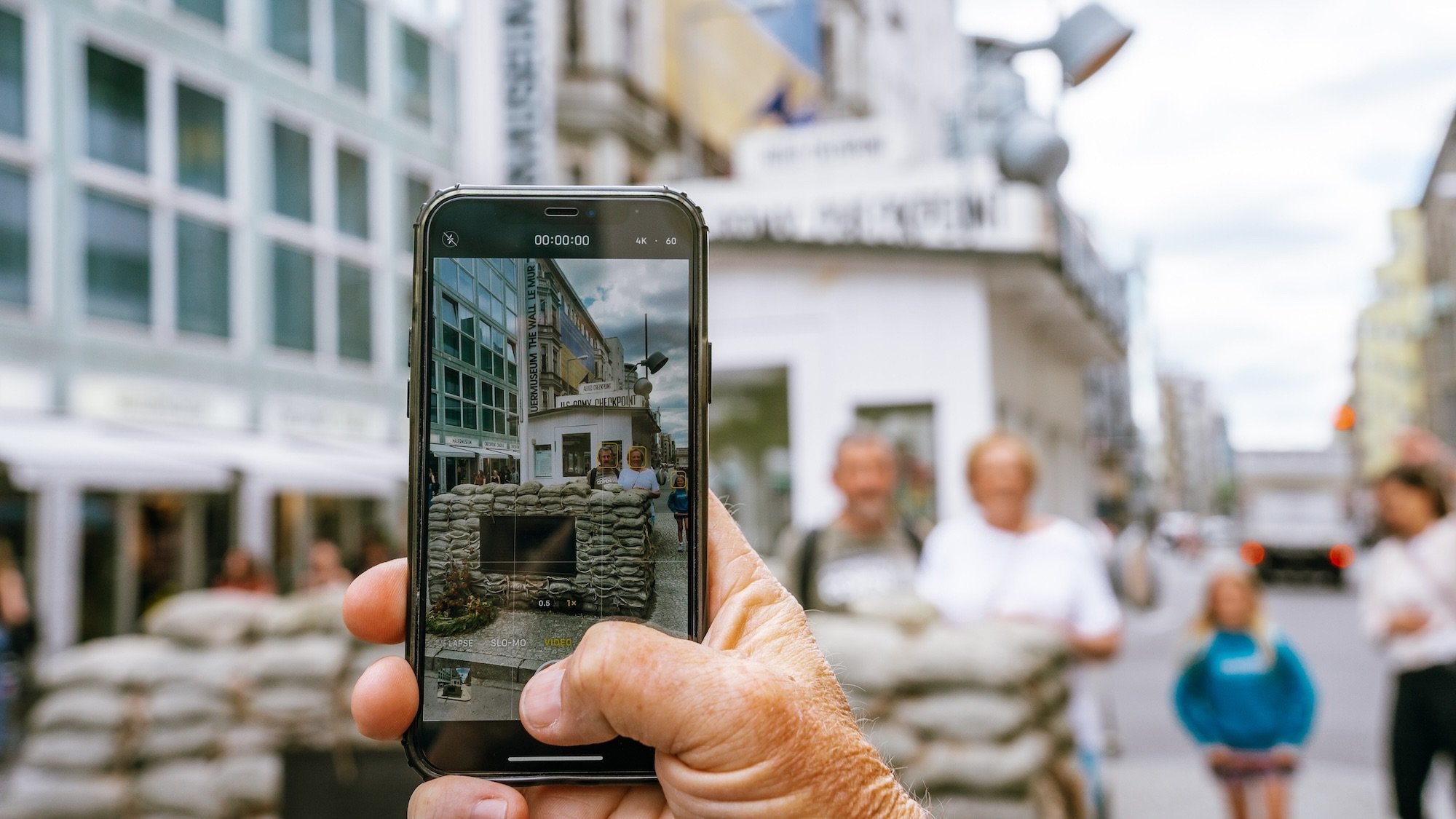
It’s not something anyone really wants to think about, but what happens to those thousands of digital photos on your phone in the event of your passing? Few of us can even be bothered to back up our photos, much less secure their posthumous legacy. But the idea of “personal effects” has changed over the years from physical items you wear or carry around to an entire digital past and present sitting on your smartphone.
In fact, 75 percent of Gen Zers are already thinking about it. Instead of someone claiming ownership over grandma’s couch-cushion-sized photo album charting the family’s history all the way back to the Great Depression, we now have terabytes of group photos, lunch portraits, and selfies that your family may want to keep and treasure. And like anything involving end-of-life preparation, it requires a plan.
A lot of platforms and service providers like Apple, Google, and Facebook do allow you to add what’s known as a “Legacy Contact.” Once activated, these functions generate an access key that can be shared with your chosen contact or contacts. To request access, they will need to provide the access key and upload a copy of your death certificate.
Your legacy contact also doesn’t need to have an Apple account or device themselves. There may be time limits, however–for example, in the case of Apple, legacy contacts have three years to gain approval to access files, notes, messages, videos, photos, and other data. For Google–where it’s known as “Inactive Account Manager,” it can be set for any period between 3 and 18 months.
It’s also becoming more and more common for people to name a Digital Executor to their last will and testament. These can be set up easily through services such as Everplans and are similar to creating a Legacy Contact, but this person has a more of an active role in archiving and preserving your digital legacy. A Digital Executor can archive your personal files, photos, videos, and other content you’ve created, delete specified files
Đọc thêm từ Khoa học

Twisted laser light distinguishes mirror-image molecules by their fragment counts
Many molecules exist in two mirror-image forms—like left and right hands—that look identical but can behave very differently, especially in biological systems and pharmaceuticals. Distinguishing between these enantiomers (also called chiral molecules) is a longstanding challenge

When a teenager makes the 'stupid choice,' their brain is working exactly as designed
When an adult refuses to let an injustice pass—stands up to a bully or asserts their rights—we call it principle. When a 15-year-old retaliates to an insult thrown in a school corridor, risking detention, we call it a failure to think ahead. It's easy to ascribe this to a not-yet

Gamma-ray pulsations reveal extreme 3.2-millisecond pulsar 3,900 light-years away
By analyzing the data from NASA's Fermi gamma-ray space telescope, Chinese astronomers have investigated a recently identified millisecond pulsar known as PSR J0435+3233. As a result, they found that the pulsar exhibits gamma-ray pulsations. The discovery was detailed in a paper

Trace molecules emerge as chemical 'keystones' that steer life's communities
In nature, the rarest ingredient can be the one that holds everything together. In a new article published in Trends in Ecology & Evolution, Dr. Erika C. Freeman of the Leibniz Institute of Freshwater Ecology and Inland Fisheries (IGB) in Berlin argues that a handful of scarce mo