MacKenzie Scott's Giving, in Quality-Adjusted Life Years (QALYs)
Article URL: https://maxghenis.com/mackenzie-scott-qaly/ Comments URL: https://news.ycombinator.com/item?id=48886311 Points: 6 # Comments: 1
Drag to see the estimate move. The model reruns in your browser. Skeptical weights each effect by how well its study identifies causation.
Credulous trusts every cited effect at face value. Central value (mode) of a 0.55–1.
10 triangular draw for the share of the studied effect a marginal unrestricted grant delivers — the whole distribution is sampled, not this number alone. Real 2026 dollars. Default inflates each year's gifts ($26.
39B nominal, 2020–2025) to ~$30.3B with CPI-U. Annual discount on future life-years.
The most important control is evidence stance: from skeptical (~70,000 QALYs — each effect weighted by how well its study identifies causation) to credulous (~200,000 — every cited effect at face value). That gap, not the dollar figure, is the real uncertainty. MacKenzie Scott's Yield Giving network has made over $26 billion in 2,700+ gifts since 2019 — $26.
3 billion through 2025 by CNBC's year-end accounting. This page asks what that buys in quality-adjusted life-years, the unit health economists use to compare a death averted against years lived in better health. It is a GiveWell-style model: 13 intervention archetypes, each cost-per-QALY drawn where possible from a published causal estimate (Medicaid mortality, community health centers, supportive housing, collaborative-care depression), each effect shrunk toward zero in proportion to how well its study identifies causation, and the whole thing rerun through thousands of Monte Carlo draws each time you move a slider.
I built the model with Claude; every estimate here is a model output, not a measured fact. The Python package, tests, and sources are on GitHub; this page runs a checked TypeScript implementation in the browser, reading the exported parameter file. Each Monte Carlo draw takes the giving — each year's gifts inflated to 2026 dollars ($26.
39 billion nominal ≈ $30.3 billion, so the dollars and the cost-effectiveness evidence share one price level) — allocates it across the archetypes (a Dirichlet whose centers come from Scott's own gift database — dollar amounts are disclosed for about two-thirds of the money, and each organization's dollars are split across its reported focus areas and mapped to the 13 archetypes; the undisclosed remainder is imputed from her announced year totals, scaled by each recipient's pre-gift IRS 990 revenue), assigns each a cost-per-QALY, and multiplies by two independent discounts: The gift-size data yields one measured regularity along the way: across the 1,313 disclosed gift–revenue pairs, gift size scales with the recipient's pre-gift revenue to the power 0.41 (R² 0.
37) — a 10× larger organization receives about 2.5× more money, not 10× more. That fitted elasticity, not proportionality, weights the imputation of the undisclosed gifts.
The model also prices the same dollars at the global-health frontier. GiveWell's current impact estimates put the 2022–2024 program averages at ~$4,000 per life saved (Malaria Consortium) to ~$5,500 (AMF nets). A child death averted at ~age 1 is ~25 discounted QALYs under this model's own conventions (~65 remaining years, 3% discount, utility ~0.
87), so those endpoints — inflated to 2026 dollars — become roughly $175–$241 per QALY-equivalent; I model the benchmark as loguniform $150–$260, handicapped with the same realization and credibility as Scott's portfolio (and rescaled at other discount rates) so the comparison is like-for-like. At the skeptical defaults, the frontier delivers roughly 1,500× more health per marginal dollar. That multiple is a marginal comparison — the next dollar, not the whole portfolio.
Frontier-priced opportunities are scarce: GiveWell directed $397 million in all of 2024 and moves its cost-effectiveness bar with the money it expects to raise — funding down to ~6× cash when flush, back up to 10× when projections fell. Malaria control, the deepest frontier bucket, absorbed $3.9 billion in 2024 against a $9.
3 billion target, while ~610,000 people died. And the implied frontier counterfactual — ~105 million QALYs at the default settings — would mean averting ~4.2 million child deaths, most of a full year of the world's under-5 deaths; no amount of money buys that at bed-net prices.
Redeploying the full $30 billion would ride up the marginal-cost curve — to a few hundred times rather than ~1,500×, at my guess — softer in magnitude, same in direction. The floor is direct cash, the one option with effectively unbounded capacity, which GiveWell now scores at 3–4× its own historic benchmark: in health-only terms, somewhere under 50–100×. A QALY is a health metric.
Most of Scott's giving targets economic mobility, education, and equity, whose value is largely non-health — income, opportunity, rights, wellbeing. The model therefore understates her total social impact; it answers one specific question. The largest dollar buckets (equity & justice at ~22%, education at ~18%) contribute little health precisely because no credible study ties those grants to QAL
Đọc thêm từ Công nghệ

Agnes AI launches Agnes-2.5-Flash, teases flagship Pro model, and debuts Agnes Code desktop app
Agnes AI has officially launched Agnes-2.5-Flash, the latest version of its text model, alongside Agnes Code, a new desktop application that brings the company’s AI capabilities directly into developers’ local coding environments. Alongside the launch, the company gave a first pr

Musing on AI from 1964
[Irving John Good] was at Trinity College, Oxford back in 1964. His paper, “Speculations Concerning the First Ultraintelligent Machine” could have been a topic for today, as we deal with …read more
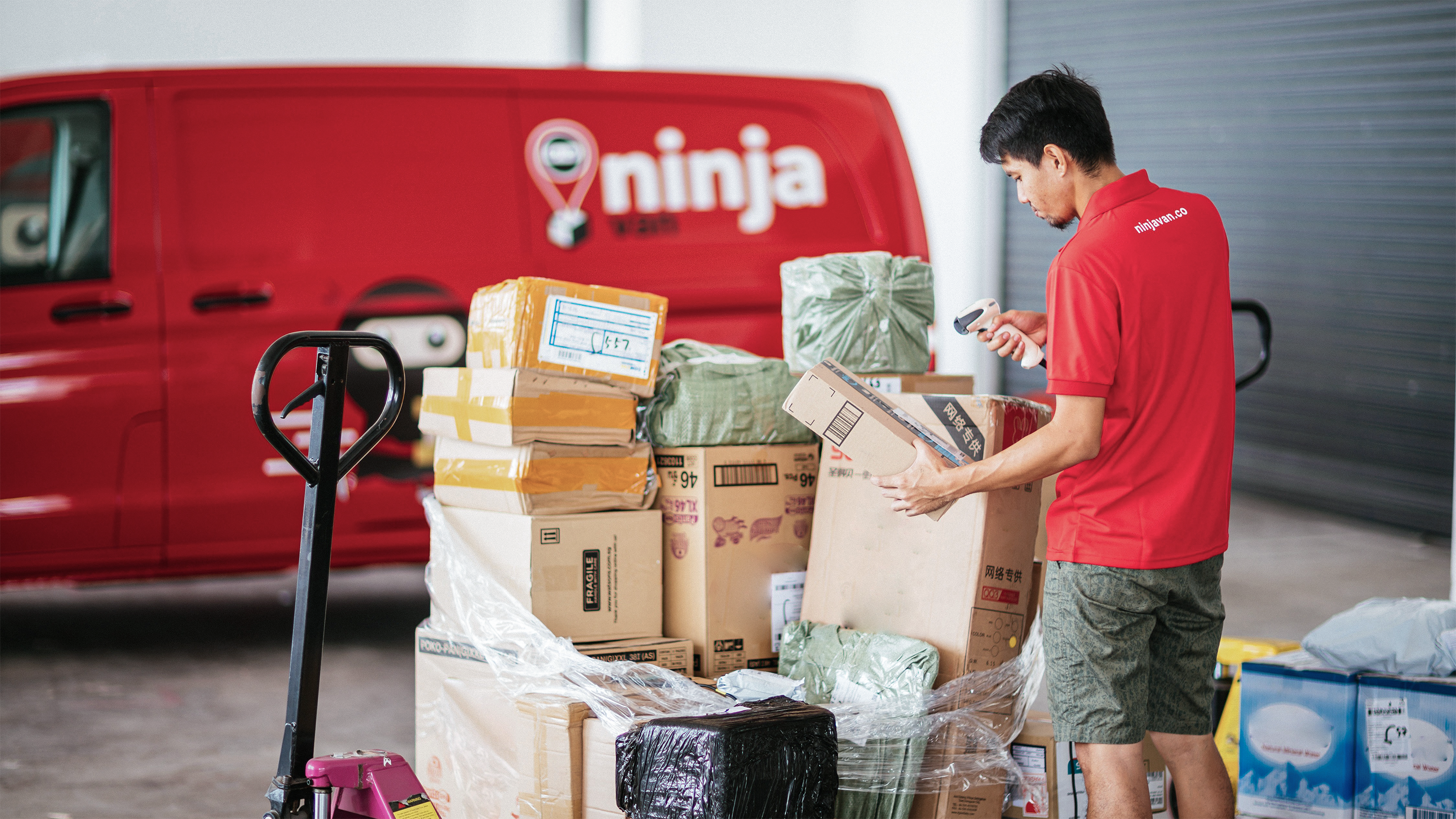
How Ninja Van evolved its tech stack for SEA’s logistics demands
To keep pace with rising expectations, Ninja Van worked with partners such as Huawei Cloud to build more resilient architecture.

All in on AI – too soon?
We spotlight the VCs investing in - and embracing - AI in Southeast Asia, plus everything you need to know about OpenAI’s newest frontier model.