Love It or Hate It, the Ferrari Luce Is a Thrilling Drive
WIRED test-drove a preproduction version of the Luce, the storied Italian automaker’s controversial electric car, and it was remarkably surprising. Will it convert Ferrari fanatics?

CommentLoaderSave StorySave this storyCommentLoaderSave StorySave this storySome still believe that you can’t manage a car company unless you’re a fully paid-up “car guy.” Tell that to Benedetto Vigna, Ferrari’s CEO. He’s a physicist by education, hired to run the company in 2021 after a career in semiconductors, although he did significant business with automotive during that time.
Vigna also helped develop a three-dimensional motion sensor first used in airbags, later adapted for the Nintendo Wii and the iPhone’s screen rotation function. An inventor, then. “I prefer innovator,” he once told me.
“A lot of the time inventors are just thinking, but innovators conceive new things and make them happen.”This is all useful background to the Luce, Ferrari’s first fully electric car, engineered in Maranello, Italy, but designed in California by LoveFrom, the agency set up by renowned iPhone designer Jony Ive. It’s not Apple’s abandoned car, reskinned and rebooted for the world’s most famous automotive name, but more the product of a union between like-minded innovators—Italian spirit and attitude, Silicon Valley lateral thinking.
Courtesy of FerrariBut unless you’ve been hiding under a rock on Mars with Elon Musk these past few months, you’ll also know that the result didn’t land the way its creators would have anticipated. Ferrari’s immense global fan base is seemingly not on board with the idea of an electric car on a point of principle. And hiring Ive and his team to reimagine the aesthetic has proven as welcome as Kryptonite is to Superman.
Part of the frequently obnoxious discourse around the Luce centered around the idea that a Ferrari’s design should deliver an instant dopamine rush. These aren’t cars that require a PhD in design to understand; they’re meant to hit hard and fast, seeding desire the moment you see them. The Luce spectacularly breaks from tradition, and without the famous Prancing Horse badge, there’s little here that yokes it to perhaps the most revered automotive back catalog of all.
But that was all part of the brief: Do something different.The driving experience amplifies this feeling. The Luce is a Ferrari, just not the sort we’re used to.
“In the past 100 years, technology has changed for sure,” Raffaele de Simone, Ferrari’s chief test driver, tells me. “But what hasn’t changed is our bodies. We have two hands, two eyes and ears, and two feet.
The interface is the same—steering, brakes and throttle—but the Luce has a different sort of driving emotion and a different way of announcing driving thrills.”Driving DifferentWIRED drove a preproduction model of the Luce before the May reveal in Rome, which is why there's a camo wrap hiding the design. Courtesy of FerrariI was at a test track in northern Italy in May to find out how successfully that’s been achieved.
I was in a preproduction car, still disguised at the time of driving because it pre-dates the car’s reveal in Rome. First impressions? The Luce’s cab-forward proportions mean you sit closer to the front axle than usual, and higher because there’s a large battery pack beneath the cabin.
It’s clearly not low-slung or sporty.You can’t help but take in that interior, clearly Apple-inspired but positing a whole new approach to territory that has seen an entire generation of new cars lose sight of first principles. The three-spoke wheel’s design is inspired by a classic Ferrari’s, and it feels fantastic.
The air vents pivot with a deeply engineered precision. Even the seat runners are elegant. The space in the rear is almost limo-like.
One of Ive’s superpowers is being able to detect the level of care invested in a product's design, and whether you like the Luce’s aesthetic or not, that’s indisputable. But he rejects the concept of a touchscreen inside a car, choosing instead to elevate haptic feel and the clarity of the dials to a level previously unseen in the automotive context. Ive is all about input and output.
The Luce is a special place to be.The Ferrari Luce's interior. Courtesy of FerrariThere’s a slickness to the first driving impressions, too.
Ferraris have become less highly strung over the years, with greater emphasis now placed on daily usability. As befits its four-door, five-seat layout, the Luce is arguably the most accessible Ferrari in the company’s near-80-year history. Its major controls—the throttle and brake pedal—are beautifully calibrated, so it moves away effortlessly with an impressively and perhaps unexpectedly light touch.
On some classic Ferraris, you have to let the gearbox oil warm thoroughly before going anywhere. This is not an issue on the Luce, despite its complex electronic drive units.The structure is all new.
The chassis consists of hollow castings, extrusions and aluminum sheets, to reduce weight and optimize load paths. The 800-volt battery architecture is integrated into the chassis, positioned as low in the Luce’s floorpan as the engineers could achieve. So it has a center of gravity that’s 95 mm lo
Đọc thêm từ Công nghệ

Bloomberg: Moonshot AI closes $3.5bn round at $35bn valuation
Moonshot AI is now aiming to raise new funds at a $50bn pre-money valuation. Read more: Bloomberg: Moonshot AI closes $3.5bn round at $35bn valuation

DoorDash says the FAA granted it Part 135 air carrier certification to operate a drone delivery service and it plans to launch drone deliveries in the fall (Natalie Lung/Bloomberg)
Natalie Lung / Bloomberg: DoorDash says the FAA granted it Part 135 air carrier certification to operate a drone delivery service and it plans to launch drone deliveries in the fall — DoorDash Inc. is building its own delivery drones and has gained the necessary approvals to oper
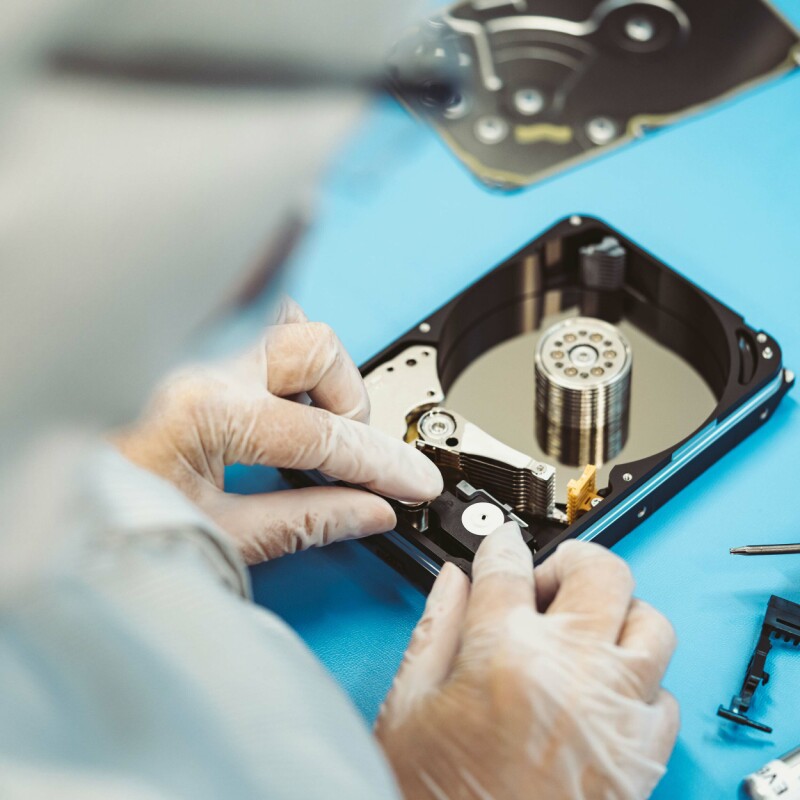
AI storage boom is keeping Seagate's hard drives spinning
Cloud operators have already claimed most of its nearline capacity through 2028

Source: OpenRouter was recently generating ~$140M in annualized revenue, or ~$12M per month, up nearly 3x since April, making Stripe's $10B offer a big premium (The Information)
The Information: Source: OpenRouter was recently generating ~$140M in annualized revenue, or ~$12M per month, up nearly 3x since April, making Stripe's $10B offer a big premium — If Stripe ends up buying three-year-old startup OpenRouter for close to $10 billion, the payments fir