Life of homemakers
It is traditionally accepted that homemaking is a woman’s job, adversely affecting them
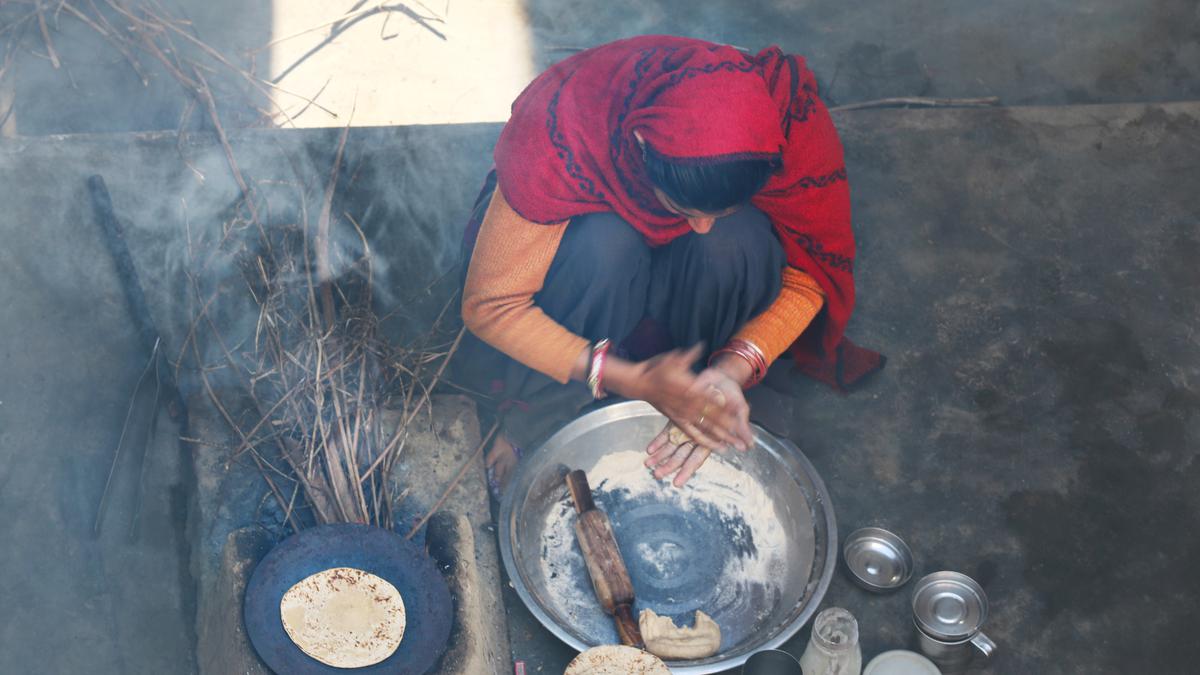
There are about 160 million women in India who are occupied as homemakers. On average, a woman spends 297 minutes daily engaged in household chores while a man contributes only 31 minutes daily, according to data from the National Sample Survey Organisation. A homemaker’s job comprises day-to-day household chores such as cooking, cleaning, buying groceries, caring and nursing, managing domestic staff, budgeting, etc.
However, homemaking is not a profession. It is not considered an economic activity. This not only dilutes the importance of the job but also alienates those who partake in it, mostly, women.
The words woman and homemaker are often used interchangeably in India.Why did Supreme Court quantify labour of homemakers?We often overlook the fact that if we were to hire professionals to do the jobs mentioned above, we would have to pay them a salary.
So, what should we pay the millions of homemakers who go about these chores daily? On careful examination, one can notice that the activity of homemakers directly influences macroeconomic performance. For instance, homemakers navigate the fruits and vegetables market and also decide on the consumption of dairy products for their families.
These are two of the largest markets in India, worth trillions of rupees. The products from these markets are used in every household across all sections of society. This makes homemakers the largest consumer base in the economy.
Additionally, it is the homemakers who do the budgeting and saving in a household. Since household savings are the largest contributor to gross domestic savings, this reflects the impact of homemakers on national savings. This saving propels investment expenditure and, in turn, the GDP.
Therefore, the two major determinants of the economy — consumption and saving — are directly dependent on homemakers.Our society narrows down homemaking to a handful of stereotypes. It is traditionally accepted that homemaking is a woman’s job.
This adversely affects the nature of a woman’s life. For instance, in rural areas, girls are deprived of education and vocational training but prepared for tending to their families after marriage. They are seen as dependent on their husbands.
However, these men who act as economic agents and receive monetary compensation for their work are directly dependent on their wives for their nourishment. Therefore, it follows that the physical and mental health of homemakers is linked to the well-being of men, and consequently to the productivity of the economy.Women being engaged in domestic work is also the reason for their reduced participation in the labour force across all sectors.
Despite an increase in GDP, education levels, and household income, the country’s labour force participation of women is very low. Over 90% of women do unpaid domestic work compared to only 27% of men. On the other hand, only 22% of women were employed as opposed to 71% of men.
The data are based on a National Sample Survey of 2019.Domestic work should be formalised and quantified in monetary terms. This would give clarity about the magnitude of economic activity in India.
Prabha Kotiswaran (Professor, King’s College London) explains how Indian courts offered compensation to the families of homemakers who died in road accidents. The courts considered the opportunity cost of women’s work at home, the minimum wage for workers, educational qualifications, age, number of children, etc. Based on this, they calculated the monetary compensation that the deceased’s family would receive.
Furthermore, as household savings are generated by women, they should also learn evolving aspects of personal finance. Previously, savings were either invested in real estate or gold, but today there exists a vast array of financial assets. Women must be actively provided with vocational skills to ensure their employability.
This would uplift the socio-economic status of women and encourage men to participate in domestic work. We must ensure that domestic work is considered an economic activity and, like any other paid job, becomes a choice for everyone and not just women.das.
sayaksundar@gmail.com Published - March 26, 2023 01:51 am IST Read Comments Copy link Email Facebook Twitter Telegram LinkedIn WhatsApp Reddit READ LATER SEE ALL Remove
Đọc thêm từ Thế giới

장동혁, ‘투표용지 특검’ 방패 삼아 버티기…이번주 의총 거취 분수령
본문정치정치일반장동혁, ‘투표용지 특검’ 방패 삼아 버티기…이번주 의총 거취 분수령김해정기자수정 2026-06-14 17:53펼침기사를 읽어드립니다Your browser does not support theaudio element.0:00장동혁 국민의힘 대표와 정점식 원내대표, 김민수 최고위원이 11일 국회에서 열린 최고위원회의에 입장하고 있다.

원성준, 이틀 연속 결승타…키움, 798일 만에 한화전 싹쓸이
본문스포츠야구·MLB원성준, 이틀 연속 결승타…키움, 798일 만에 한화전 싹쓸이김양희기자수정 2026-06-14 17:49펼침기사를 읽어드립니다Your browser does not support theaudio element.0:00키움 히어로즈 원성준이 14일 고척 스카이돔에서 열린 2026 KBO리그 한화 이글스와 경기에서 8회말 적시타를 때려내고 있다.

‘206억 채무 불이행’ JTBC, 중계권 독점 ‘승자의 저주’…“비상경영”
본문사회미디어‘206억 채무 불이행’ JTBC, 중계권 독점 ‘승자의 저주’…“비상경영”신다은기자수정 2026-06-14 17:55펼침기사를 읽어드립니다Your browser does not support theaudio element.0:00한-체코전 축포 날, 채무불이행에 신용등급 투기등급 강등올림픽·월드컵 중계권 무리한 투자 발목…

N. Korea calls denuclearization 'irreversibly finalized' matter
North Korea on Sunday called denuclearization an "irreversibly finalized" matter as it denounced recent talks between South Korea and the United States that reaffirmed the goal of the North's denuclearization. An unnamed spokesperson of the North's foreign ministry issued the cri