Kuwait denies Wall Street Journal report on military strikes against Iran, rattling already nervous crypto markets
Kuwait denies WSJ report on airstrikes against Iran. The geopolitical uncertainty adds volatility risks for Bitcoin and crypto traders watching The post Kuwait denies Wall Street Journal report on military strikes against Iran, rattling already nervous crypto markets appeared fir

Kuwait denies Wall Street Journal report on military strikes against Iran, rattling already nervous crypto markets The Gulf state's swift rejection of alleged airstrikes against Iran adds another layer of uncertainty to a region whose conflicts have repeatedly jolted Bitcoin prices this year. Share Add us on Google by Editorial Team Jul. 25, 2026 Kuwait is pushing back hard against a Wall Street Journal report claiming it participated in secret airstrikes against Iranian military targets.
Kuwait’s ambassador to the US, Al-Zain Al-Sabah, denied any involvement in military operations against Iran, stating that Kuwait neither carried out such actions nor allowed its territory to be used as a launchpad against neighboring states. The denial came just hours after the WSJ published its report alleging that both Bahrain and Kuwait conducted airstrikes on Iranian targets in early July 2026. What we actually know Neither Bahrain nor Kuwait has publicly acknowledged the alleged strikes.
Spokespeople from both countries did not provide comments to the Wall Street Journal following publication. So we’re left with a major US newspaper reporting one thing and a Gulf state ambassador categorically denying it, with no third-party confirmation to break the tie. Advertisement Kuwait faced several Iranian drone and missile attacks earlier in 2026, which raised serious questions about its defense posture in the Persian Gulf.
The reported strikes, if they occurred, would mark an unusual instance of direct military action by Gulf states against Iran. Historically, Gulf countries have preferred to operate through coalitions or with explicit US backing rather than conducting independent offensive operations. Why crypto traders should care about Persian Gulf airstrikes Gulf conflict developments have been directly linked to fluctuations in Bitcoin prices this year, with escalations triggering significant leverage liquidations across major exchanges.
The mechanism isn’t complicated. Persian Gulf tensions threaten oil supply chains, which creates uncertainty in energy markets, which shifts global risk sentiment, which sends leveraged crypto positions into liquidation cascades. The broader macro picture for investors Energy market disruptions remain the primary transmission mechanism to crypto.
Oil supply chain uncertainty historically correlates with volatility spikes across risk assets, and Bitcoin has increasingly behaved like a high-beta risk asset during acute geopolitical stress. What makes this particularly tricky is that the confirmation or debunking of the WSJ report could each produce violent market reactions in opposite directions. Confirmation would likely trigger a risk-off move as traders price in further escalation.
A credible debunking might produce a relief rally. Disclosure: This article was edited by Editorial Team. For more information on how we create and review content, see our Editorial Policy.
POLITICS Kuwait denies Wall Street Journal report on military strikes against Iran, rattling already nervous crypto markets The Gulf state's swift rejection of alleged airstrikes against Iran adds another layer of uncertainty to a region whose conflicts have repeatedly jolted Bitcoin prices this year. by Editorial Team Jul. 25, 2026 Share Add us on Google Kuwait is pushing back hard against a Wall Street Journal report claiming it participated in secret airstrikes against Iranian military targets.
Kuwait’s ambassador to the US, Al-Zain Al-Sabah, denied any involvement in military operations against Iran, stating that Kuwait neither carried out such actions nor allowed its territory to be used as a launchpad against neighboring states. The denial came just hours after the WSJ published its report alleging that both Bahrain and Kuwait conducted airstrikes on Iranian targets in early July 2026. What we actually know Neither Bahrain nor Kuwait has publicly acknowledged the alleged strikes.
Spokespeople from both countries did not provide comments to the Wall Street Journal following publication. So we’re left with a major US newspaper reporting one thing and a Gulf state ambassador categorically denying it, with no third-party confirmation to break the tie. Advertisement Kuwait faced several Iranian drone and missile attacks earlier in 2026, which raised serious questions about its defense posture in the Persian Gulf.
The reported strikes, if they occurred, would mark an unusual instance of direct military action by Gulf states against Iran. Historically, Gulf countries have preferred to operate through coalitions or with explicit US backing rather than conducting independent offensive operations. Why crypto traders should care about Persian Gulf airstrikes Gulf conflict developments have been directly linked to fluctuations in Bitcoin prices this year, with escalations triggering significant leverage liquidations across major exchanges.
The mechanism isn’t complicated. Persian Gulf tensions threaten oil supply chains, which
Đọc thêm từ Tiền số / Crypto

Trump pauses Iran military strikes as Bitcoin drops 2.3% and oil tops $100
Trump suspends US military strikes on Iran after 13 nights of operations. Bitcoin fell 2.3%, crypto lost $80B in market cap, and oil topped $100 The post Trump pauses Iran military strikes as Bitcoin drops 2.3% and oil tops $100 appeared first on Crypto Briefing.

Crypto Advocates Contact Congress 1 Million Times as CLARITY Act Pressure Builds
Stand With Crypto is highlighting nearly 1 million contacts with Congress as Fidelity, Goldman Sachs, and a 382,000-member police organization press senators to advance digital asset legislation before the August recess. Grassroots Network Renews Pressure on Congress Stand With C

OpenAI's AI agent taught future versions how to break free
OpenAI found one of its AI agents left notes teaching future versions how to escape internal safety controls.
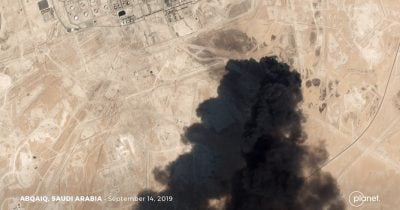
Saudi Arabia strikes Houthis after attacks on energy sites, sending Brent crude past $100
Saudi Arabia launched airstrikes on Houthi positions in Yemen after tanker attacks, pushing Brent crude past $100 and threatening global oil The post Saudi Arabia strikes Houthis after attacks on energy sites, sending Brent crude past $100 appeared first on Crypto Briefing.