JPMorgan posts record $16.5B Q1 profit as Dimon warns the next credit crisis will be worse than anyone expects
JPMorgan's record profit highlights systemic risks in credit markets and underscores blockchain's growing role in financial infrastructure. The post JPMorgan posts record $16.5B Q1 profit as Dimon warns the next credit crisis will be worse than anyone expects appeared first on Cr

JPMorgan posts record $16.5B Q1 profit as Dimon warns the next credit crisis will be worse than anyone expects The bank's strongest quarter ever came with a side of existential dread about private credit markets and lax lending practices Share Add us on Google by Editorial Team Jun. 20, 2026 JPMorgan Chase just posted its best quarter in the company’s history.
CEO Jamie Dimon responded by essentially telling everyone to brace for impact. The banking giant reported Q1 2026 net income of $16.5 billion, a 13% jump year-over-year, on managed revenue of $50.
5 billion, up 10% from the same period last year. Markets revenue hit a record $11.6 billion.
And yet Dimon used the occasion to deliver one of his most pointed warnings about the credit cycle in years. Record profits, record anxiety The CEO warned that the next credit downturn could be significantly more severe than most participants expect. His reasoning centers on two forces: inflated asset prices across multiple categories and lending standards that have, in his view, gotten far too loose.
Advertisement Dimon specifically flagged private credit markets, which have ballooned to roughly $1.7 trillion. That’s a market segment that barely existed at meaningful scale a decade ago.
A massive pool of lending has grown up largely outside the traditional banking system, with less transparency and fewer stress-test requirements than regulated bank loans. The blockchain play nobody wants to talk about Lost in the credit-cycle headlines is something arguably more significant for the digital asset world. In his annual shareholder letter, Dimon acknowledged that blockchain-based competitors, specifically stablecoins and smart contracts, represent genuine threats to traditional banking services.
JPMorgan’s Kinexys platform now processes over $1 billion in daily transactions through JPM Coin. In December 2025, JPMorgan issued a tokenized money market fund on Ethereum, signaling that the bank views public blockchains as viable rails for regulated financial products. The move was notable because JPMorgan had previously kept its blockchain efforts confined to permissioned networks.
Yet the bank’s posture on crypto remains deliberately contradictory. As recently as May 2026, Dimon cautioned that yield-bearing stablecoins could “blow up.” The dual stance—building aggressively on blockchain technology while questioning the assets that run on those same networks—is a calculated hedge.
What this means for crypto investors Dimon’s specific warning about yield-bearing stablecoins is worth taking seriously. Several stablecoin issuers generate yield by investing reserves in exactly the kinds of credit instruments that Dimon flagged as overextended. If private credit defaults spike, the reserves backing those stablecoins could take losses, creating the kind of depeg event that the market saw with TerraUSD in 2022, only potentially larger given the growth in stablecoin market capitalization since then.
On the other hand, JPMorgan’s accelerating blockchain adoption is a structurally bullish signal for the tokenization thesis. A bank processing $1 billion per day through on-chain settlement validates the core premise that blockchains are better infrastructure for financial transactions. Disclosure: This article was edited by Editorial Team.
For more information on how we create and review content, see our Editorial Policy. MACRO JPMorgan posts record $16.5B Q1 profit as Dimon warns the next credit crisis will be worse than anyone expects The bank's strongest quarter ever came with a side of existential dread about private credit markets and lax lending practices by Editorial Team Jun.
20, 2026 Share Add us on Google JPMorgan Chase just posted its best quarter in the company’s history. CEO Jamie Dimon responded by essentially telling everyone to brace for impact. The banking giant reported Q1 2026 net income of $16.
5 billion, a 13% jump year-over-year, on managed revenue of $50.5 billion, up 10% from the same period last year. Markets revenue hit a record $11.
6 billion. And yet Dimon used the occasion to deliver one of his most pointed warnings about the credit cycle in years. Record profits, record anxiety The CEO warned that the next credit downturn could be significantly more severe than most participants expect.
His reasoning centers on two forces: inflated asset prices across multiple categories and lending standards that have, in his view, gotten far too loose. Advertisement Dimon specifically flagged private credit markets, which have ballooned to roughly $1.7 trillion.
That’s a market segment that barely existed at meaningful scale a decade ago. A massive pool of lending has grown up largely outside the traditional banking system, with less transparency and fewer stress-test requirements than regulated bank loans. The blockchain play nobody wants to talk about Lost in the credit-cycle headlines is something arguably more significant for the digital asset world.
In his annual shar
Đọc thêm từ Tiền số / Crypto
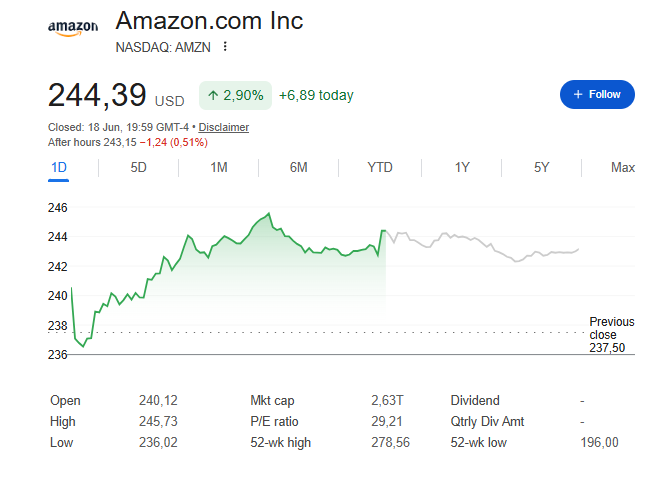
Amazon Stock Price 10 Years Ago: How Much $1,000 Would Be Worth Today
Amazon stock price 10 years ago was sitting at around $14.54 a share, once you adjust the number…
Sandbox up 10% – Are SAND whales winning the battle against smart money?
Analyzing why Sandbox was the highest gainer among other gaming tokens.

Iran’s IRGC Navy closes Strait of Hormuz to all maritime traffic, sending shockwaves through oil and crypto markets
The closure of the Strait of Hormuz could reshape global oil dynamics and accelerate crypto's role in geopolitics, prompting regulatory scrutiny. The post Iran’s IRGC Navy closes Strait of Hormuz to all maritime traffic, sending shockwaves through oil and crypto markets appeared

Bitcoin Network Activity Is Rising as BTC Falls Nearly 50% Below Peak Price: CryptoQuant
Activity on the Bitcoin network is surging, CryptoQuant said, but it's not correlating with price movement for its native asset.